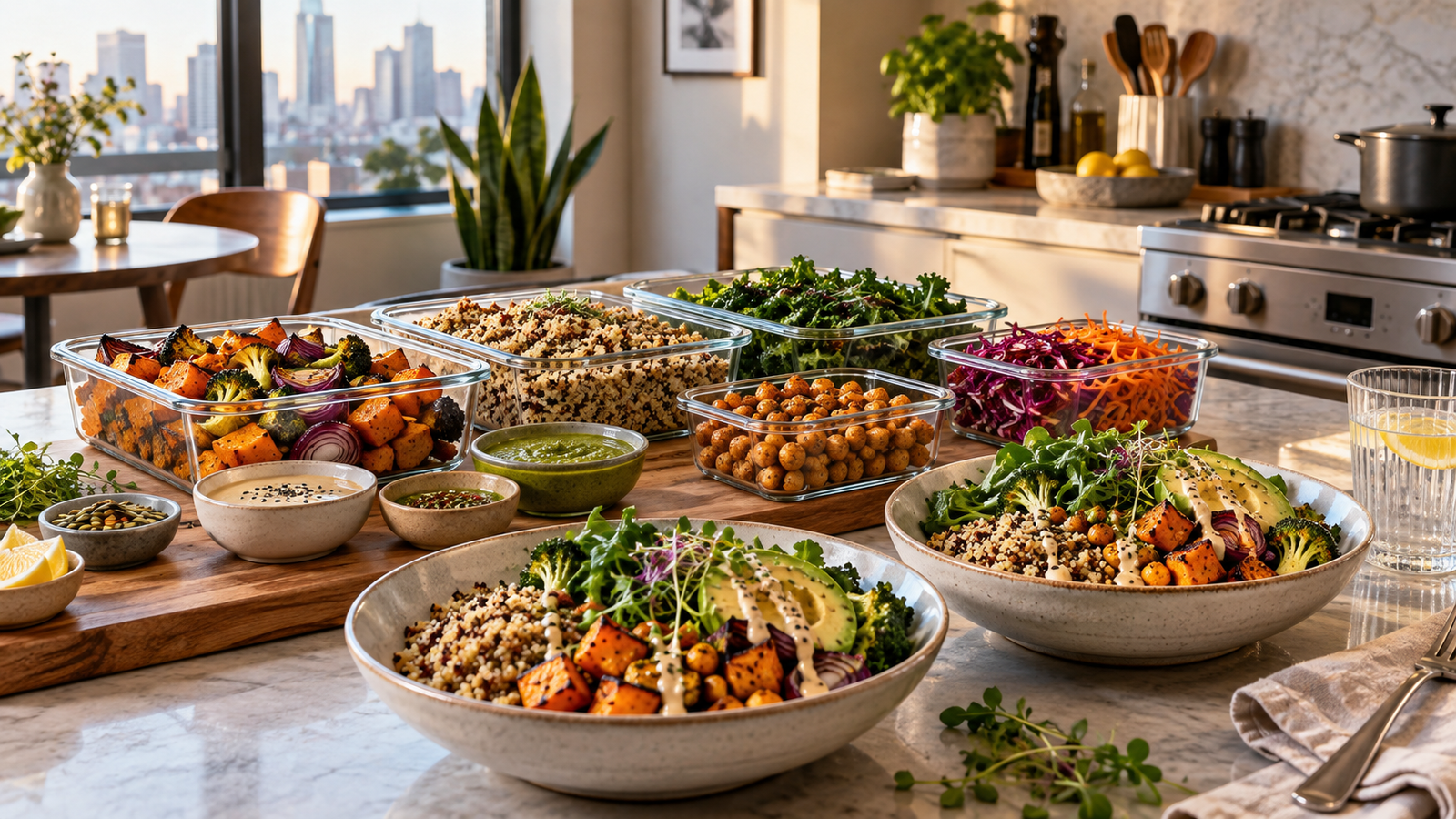
Elevated Batch Cooking for Demanding Schedules
Michelin-inspired technique. Metro budgets. Under ten minutes on a Tuesday.
There is a particular kind of hunger that arrives after a long city day.
You have answered messages before breakfast, squeezed onto a train, worked through meetings, pushed lunch later than planned, made one more stop on the way home and finally walked into your apartment with almost no interest in chopping twelve vegetables or washing a tower of pans.
The delivery app is already waiting.
A salad can easily become an expensive convenience purchase. A restaurant-quality dinner delivered to your door can cost considerably more once fees, taxes and tips are added. Repeat that habit several times a week and convenience quietly becomes one of the largest flexible expenses in your monthly budget.
But traditional meal prep creates another problem.
Few people want to spend Sunday cooking seven identical containers of chicken, rice and broccoli.
The Metro Pantry Protocol offers a different system.
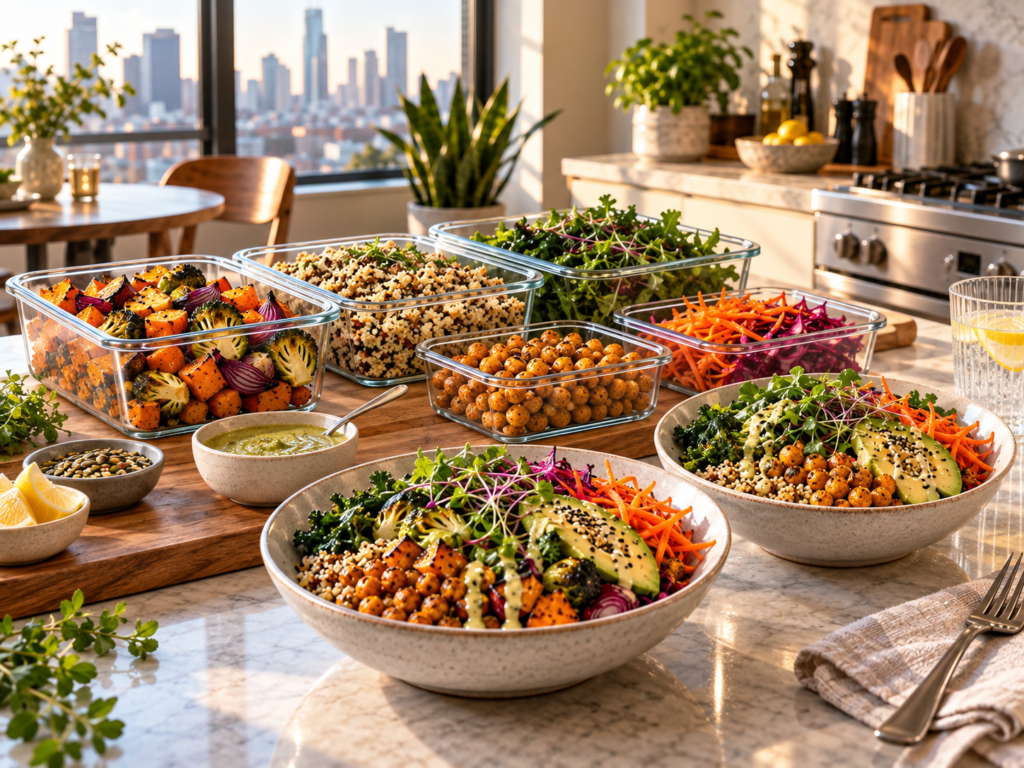
Instead of cooking complete meals days in advance, you spend roughly 90 focused minutes preparing a small collection of versatile culinary building blocks: a sauce, a grain or legume base, cooked vegetables, one or two proteins and a concentrated flavor component.
During the week, those components become completely different meals in minutes.
Monday might be a miso-glazed chicken bowl.
Tuesday becomes crispy chickpeas over lemon-herb grains.
Wednesday is a restaurant-style steak and roasted vegetable plate.
Thursday becomes a tahini lentil bowl.
Friday might be a fast pasta finished with the same concentrated tomato base you prepared on Sunday.
The objective is not merely to meal prep faster.
It is to build a home food system that respects three things busy urban professionals rarely have in excess:
time, money and kitchen space.
Why the Metro Pantry Protocol Fits the Way People Eat Now
Convenience has become increasingly important in food decisions.
In its 2026 Food & Health Survey, the International Food Information Council reported that convenience moved ahead of healthfulness as a factor influencing U.S. food and beverage choices, while taste and price remained especially important. At the same time, fiber-forward foods and digestive-wellness products continue to attract consumer interest.
That combination creates an important opportunity.
People do not necessarily need another complicated healthy eating program.
They need a system where good food is easier to choose when they are tired.
That is the philosophy behind the Metro Pantry Protocol.
Instead of relying on motivation every evening, you redesign the environment so dinner is almost assembled before the workday ends.
The Problem With Traditional Meal Prep
Meal preparation is often presented as an all-or-nothing weekend ritual.
Cook everything.
Portion everything.
Label everything.
Stack fourteen containers into the refrigerator.
That approach works for some people, especially when nutritional consistency is the priority. But for professionals who care about flavor and variety, repetition can quickly lead to meal-prep fatigue.
The Metro Pantry Protocol uses modular meal preparation instead.
You do not prepare five dinners.
You prepare five foundations that can become many dinners.
Think like a restaurant kitchen rather than a cafeteria.
A restaurant rarely begins every dish from zero when an order arrives. Many components have already been washed, reduced, marinated, portioned or partially cooked.
The finishing happens at service.
Your Tuesday evening kitchen can operate the same way.
Pillar One: High-End Technique Meets Everyday Ingredients
Expensive ingredients do not automatically create expensive-tasting food.
Technique often matters more.
A humble tray of carrots becomes dramatically more interesting when roasted aggressively for caramelization and finished with lemon, yogurt and toasted seeds.
Canned chickpeas become something different after being dried properly, crisped in a hot pan and coated with warm spices.
A basic chicken thigh can feel restaurant-worthy when it receives a hard sear, a glossy pan sauce and a bright acidic finish.
The Metro Pantry Protocol borrows several professional kitchen habits without requiring professional equipment.
Batch Reductions
A reduction concentrates flavor by simmering liquid until some of its water evaporates.
Instead of opening a different sauce every night, prepare one concentrated flavor base.
For example:
Simmer crushed tomatoes with garlic, olive oil, chili and herbs until thick.
On Monday, loosen it with pasta water.
On Wednesday, spoon it under roasted fish.
On Friday, mix it with beans and greens for a fast skillet dinner.
One preparation creates several culinary directions.
Emulsion Bases
An emulsion combines ingredients that normally resist mixing, such as oil and water-based liquids.
A basic lemon-Dijon dressing can become:
a grain-bowl dressing,
a chicken marinade,
a roasted vegetable finish,
a sandwich spread when mixed with yogurt,
or a creamy herb sauce when blended with parsley.
Instead of buying six sauces, build one adaptable base.
Flash-Searing
Pre-cooked or partially cooked proteins can develop fresh flavor through a fast final sear.
This matters because reheated food often tastes reheated.
A hot skillet changes that.
Cooked chicken, tofu or sliced steak can spend two or three minutes in a hot pan before serving, restoring texture and creating browned edges.
Suddenly the meal feels freshly cooked rather than recovered from a container.
Pillar Two: Build Nutrient-Dense Meals Without Turning Dinner Into Mathematics
The Metro Pantry Protocol is not a medical diet.
It is a practical meal architecture designed to make balanced eating easier during demanding weeks.
A useful starting structure is:
Protein + fiber-rich carbohydrate + vegetables + healthy fat + flavor
For example:
Salmon + lentils + roasted broccoli + olive oil + herb dressing.
Chicken + brown rice + cabbage + sesame + ginger-lime sauce.
Tofu + quinoa + mushrooms + avocado + chili crisp.
Greek yogurt + oats + berries + nuts + cinnamon for breakfast.
Rather than chasing nutritional perfection, build meals that are satisfying enough to reduce the constant cycle of grazing, ordering food and searching for something else an hour later.
Put Fiber Back at the Center
Protein gets enormous attention in modern meal planning, but fiber deserves equal consideration.
Beans, lentils, chickpeas, oats, vegetables, fruit, seeds and whole grains can add both texture and staying power to meals.
They also work exceptionally well in batch-cooking systems because many are affordable, versatile and refrigerator-friendly.
Make Protein Modular
Do not think:
“I need five chicken dinners.”
Think:
“I need a protein that can participate in five possible meals.”
A tray of simply seasoned chicken thighs might become:
Mediterranean grain bowls,
ginger-soy rice bowls,
warm chicken salads,
flatbread wraps,
or tomato-braised chicken pasta.
Neutral preparation creates flexibility.
Heavy seasoning can happen during assembly.
Pillar Three: The Precision Grocery System
One of the hidden costs of ambitious home cooking is not the food you eat.
It is the food you throw away.
The Metro Pantry Protocol treats grocery shopping as inventory management.
Before shopping, each ingredient should ideally have more than one destination.
If cilantro appears in only one recipe, reconsider it.
If parsley can appear in a dressing, grain bowl, pasta and yogurt sauce, it earns refrigerator space.
This is especially valuable in apartments where refrigerator capacity is limited.
The 2-Use Minimum Rule
Before purchasing a highly perishable ingredient, ask:
Where will I use this at least twice?
Spinach could appear in breakfast eggs and pasta.
Greek yogurt could become breakfast, salad dressing and a sauce.
Lemons can season vegetables, brighten sauces and finish proteins.
Cabbage can become slaw, stir-fry vegetables and a grain-bowl topping.
The fewer ingredients that have only one purpose, the easier it becomes to reduce food waste.
Create a Metro Pantry Core
A compact but powerful pantry might include:
olive oil,
rice,
quinoa or another grain,
lentils,
canned chickpeas,
canned tomatoes,
pasta,
Dijon mustard,
soy sauce or tamari,
vinegar,
tahini,
garlic,
onions,
dried spices,
nuts or seeds,
and one concentrated condiment such as chili crisp.
These ingredients create an enormous number of meals without occupying much refrigerator space.
Then each grocery trip can focus on fresh produce and protein rather than rebuilding your pantry every week.
Shopping at Trader Joe’s, Whole Foods and Urban Grocery Stores
The protocol does not depend on a particular supermarket.
Instead, shop by function.
Your list might look like this:
Two proteins: chicken thighs and salmon.
Two fiber bases: lentils and brown rice.
Four vegetables: broccoli, cabbage, mushrooms and carrots.
Two fresh flavor ingredients: lemon and parsley.
One creamy component: Greek yogurt.
One convenience ingredient: pre-washed greens.
This is more efficient than shopping for five completely unrelated recipes.
You are buying a food system.
Pillar Four: Active Prep vs. Passive Assembly
This is the operational heart of the Metro Pantry Protocol.
Do difficult work once.
Do easy work repeatedly.
The 90-Minute Sunday Protocol
Your exact routine will depend on your household, but one practical structure looks like this.
Minutes 0–15: Heat, Wash and Organize
Preheat the oven.
Start your grain.
Wash produce.
Prepare two sheet pans.
Mix your basic dressing or sauce.
Minutes 15–40: Roast and Simmer
Roast vegetables.
Cook chicken, tofu or another batch-friendly protein.
Simmer lentils or another base if needed.
Reduce a sauce while everything else cooks.
Minutes 40–60: Build Flavor Components
Prepare a lemon-herb dressing.
Toast nuts or seeds.
Quick-pickle sliced onions or cabbage.
Mix a yogurt or tahini sauce.
Minutes 60–80: Portion Foundations
Store ingredients separately rather than building complete meals.
Keep crispy ingredients away from sauces.
Keep delicate greens dry.
Portion proteins if doing so makes weeknight assembly easier.
Minutes 80–90: Reset the Kitchen
Wash the final pan.
Wipe down counters.
Put the week’s most frequently used components where they are easiest to reach.
Now weekday cooking becomes assembly rather than production.
Five Foundations That Can Build a Week of Meals
Imagine your Sunday session creates:
1. Lemon-herb chicken
2. Roasted broccoli, carrots and mushrooms
3. Brown rice and lentil blend
4. Lemon-Dijon herb dressing
5. Smoky tomato reduction
Those five foundations can create surprisingly different meals.
Monday: Mediterranean Power Bowl
Rice-lentil base, chicken, roasted vegetables, greens and lemon dressing.
Finish with yogurt and toasted seeds.
Assembly time: approximately five minutes.
Tuesday: Crispy Chicken Bistro Plate
Flash-sear sliced chicken.
Warm roasted carrots.
Add greens tossed in Dijon dressing.
Finish with lemon.
Assembly time: approximately eight minutes.
Wednesday: Smoky Tomato Grain Bowl
Heat rice and lentils with the tomato reduction.
Add vegetables.
Top with yogurt, parsley and seeds.
Assembly time: approximately seven minutes.
Thursday: Fast Restaurant-Style Pasta
Cook a quick portion of pasta.
Add tomato reduction and a splash of pasta water.
Fold in chicken and mushrooms.
Finish with herbs.
Active time can remain close to ten minutes depending on the pasta used.
Friday: Clean-the-Fridge Skillet
Add remaining vegetables, grains and protein to a hot skillet.
Finish with whichever sauce remains.
No elaborate recipe is required.
The system has already done the thinking for you.
The Takeout Arbitrage
One of the strongest economic arguments for sophisticated home meal preparation is what could be called takeout arbitrage.
The goal is not to eliminate restaurants.
New York would be a miserable place to live if nobody enjoyed restaurants.
The goal is to stop paying restaurant-level prices for meals you order only because you are tired.
Imagine someone regularly buys premium workday lunches and several delivered dinners each week.
Replacing even part of that routine with thoughtfully assembled home meals can potentially redirect hundreds of dollars per month toward savings, travel, entertainment or genuinely memorable restaurant experiences.
The exact savings depend on grocery choices, household size, delivery habits and neighborhood pricing.
But the principle remains powerful:
Use home cooking for routine nourishment. Save restaurant spending for experiences worth remembering.
Tiny-Kitchen Meal Prep: Design for Reality
Many cooking systems assume you own a suburban kitchen.
The Metro Pantry Protocol assumes you may have:
one usable cutting board,
limited counter space,
two burners,
a small oven,
one narrow refrigerator shelf,
and absolutely nowhere to store twelve meal-prep containers.
That changes the strategy.
Use One-Pan Cooking
Roast several vegetables on a single sheet pan.
Cook ingredients with similar temperature requirements together.
Use parchment when appropriate to reduce cleanup.
Store Components, Not Complete Meals
Five fully assembled dinners can consume enormous refrigerator space.
A container of grain, one container of vegetables, one container of protein and two small sauces may create the same number of meals while using less room.
Choose Stackable Containers
Uniform containers make compact refrigerators considerably easier to manage.
Transparent containers are especially useful because invisible leftovers become forgotten leftovers.
Avoid Gadget Dependence
You do not need a countertop full of appliances.
A practical setup can be surprisingly small:
one chef’s knife,
one cutting board,
one skillet,
one saucepan,
one sheet pan,
one mixing bowl,
and several storage containers.
The system matters more than the equipment.
The Flavor Matrix: How to Prevent Meal-Prep Boredom
The easiest way to make the same ingredients taste different is not to cook five proteins.
It is to change the finishing profile.
One chicken-and-grain base can move through several cuisines simply by changing sauce, acid, herbs and texture.
Mediterranean
Lemon + parsley + yogurt + olive oil.
East Asian-Inspired
Soy sauce + ginger + sesame + scallions.
Spicy-Smoky
Tomato reduction + smoked paprika + chili + lime.
Middle Eastern-Inspired
Tahini + lemon + cumin + herbs.
Bistro
Dijon + shallot + vinegar + olive oil.
The ingredients underneath may remain remarkably similar.
Your palate experiences variety because the finishing signals change.
High-Performance Plating for High-Pressure Weeks
Presentation may sound unnecessary on a busy Tuesday.
It is not.
A meal that looks intentional often feels more satisfying than the same ingredients dumped into a container.
Restaurant plating does not require tweezers.
Try a simple rule:
Base. Height. Sauce. Freshness. Crunch.
Place grains or puree first.
Add the protein with some height.
Spoon sauce around or across the plate.
Finish with herbs, lemon or greens.
Add seeds, nuts or crispy chickpeas for texture.
Thirty extra seconds can dramatically change the psychological experience of eating at home.
A Better System for Busy Professionals
The Metro Pantry Protocol is especially suited to people who experience a predictable contradiction:
They care about eating well but have very little energy available for cooking when they actually need dinner.
That might include:
finance professionals,
founders,
consultants,
healthcare workers,
lawyers,
designers,
developers,
freelancers,
creatives,
remote workers,
and anyone whose weekdays routinely expand beyond the schedule they intended.
The solution is not stronger discipline at 8:30 p.m.
The solution is fewer decisions at 8:30 p.m.
Your Tuesday Dinner Should Not Require Executive Function
Every decision consumes a little attention.
What should I cook?
Do I have onions?
Did the chicken expire?
Which recipe did I save?
Do I need to thaw something?
Should I just order delivery?
A reliable food system removes those questions before they appear.
Open the refrigerator.
Choose one protein.
Choose one base.
Choose vegetables.
Choose a finishing sauce.
Heat.
Plate.
Eat.
That is the protocol.
How to Start Without Rebuilding Your Entire Life
Do not begin with seven breakfasts, seven lunches, seven dinners and seventeen matching containers.
Start with three dinners.
Prepare:
one protein,
one grain or legume,
one large batch of vegetables,
one sauce,
and one fresh finishing ingredient.
Use those components three different ways.
Once that becomes automatic, expand.
Good systems become powerful because they are repeatable, not because they are complicated.
The Metro Pantry Protocol Is Not About Cooking More
It is about cooking strategically.
The traditional weekday dinner model asks you to perform the same sequence every night:
decide,
shop,
chop,
cook,
clean.
The Metro Pantry model rearranges that sequence.
Plan once.
Shop once.
Prep once.
Assemble repeatedly.
That is how professional kitchens create speed, and the same logic can work inside a compact apartment.
You do not need luxury ingredients every evening to create food that feels elevated.
You need strong fundamentals.
Heat.
Acid.
Texture.
Seasoning.
Freshness.
Contrast.
And a refrigerator stocked with ingredients that already know where they are going.
Outsource the menu planning, not your health or your wallet.
With a well-designed batch-cooking system, demanding schedules no longer have to produce an automatic choice between bland meal prep and expensive delivery.
You can have food that feels thoughtful without treating dinner as a second job.
And on a chaotic Tuesday evening, that may be one of the most valuable luxuries your kitchen can provide.
Questions and Answers
1. What is the Metro Pantry Protocol?
The Metro Pantry Protocol is a modular batch-cooking system designed for busy professionals and compact urban kitchens. Instead of preparing identical meals for the entire week, you batch-cook several flexible components and combine them into different meals in roughly ten minutes or less on many weeknights.
2. Is batch cooking cheaper than ordering takeout in NYC?
It can be substantially cheaper for people who regularly buy premium lunches or delivered dinners, although savings vary according to grocery prices, restaurant habits, household size and food choices. The largest advantage comes from replacing routine convenience purchases rather than eliminating restaurant dining altogether.
3. How long should weekly meal prep take?
A streamlined session can often be completed in about 60 to 90 minutes once the routine becomes familiar. Preparing ingredients simultaneously—such as roasting vegetables while grains cook and sauces are mixed—reduces active kitchen time.
4. What foods are best for healthy batch cooking?
Useful foundations include lentils, beans, chickpeas, whole grains, roasted vegetables, chicken, tofu, eggs, fish, yogurt, leafy greens, nuts, seeds and versatile sauces. The best ingredients are foods you enjoy and can reuse across several meals. People with medical or dietary needs should personalize choices with an appropriately qualified healthcare or nutrition professional.
5. How do I meal prep in a tiny NYC apartment kitchen?
Focus on one-pan recipes, multipurpose ingredients, vertically stackable containers and modular storage. Avoid making five complete meals in separate containers. Store proteins, grains, vegetables and sauces separately so a few compact containers can generate several different meals throughout the week.
Make This Your Weekly Default
Before your next grocery trip, choose just five foundations:
one protein, one fiber-rich base, one vegetable batch, one versatile sauce and one fresh finishing ingredient.
Give yourself 90 minutes.
Then see how little work dinner requires for the rest of the week.
Once you experience the difference between cooking every night and assembling intelligently, it becomes difficult to return to the old system.
Michelin-inspired technique. Metro budgets. Under ten minutes on a Tuesday.
Stay ahead with exclusive updates
Join our community. Get curated industry trends, actionable guides, and fresh resources delivered straight to your inbox.