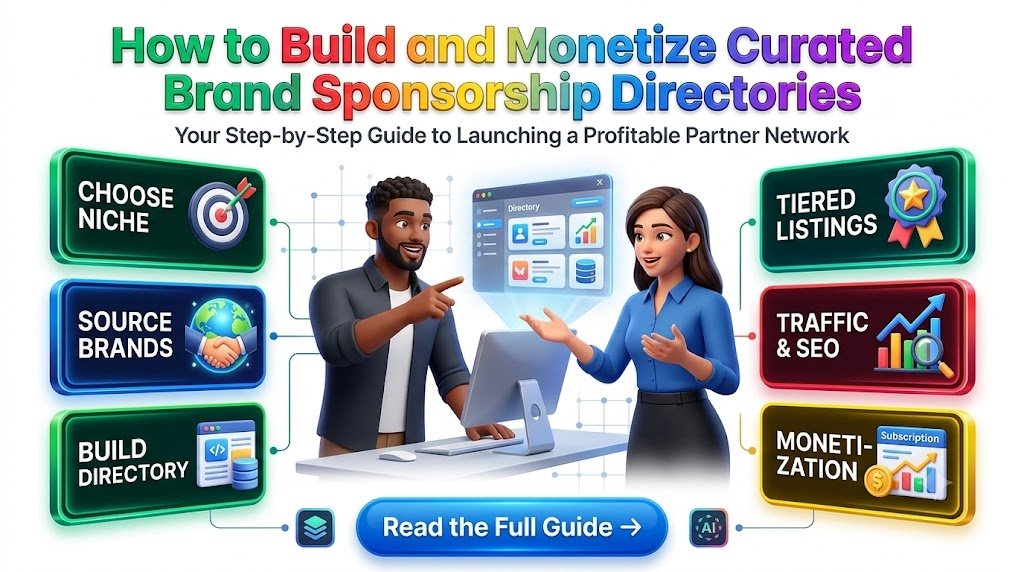
Turn publicly available brand partnership information into a valuable digital product that helps creators find relevant sponsors, pitch confidently, and spend less time searching for opportunities.
Imagine being a YouTuber with 12,000 subscribers, a fitness creator with 8,000 Instagram followers, or a podcaster with a small but loyal audience. You create valuable content, your audience trusts your recommendations, and you know brand sponsorships could become an important revenue stream.
But there is one frustrating problem.
You don’t know which brands to approach, who handles partnerships, or where to send your pitch.
You spend hours searching company websites, checking social media profiles, and guessing whether a brand works with smaller creators. By the time you find a few promising opportunities, you’ve already lost an afternoon.
Now imagine someone offering you a professionally organized database containing 50 relevant companies, their official partnership contact channels, verified public business information, previous creator collaborations, and practical pitching guidance.
Would that save time?
Absolutely.
That simple idea creates an opportunity for digital product entrepreneurs: building and selling curated brand sponsorship directories.
Instead of selling generic contact lists, you can create niche-specific sponsorship research tools that help content creators identify suitable brands and approach them more strategically.
And because the finished product is digital, you can sell it repeatedly without manufacturing physical inventory.
In this guide, you’ll discover how to research sponsorship opportunities, build a professional brand contact database, validate demand, find your first customers, price your product, and develop a sustainable digital business.
What Is a Curated Brand Sponsorship Directory?
A curated brand sponsorship directory is an organized digital resource containing information about companies that may be suitable partners for content creators.
Unlike an ordinary list of company names, a high-quality sponsorship directory helps creators understand which brands are relevant to their audience, what kinds of partnerships those brands appear to support, and how to make an appropriate first approach.
A typical directory might contain:
- Company name, website, and industry.
- Products or services offered.
- Relevant creator niches and audience categories.
- Official partnership or influencer marketing page.
- Publicly designated sponsorship contact email, where available.
- Previous publicly documented influencer collaborations.
- Geographic market and eligibility requirements.
- Affiliate, ambassador, gifting, or paid collaboration opportunities.
- Source links, verification dates, and research notes.
The key selling point isn’t simply the information.
It’s the research, organization, relevance, and time your customer saves.
For example, a creator searching for wellness sponsorships doesn’t necessarily need a database of 10,000 random businesses.
A carefully researched directory of 50 wellness brands with genuinely relevant partnership channels could be far more useful.
The narrower and more relevant the database, the easier it becomes to explain its value.
Why Creators Need Better Brand Sponsorship Research
Small and mid-sized creators often face a different challenge from established influencers.
Larger creators may receive inbound brand inquiries, work with talent managers, or have existing agency relationships. Smaller creators frequently need to identify and approach potential sponsors themselves.
That requires several separate tasks.
First, they must identify companies whose products match their audience.
Next, they must determine whether those companies have worked with creators before.
Then they need to find appropriate business contact channels, understand the brand’s positioning, and prepare personalized partnership proposals.
Finally, they must track their outreach and follow up professionally.
Each step creates friction.
A curated sponsorship directory reduces that friction by turning scattered information into a structured research resource.
The Real Product Is a Shortcut to Relevant Opportunities
Think about two different products.
Product A offers 1,000 unverified company email addresses.
Product B offers 50 carefully researched potential sponsors for fitness creators, including public partnership contacts, campaign examples, geographic relevance, and suggested pitch angles.
Product B may be smaller, but it offers a clearer path from information to action.
Its commercial value comes from helping customers answer three important questions:
Which brands should I contact? Why would they be interested in my audience? How should I approach them?
When your digital product answers those questions effectively, it becomes more than a spreadsheet.
It becomes a practical creator sponsorship research toolkit.
Step 1: Choose a Profitable Creator Niche
One of the biggest mistakes new directory sellers make is trying to serve every kind of influencer.
A universal brand sponsorship database sounds attractive, but broad databases are difficult to maintain and often fail to address specific creator needs.
A more practical strategy is to start with one audience category.
Promising Niches for Sponsorship Directories
| Creator niche | Potential sponsor categories | Directory opportunity |
|---|---|---|
| Fitness creators | Workout apps, activewear, fitness equipment | Fitness brand partnership research kit |
| Gaming creators | Indie game studios, gaming accessories, gaming software | Gaming sponsorship opportunity directory |
| Beauty influencers | Skincare, cosmetics, beauty tools | Beauty creator collaboration database |
| Travel bloggers | Travel accessories, booking services, luggage brands | Travel sponsorship prospect list |
| Tech YouTubers | Software, productivity applications, hardware accessories | Tech creator brand partnership directory |
| Parenting creators | Educational products, family services, children’s activities | Family-friendly brand research database |
| Food creators | Kitchen equipment, cooking products, meal services | Food and cooking sponsorship directory |
| Book reviewers | Reading applications, book subscriptions, publishers | Book creator partnership research kit |
| Podcasters | Audio software, microphones, productivity tools | Podcast sponsorship prospect directory |
| Wellness creators | Meditation apps, wellness products, lifestyle services | Wellness collaboration research database |
These are potential markets to validate, not verified rankings of current demand.
How to Identify a Niche That Could Generate Sales
Start by researching creator communities rather than immediately collecting company details.
Explore relevant discussions on Reddit, YouTube, Discord communities, creator forums, and professional social networks.
Look for recurring questions such as:
“How do small YouTubers find sponsors?”
“Where can I find brands that work with micro-influencers?”
“How do I contact companies for Instagram collaborations?”
“Can I get brand deals with fewer than 10,000 followers?”
“Which companies sponsor niche podcasts?”
These questions reveal problems that your directory could help solve.
Pay particular attention to people who have already tried finding sponsors and explain why the process was difficult.
That information can influence everything from your database structure to your product description.
A useful rule: Choose a niche where creators have specific sponsorship needs, brands have identifiable official contact channels, and buyers can understand the value of your research immediately.
Step 2: Research 50 Relevant Sponsorship Prospects
Once you’ve selected your niche, begin building your first directory.
For example, suppose you choose independent gaming creators.
Your product could be called:
The Indie Gaming Creator Sponsorship Research Kit — 50 Brand Prospects and Partnership Resources
The goal is to identify 50 genuinely relevant companies, not simply collect the first 50 names appearing in search results.
Where to Find Potential Sponsor Companies
Start with company websites and official partnership pages.
Look for sections titled Partnerships, Creator Program, Ambassador Program, Affiliates, Press, or Business Inquiries.
Other useful research sources include:
- Brands publicly sponsoring creators in your selected niche.
- Official influencer or affiliate program directories.
- Company press releases announcing creator campaigns.
- Product launch announcements.
- Public business partnership forms.
- Company-sponsored creator events.
- Publicly published campaign or collaboration information.
You can also study videos and posts containing clearly labeled sponsorships to discover which types of companies have previously invested in creator marketing.
However, previous sponsorship activity does not prove that a company is currently accepting proposals.
Your database should distinguish between confirmed open programs, historical sponsorship activity, and research prospects.
Use Relevant Search Queries
Try searches such as:
- “fitness app creator partnership program”
- “indie game publisher influencer program”
- “skincare brand ambassador application”
- “software company YouTube sponsorship”
- “podcast advertising brand partnership”
- “travel brand creator collaboration application”
Check the official company source before adding information.
Avoid assuming that a search result, directory listing, or old blog post represents an active opportunity.
Prioritize Official Business Contact Channels
For privacy and reliability, prioritize publicly designated partnership addresses, contact forms, and official business inquiry channels.
For example, a brand might publish a role-based address such as partnerships@example.com or provide an influencer application form.
Do not guess employees’ email addresses, purchase leaked databases, or collect personal contact details from unrelated sources.
A publicly visible employee address is not automatically authorized for resale or unrestricted marketing use.
Build your directory around business opportunities rather than personal information.
Step 3: Create a Professional Sponsorship Database
Your product should feel organized enough to be useful immediately after purchase.
You can build the first version with Google Sheets, Microsoft Excel, Airtable, or a similar database tool.
Google Sheets is particularly convenient for a beginner-friendly product because customers can filter entries, add notes, and track outreach without learning specialized software.
Recommended Database Structure
| Column | Information to include |
|---|---|
| Brand name | Official company or product name |
| Category | Gaming, beauty, wellness, technology, etc. |
| Website | Official brand website |
| Audience fit | Creators or audiences the product may suit |
| Partnership contact | Official public business email or contact form |
| Program type | Affiliate, ambassador, paid sponsorship, gifting, or unknown |
| Evidence | Source for the relevant partnership information |
| Status | Open program, historical collaboration, or unconfirmed prospect |
| Region | Geographic availability or restrictions |
| Pitch opportunity | Suggested collaboration angle |
| Last verified | Date the information was checked |
| Notes | Requirements, limitations, or research observations |
An especially valuable addition is a confidence or verification label.
You could use three categories:
Verified Program: An official source currently describes a relevant partnership or application opportunity.
Documented Partnership History: The brand has publicly collaborated with creators, but current availability is unconfirmed.
Potential Prospect: The brand appears commercially relevant, but no active creator sponsorship opportunity has been verified.
This approach makes your directory substantially more transparent than a generic lead list.
Make the Spreadsheet Easy to Navigate
Use clear column headings, readable text, consistent date formats, filters, and a short instruction tab.
You can also include a separate outreach tracking sheet where customers can record the brands they contacted, the date, response status, and next action.
The easier it is to move from research to pitching, the more valuable your resource becomes.
Step 4: Add Features That Make Your Directory Worth Buying
A list of brand names and websites can be assembled by almost anyone.
A professional sponsorship research kit should offer additional value.
1. Sponsorship Pitch Templates
Include customizable email templates for different collaboration types.
For instance, a gaming creator might use the following approach:
Subject: Collaboration Idea for [Brand] and [Creator Channel]
Hi [Brand Partnerships Team],
I create content for an audience interested in [specific gaming category].
I’ve been researching products that would be relevant to my viewers, and I believe [Brand/Product] could be a strong fit for a future content collaboration.
My channel currently reaches [audience size], with a focus on [specific audience interests and verified engagement metrics].
I’d love to explore a partnership involving .
Would your team be open to reviewing a short collaboration proposal?
Best regards,
[Creator Name]
[Channel Link]
This template gives buyers a starting point while encouraging personalization.
2. A Simple Creator Media Kit Template
Provide a one-page media kit containing:
- Creator introduction.
- Main content categories.
- Audience demographics, when available.
- Recent reach and engagement metrics.
- Previous brand collaborations, if any.
- Contact information.
- Proposed sponsorship formats.
Creators should use accurate, current figures rather than inflated performance claims.
3. A Brand Fit Evaluation System
Help customers decide which companies deserve attention.
For example, introduce a five-factor score:
| Evaluation factor | Maximum score |
|---|---|
| Audience relevance | 5 |
| Product relevance | 5 |
| Evidence of creator partnerships | 5 |
| Geographic suitability | 5 |
| Availability of an official contact route | 5 |
| Total | 25 |
A brand scoring 22 out of 25 could be prioritized over one scoring 10.
This isn’t a prediction of sponsorship approval. It is simply a consistent decision-making framework.
4. Follow-Up and Outreach Tracker
A built-in tracker transforms a static directory into a practical workflow.
Customers can organize research, proposals, replies, and follow-ups in one place.
5. Maintenance and Verification Notes
Include the date of the latest review, links to official sources, and instructions for reporting outdated information.
This also creates a reason for customers to revisit your website or purchase updated editions.
Step 5: Package the Product for Commercial Appeal
Your directory’s presentation influences whether a potential buyer understands its value.
A plain spreadsheet may contain excellent research but look unfinished.
Consider selling a complete package with a clear product identity.
Example Product
The Creator Sponsorship Starter Kit: 50 Researched Brand Prospects for Fitness Influencers
Inside the package:
- 50 researched brand prospect profiles.
- Public official partnership contact channels where available.
- Brand research source links.
- Audience-fit notes.
- Five customizable sponsorship pitch templates.
- Creator media kit template.
- Outreach tracking spreadsheet.
- Brand-fit scoring worksheet.
- Quick-start PDF explaining how to use the directory.
The positioning should be practical and specific.
Instead of saying, “Get instant brand deals,” explain that your product helps creators discover relevant companies, organize outreach, and prepare professional proposals.
Offer Three Product Versions
You could test the following example pricing structure.
| Product | Example price | Included value |
|---|---|---|
| Starter Directory | $9 | 25 brand prospects and a basic outreach tracker |
| Creator Pro Kit | $19 | 50 brand prospects, pitch templates, and scoring tools |
| Premium Research Kit | $39 | Expanded research, templates, examples, and a clearly defined update period |
These are suggested test prices, not established market averages.
Your final pricing should reflect research quality, niche demand, verification costs, competing products, and buyer feedback.
Avoid describing updates as lifetime access unless you genuinely intend to provide and maintain that service.
Step 6: How to Target Your First Sale Within 24 Hours
Selling a brand sponsorship directory within one day is possible, but no ethical method can guarantee a sale within 24 hours.
The practical objective is to create a minimum viable product, validate genuine demand, and offer it directly to creators who have already expressed an interest in sponsorship research.
The strongest early sales strategy isn’t waiting for search engine traffic.
It’s finding a clear problem and presenting a useful solution to the right audience.
Hours 1–4: Validate the Niche
Choose a creator category and identify examples of people publicly discussing sponsorship difficulties.
Look for questions about finding brands, pitching smaller channels, or identifying relevant partnership programs.
Study the language creators use when describing their problems.
Ask a small number of interested creators whether an organized, verified resource would be useful.
Don’t assume every person discussing sponsorships is ready to buy.
Hours 4–10: Build the Minimum Viable Directory
Research an initial collection of approximately 20–25 high-quality prospects.
Verify the official business sources, record contact channels, and label current partnership availability accurately.
If the full 50-company edition is not finished, do not market it as completed.
You can sell a clearly labeled smaller starter edition or offer a transparently described preorder with a firm delivery date and appropriate refund terms.
Hours 10–14: Create the Sales Page
Build a simple product page on a suitable digital download platform or your own website.
Your page should explain the audience, contents, verification date, format, pricing, limitations, and permitted use.
Show a preview of the directory without exposing the complete paid database.
Include a straightforward purchasing option and clear support contact.
Hours 14–18: Create a Free Sample
Prepare a sample containing three to five brand prospect profiles.
This gives potential buyers an opportunity to evaluate your research quality and spreadsheet organization before making a purchase.
A sample is particularly useful when you’re selling a new digital product without existing reviews.
Hours 18–24: Reach Interested Creators
Focus on creators who have asked for recommendations or have otherwise indicated that sponsorship research would be helpful.
Where community rules permit, participate in relevant conversations and explain how to research sponsors effectively.
You can also contact prospective customers through appropriate, permission-based business channels.
A respectful message could read:
Subject: Resource for Finding Fitness Brand Partnerships
Hi [Creator Name],
I came across your content about [relevant topic] and noticed your focus on [specific niche].
I’ve developed a sponsorship research kit for fitness creators. It organizes relevant brands, official partnership channels, and outreach guidance to make sponsor research easier.
I have a free sample available if you’d like to review the format before considering the full directory.
Best,
[Your Name]
Personalize messages and avoid mass-sending identical pitches.
Do not post unsolicited promotions in communities that prohibit them.
What If No One Buys on Day One?
Use the result as research.
If people click the sales page but don’t purchase, investigate whether the price, presentation, sample quality, or product promise is creating friction.
If nobody clicks, reconsider your audience targeting or message.
If potential buyers ask for a different niche, more recent data, or additional templates, those requests provide useful direction.
Your first 24 hours should produce market feedback, even if they don’t produce revenue.
Step 7: Write a High-Converting Sales Page
A directory is not an emotionally exciting product on its own.
Customers become interested when they understand how it solves a frustrating, expensive, or time-consuming problem.
Your sales copy should connect the research to the creator’s actual workflow.
Example Sales Page Headline
Stop Guessing Which Brands to Pitch. Start With a Researched Sponsorship Prospect Directory.
Supporting Description
Discover 50 carefully researched brand prospects in your creator niche, with official partnership contact channels where available, source references, audience-fit insights, and reusable outreach tools.
Spend more of your time creating compelling partnership proposals and less time searching for relevant companies.
Buyer-Focused Benefits
Instead of emphasizing database size alone, explain the practical advantages.
Buyers can organize sponsorship research in one location, discover companies they may not have considered, prioritize relevant opportunities, and prepare more informed outreach.
A well-presented sales page should also answer important questions.
When was the data verified? Are sponsorship opportunities guaranteed? What file formats are included? Are individual employees’ personal details included? Will customers receive updates?
Answering these questions openly helps reduce purchase uncertainty.
Use a Direct Call to Action
Explore the Sponsorship Research Kit and Preview Five Brand Profiles Before Buying.
A useful preview can be more persuasive than unsupported promises about getting brand deals quickly.
Step 8: Turn Your Directory Into a Repeatable Digital Product Business
Once you’ve validated one niche, you can explore additional creator categories.
For example, a fitness directory could lead to research kits for wellness podcasters, health-focused YouTubers, lifestyle bloggers, or sports content creators.
However, expansion should follow demonstrated demand.
Don’t build ten unrelated databases before establishing whether customers value the first one.
Revenue Model 1: Individual Digital Downloads
Sell one niche-specific directory for a one-time price.
This is the simplest model for beginners because customers know exactly what they’re purchasing.
Revenue Model 2: Category Bundles
Combine complementary products.
A Creator Sponsorship Bundle could contain fitness, wellness, and lifestyle brand prospect directories, together with shared outreach templates.
The bundle should offer meaningful additional value rather than artificially inflated quantities.
Revenue Model 3: Subscription-Based Research Updates
If you can sustain ongoing verification, consider a paid membership providing periodic research updates.
Subscribers could receive new companies, updated program information, and additional pitching resources.
Recurring revenue is attractive, but subscriptions create recurring responsibilities.
Customers should understand what will be updated, how frequently, and how cancellation works.
Revenue Model 4: Personalized Research Services
Some creators may prefer research customized to their channel.
You could offer a premium service that identifies relevant brand prospects based on content category, audience location, engagement patterns, and partnership preferences.
Unlike the downloadable directory, personalized research requires additional labor and should be priced accordingly.
Revenue Model 5: Licensing Research Tools
You might also offer appropriate business licenses to creator educators, consultants, or agencies.
Clearly define permitted usage, redistribution restrictions, and whether third-party information can lawfully be shared under your intended licensing model.
Step 9: Understand the Revenue Potential
Digital directories have low physical distribution costs, but they are not automatically passive income.
Research, maintenance, customer support, platform fees, and marketing require ongoing attention.
Consider this illustrative scenario.
Suppose you sell a niche sponsorship research kit for $19.
| Monthly sales | Gross sales revenue |
|---|---|
| 10 | $190 |
| 25 | $475 |
| 50 | $950 |
| 100 | $1,900 |
| 200 | $3,800 |
These are hypothetical gross sales figures, not earnings forecasts.
Payment processing fees, marketplace commissions, refunds, taxes, advertising expenses, software subscriptions, and research costs would reduce your actual profit.
The most important question is not how large your spreadsheet can become.
It is whether customers consistently find your research accurate, relevant, and worth paying for.
That is what supports repeat purchases, referrals, and product expansion.
Step 10: Attract Organic Traffic With Search-Friendly Content
A digital directory becomes easier to sell when you also publish helpful content for the creators who might eventually purchase it.
Your blog can attract people researching sponsorship outreach, partnership programs, media kits, and influencer marketing.
Instead of publishing only product advertisements, develop articles that answer specific creator questions.
Useful topics include:
- How Small YouTubers Can Find Their First Brand Sponsor.
- How to Write a Brand Sponsorship Email That Sounds Professional.
- Where Micro-Influencers Can Research Brand Partnerships.
- How to Build a Media Kit for a Small Creator Channel.
- How to Find Official Influencer Partnership Programs.
- What Brands Look for Before Sponsoring Content Creators.
- How to Track Sponsorship Pitches Without Expensive Software.
Each article can provide standalone educational value while naturally introducing your directory where it genuinely helps.
Answer Search Questions Clearly
Search engines and AI-powered answer systems can better interpret content that directly explains concepts and answers readers’ questions.
For example:
What is a brand sponsorship directory?
A brand sponsorship directory is a structured resource that helps creators research potential brand partners, review official contact channels, and organize sponsorship outreach.
A concise answer like this can serve readers who want an immediate explanation while supporting more detailed discussion below it.
Use descriptive headings, specific examples, original research observations, and accurate terminology.
Avoid repetitive keyword placement or writing solely to manipulate rankings.
Make the Content Useful for Different Creator Markets
A sponsorship research guide can serve a global audience, but different markets have different opportunities.
A creator based in India may need partnership programs serving Indian audiences, while a United States-based creator may prioritize companies targeting US consumers.
Region-specific resources can be useful when they provide genuinely distinct information, including:
- Geographic eligibility.
- Local brand availability.
- Supported languages.
- Regional partnership programs.
- Relevant business outreach considerations.
Avoid creating nearly identical pages for dozens of cities or countries without meaningful localized research.
Improve Google Discover Readiness
Google Discover can expose useful articles to people interested in a topic even when they haven’t performed a traditional keyword search.
For a sponsorship directory article, consider an original, visually clear featured image illustrating a creator workspace, brand research database, or professional collaboration process.
Use high-quality, representative images at least 1,200 pixels wide and configure large image previews appropriately.
Write an accurate, engaging headline rather than an exaggerated promise of guaranteed sponsorship income.
Include a visible publication or update date and keep research-dependent details current.
Also ensure the article offers a good mobile reading experience, with readable headings, clear navigation, appropriately sized images, and accessible calls to action.
Google’s Discover guidance recommends large, relevant imagery and discourages misleading or sensational presentation. These practices improve readiness but cannot guarantee traffic or placement.
Use Structured Data Where Appropriate
Article or BlogPosting structured data can describe the headline, author, image, and publication details to search engines.
Ensure the information accurately matches the visible page.
Use a representative featured image in the relevant structured-data fields and og:image metadata.
Structured data may help search engines interpret your page, but it is not a shortcut to ranking.
Step 11: Turn First-Time Readers Into Returning Visitors
One of the most overlooked opportunities in digital product publishing is building a reason for readers to come back.
A person may discover your blog while learning how to find sponsors but not be ready to buy anything that day.
If your website provides ongoing value, that visitor can become a repeat reader, subscriber, or customer.
Create a Free Sponsorship Research Sample
Offer a small, useful resource such as:
5 Brand Partnership Research Examples Every Small Creator Should Study
Include examples of how to evaluate brands, identify legitimate partnership channels, and prioritize outreach.
Make sure the sample is genuinely useful without requiring a purchase.
You can invite readers to subscribe to receive updates, with clear consent and unsubscribe options.
Publish Recurring Sponsorship Research Content
Develop a consistent editorial series such as:
The Creator Partnership Research Update
Each edition might cover publicly announced creator programs, useful outreach practices, changes to official application requirements, or new research techniques.
Don’t label a brand as actively hiring influencers unless the official information supports that claim.
Build an Email-Based Learning Series
New subscribers could receive educational content on preparing media kits, researching partner companies, developing collaboration ideas, writing personalized pitches, and tracking responses.
Introduce paid products when they naturally fit the reader’s progress.
Avoid making every email a sales message.
Readers are more likely to remain engaged when your communications consistently solve real problems.
Encourage Returning Visits With a Clear Promise
A compelling invitation could be:
Finding brand partners shouldn’t require starting your research from zero. Return for practical sponsorship research guides, updated resources, and creator outreach strategies.
The goal is to establish your website as a dependable resource rather than a one-time product landing page.
Step 12: Build Trust Through Accurate, Responsible Data Practices
The quality of a sponsorship directory depends heavily on how its information is collected and maintained.
A poorly researched list can waste customers’ time and damage your reputation.
A trustworthy product should establish a consistent process for checking sources and correcting errors.
Verify Before Publishing
Review official company information and preserve relevant source URLs.
Where possible, distinguish active applications from general partnership inquiry channels.
If an opportunity cannot be verified, mark it as unconfirmed rather than presenting it as an available sponsorship.
Respect Privacy
Do not collect private emails, personal phone numbers, leaked datasets, or confidential employee information.
Use designated public business contact channels whenever possible.
Even publicly accessible personal data can be subject to privacy laws, including requirements concerning lawful processing, transparency, data minimization, and individual rights.
Keep Product Claims Accurate
Never promise that purchasing the directory will lead to sponsorship approval, guaranteed replies, or a specific income level.
A directory can help customers identify and evaluate possible opportunities.
It cannot force brands to accept proposals.
Provide a Correction Process
Give customers an easy way to report broken links, closed programs, or inaccurate details.
Remove or correct information when appropriate.
If you sell access to regular updates, explain your update policy clearly.
A sustainable directory business is built on useful research that customers can trust.
Step 13: Common Mistakes That Can Destroy Your Directory Business
Selling Quantity Instead of Quality
A 5,000-company list sounds impressive, but irrelevant entries and outdated contacts reduce its practical value.
Focus on usefulness.
Treating Every Company as an Active Sponsor
A company may be relevant to creators without having an active sponsorship program.
Use honest status labels.
Copying and Reselling Existing Databases
Commercially available information is not always free to reproduce.
Check licensing, database rights, website terms, and privacy requirements before collecting or redistributing data.
Create original research and commentary instead of simply repackaging someone else’s directory.
Ignoring Customer Experience
A confusing spreadsheet can undermine even excellent research.
Provide instructions, clear categories, consistent formatting, and a useful preview.
Promising Guaranteed Brand Deals
No contact directory can guarantee commercial partnerships.
Creators still need suitable audiences, compelling proposals, professional communication, and realistic expectations.
Neglecting Updates
Partnership pages, program requirements, and business contact channels can change.
A directory that is never maintained can quickly lose credibility.
Step 14: A Practical 30-Day Growth Strategy
Once you’ve launched your first product, use the next month to refine the directory and test a sustainable marketing process.
| Timeline | Main objective | Practical actions |
|---|---|---|
| Days 1–5 | Validate demand | Publish the starter product, share useful samples, and gather feedback |
| Days 6–10 | Improve quality | Complete research, verify entries, refine the spreadsheet, and add instructions |
| Days 11–15 | Build organic visibility | Publish helpful articles addressing sponsorship research questions |
| Days 16–20 | Improve conversion | Refine the product page, sample, pricing, and buyer FAQs |
| Days 21–25 | Build retention | Develop an opt-in email resource and a useful update format |
| Days 26–30 | Evaluate expansion | Review sales, inquiries, refunds, feedback, and demand for additional niches |
Measure indicators that actually help improve your business.
These include qualified product-page visits, preview downloads, purchase conversion rate, customer feedback, refund reasons, and repeat purchase behavior.
Don’t confuse social media impressions with paying customer demand.
A small audience of creators who genuinely need sponsorship research may be more commercially valuable than a large audience with little buying interest.
Frequently Asked Questions
1. Can I Make Money Selling Brand Sponsorship Directories?
Yes, a curated sponsorship research directory can be sold as a digital product if it provides legitimate value and the information is collected, processed, and distributed lawfully.
Potential income depends on research quality, audience demand, pricing, marketing, operating expenses, and competition.
There is no guaranteed earnings level. A successful product must save customers time or improve their ability to research relevant sponsorship opportunities.
2. How Can I Find Brands That Work With Small Creators?
Start with official creator partnership pages, ambassador programs, company websites, affiliate programs, and publicly documented sponsorship campaigns.
Look for information about audience requirements, geographic restrictions, and suitable content categories.
A brand’s past collaboration with creators can be a research signal, but it doesn’t confirm that the brand currently accepts new applications.
3. Is It Legal to Sell a List of Brand Contact Emails?
It depends on the data, the collection method, applicable laws, and how the information will be used.
Officially published role-based business contact channels may present fewer privacy concerns than personal employee details, but public availability alone does not guarantee unrestricted reuse.
Privacy laws, database rights, contractual restrictions, and marketing rules may apply.
The safest product design prioritizes official business inquiry channels, source transparency, data minimization, and a clear correction or removal process.
4. What Is the Best Format for a Brand Sponsorship Directory?
A searchable spreadsheet or database is often practical because buyers can filter companies, review information, and track outreach.
Google Sheets and Excel are accessible choices.
A premium product can combine a spreadsheet with a PDF instruction guide, customizable sponsorship pitches, a media kit template, and an outreach tracker.
Choose formats your intended customers can actually use.
5. Can I Get My First Sale Within 24 Hours?
A first sale within 24 hours is possible, particularly if you’ve identified genuine buyer interest and created a relevant product.
However, no strategy can guarantee a purchase.
A practical approach is to validate a specific creator problem, build a small verified directory, prepare a free preview, create a transparent sales page, and offer the resource through suitable permission-based channels.
Treat the first day as an opportunity to gather evidence of demand, not as a promise of immediate income.
Build a Sponsorship Research Product Creators Can Trust
Creators don’t necessarily need another enormous spreadsheet full of company names.
They need a reliable way to discover relevant brands, understand potential partnership opportunities, and approach sponsors with confidence.
That is where a well-researched sponsorship directory can provide meaningful value.
You don’t need to begin with thousands of contacts, expensive software, or a complicated business model.
Start with one niche.
Identify 50 relevant companies.
Verify their official partnership channels and clearly explain what is known, what is historical, and what remains unconfirmed.
Add useful pitching tools, package the information professionally, and make a sample available to interested creators.
Then improve the product based on actual buyer feedback.
As your research library grows, you can explore additional niches, premium editions, educational resources, and recurring updates.
The opportunity isn’t simply to sell information.
It’s to turn careful research into a practical resource that helps creators make better sponsorship decisions.
Ready to build your first digital sponsorship product?
Choose your creator niche, research your first five brand prospects, and create a sample directory. Use that sample to validate demand before investing in a larger release.
Your next digital product doesn’t have to be complicated. It needs to solve a specific problem, present accurate information, and give customers a clear reason to trust your work.
Compliance Note
This article provides general educational and business information, not legal, financial, tax, or professional advice. Applicable laws vary by jurisdiction and business activity.
Data privacy and sourcing: Business contact information should be collected and processed lawfully. GDPR and other applicable privacy laws may apply to identifiable individuals even when their information is publicly available. Minimize personal data, document sources and lawful processing grounds where required, provide appropriate notices, respect applicable rights and objections, and avoid unauthorized scraping, leaked data, or redistribution prohibited by licensing or contractual terms.
Email marketing: Commercial outreach must comply with applicable anti-spam and electronic marketing rules. For example, the United States CAN-SPAM Act applies to business-to-business commercial email and includes requirements concerning accurate sender information, honest subject lines, postal addresses, and opt-out mechanisms. Other jurisdictions may impose additional consent requirements.
Advertising and sponsorship disclosure: Creators must comply with applicable advertising disclosure rules. In the United States, FTC guidance requires clear disclosure of material relationships such as payments, free products, or other benefits when endorsing brands.
Accuracy and commercial claims: Do not present unverified companies as confirmed sponsors. Do not guarantee sponsorship acceptance, brand replies, customer sales, income, search engine rankings, or Google Discover exposure.
Intellectual property: Respect database rights, licensing restrictions, copyright, trademarks, and website terms. Compile original research and obtain permissions where necessary.
Consumer protection: Clearly disclose product contents, data verification dates, refund policies, update obligations, and any important limitations before purchase.
Platform compliance: Follow marketplace policies, community promotion rules, and social platform requirements. Avoid unsolicited bulk messaging, deceptive marketing, and spam.
Success depends on audience demand, execution, data quality, competition, and continued maintenance. Readers should consult qualified professionals for jurisdiction-specific legal or tax guidance before commercializing contact databases.
Stay ahead with exclusive updates
Join our community. Get curated industry trends, actionable guides, and fresh resources delivered straight to your inbox.