
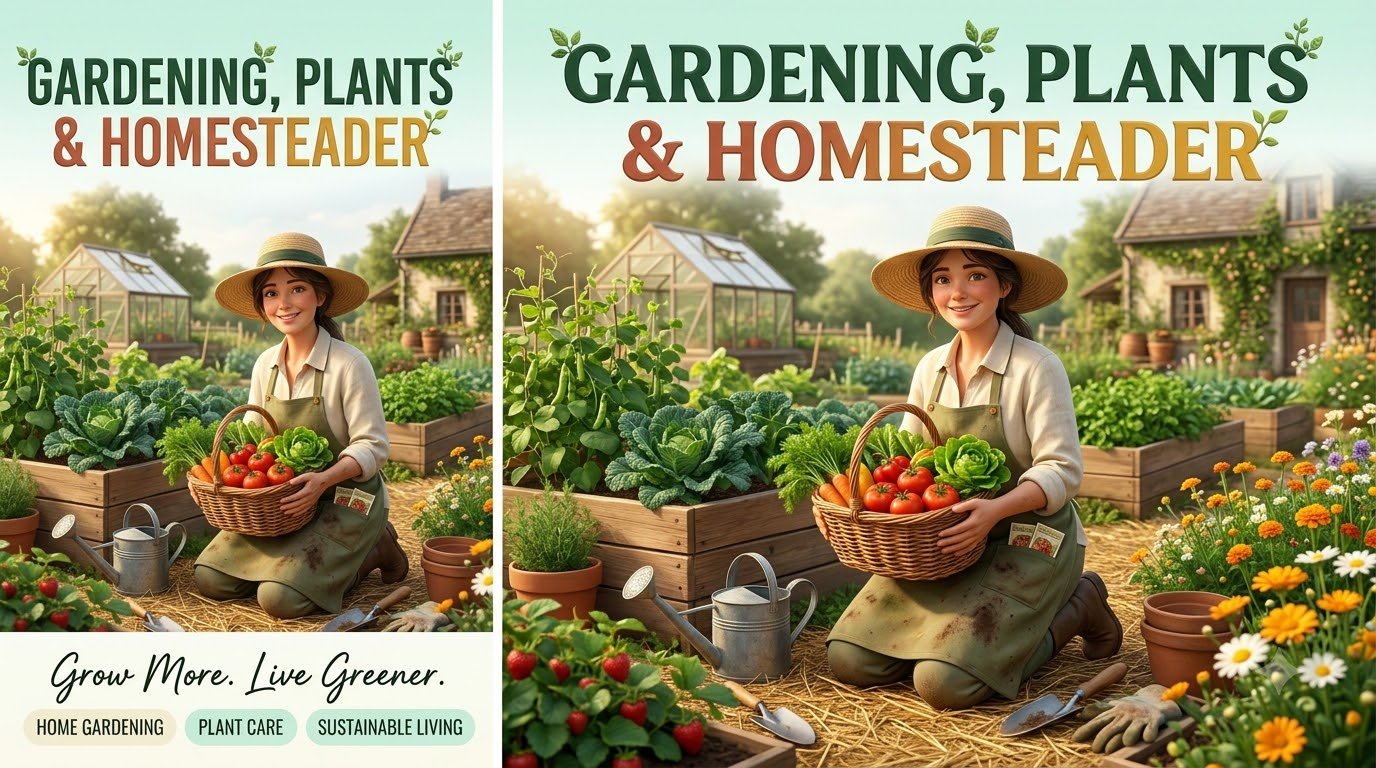
Learn how to start a home garden, grow healthy plants, improve soil, compost, save water, and build practical homesteading skills in any space.
Gardening, Plants & Homesteading
Description
Discover how to transform everyday spaces into productive, beautiful gardens while developing practical homesteading skills. From growing vegetables and caring for plants to composting, conserving water, and planning seasonal harvests, this guide introduces sustainable living methods suitable for beginners and aspiring homesteaders.
Essential Summary
Successful gardening begins with understanding local climate, USDA hardiness zones, sunlight, drainage, and soil health. Choosing suitable plants, watering according to their needs, and improving soil responsibly help create healthier growing conditions.
Sustainable practices such as composting, mulching, pollinator-friendly planting, and Integrated Pest Management support responsible garden care. Succession planting and simple garden records help improve seasonal planning and harvests.
Homesteading extends these principles through reducing household waste, conserving resources, and preserving homegrown food safely. Whether growing herbs on a balcony or managing a backyard vegetable garden, progress begins with achievable goals and consistent learning.
“A thriving garden is not measured only by its harvest, but by the knowledge, care, and sustainable habits cultivated along the way.”
Key Learning Points
- Choose plants suited to local climate and growing conditions.
- Improve soil health, watering, and garden maintenance.
- Practice composting and responsible pest management.
- Support pollinators and plan seasonal harvests.
- Build safe, practical, and sustainable homesteading habits.
From First Seed to Homegrown Harvest: The Complete Gardening, Plants & Homesteading Guide
You don’t need a farmhouse, a huge backyard, or expensive equipment to begin growing food and becoming more self-reliant. You need a little space, a practical plan, and the confidence to start.
What If Your Home Could Grow More Than Flowers?
Imagine stepping outside to gather basil for dinner, harvesting fresh lettuce from a raised bed, or watching bees visit flowers you planted yourself. These are small moments, but they can change your relationship with food, your outdoor space and the resources you use every day.
Gardening and homesteading are closely connected. Gardening teaches you to understand soil, weather and living plants. Homesteading takes those lessons further by encouraging useful skills such as composting, conserving water, reducing waste and preserving food safely.
The goal isn’t to turn every property into a working farm. It’s to create a practical system that fits your lifestyle, whether you have a sunny apartment balcony in Chicago, a suburban backyard in North Carolina, or a small rural property in Oregon.
This guide covers the steps that matter most, the mistakes worth avoiding, and the gardening supplies that may be worth buying.
How do you start a home garden successfully?
Start by measuring your available sunlight, identifying your climate and growing season, choosing a manageable planting space, and testing garden soil when appropriate. Select a few crops suited to those conditions, provide suitable water and drainage, monitor pests, and keep notes. Expand only after learning what grows reliably in your location.
The principle: Start smaller than you think you need, learn from each growing season, and build a garden you can maintain consistently.
1. Gardening vs. Homesteading: What’s the Difference?
People often use the terms interchangeably, but they describe overlapping activities rather than identical lifestyles.
Gardening focuses on cultivating plants for food, beauty, wildlife habitat, or enjoyment. Homesteading is a broader lifestyle involving the production, conservation and practical management of household resources.
A modern homesteader might grow vegetables, maintain a compost bin, preserve a seasonal harvest, collect rainwater where permitted, or keep chickens where local regulations allow. None of those activities requires owning a traditional farm.
Better Plants, Better Spaces
- Vegetable and herb cultivation
- Flower and pollinator gardens
- Indoor plant care
- Raised beds and container gardening
Practical Household Resilience
- Producing some household food
- Composting organic materials
- Responsible water conservation
- Safe food storage and preservation
2. Choose a Gardening Style That Fits Your Life
Don’t copy a beautiful garden from social media without considering the conditions that made it possible. A productive garden should match your schedule, local climate, physical needs, and available space.
Select a gardening style below to see how to begin.
Small-Space Gardening
Best for: Renters, apartment residents, beginners and people with limited outdoor space.
Start with a few containers that have drainage holes. Choose a high-quality container potting mix rather than compacted garden soil. Match pot size to the mature plant and keep an eye on moisture because containers may dry quickly in heat and wind.
Useful plants: Parsley, chives, compact lettuce varieties, basil in warm conditions, and patio tomatoes in a suitably large container.
First upgrade: A sturdy watering can or a moisture-checking routine.
Raised Bed Vegetable Gardening
Best for: Suburban households, gardeners seeking organized planting areas, or sites where native soil is unsuitable for cultivation.
Place beds where crops receive the sunlight they need, provide appropriate soil and drainage, and ensure you can comfortably reach the middle without stepping on the growing area.
Useful plants: Lettuce, radishes, bush beans, kale, peppers and tomatoes, according to season.
First upgrade: Mulch or a simple drip irrigation system.
Productive Backyard Homesteading
Best for: Households interested in building a collection of connected, sustainable living skills.
Divide your space into useful zones: a vegetable garden, a small composting area, herbs near the kitchen, pollinator habitat, tool storage, and a possible food-processing workspace inside the home.
Useful projects: Successive vegetable plantings, perennial crops suited to your region, composting and safe harvest preservation.
First upgrade: A garden planning calendar and organized recordkeeping system.
3. Understand Your USDA Growing Zone Before Buying Plants
One of the most useful resources for American gardeners is the USDA Plant Hardiness Zone Map. The current official edition, published in 2023, groups locations according to their average annual extreme minimum winter temperatures.
That information is especially helpful when choosing perennial flowers, shrubs and fruit plants that must survive winter outdoors.
However, a hardiness zone does not tell you everything about vegetable planting. You must also understand your local last spring frost, first fall frost, summer heat, rainfall, soil conditions and microclimate.
🌎 Your Climate Checklist
- Find your USDA hardiness zone using your ZIP code.
- Check local frost dates and the current weather forecast.
- Observe how many hours of direct sunlight reach each growing area.
- Identify whether your site is windy, shaded, humid or unusually dry.
- Look for local Cooperative Extension planting recommendations.
Official tool: USDA Plant Hardiness Zone Map
What About Fall Gardening in 2026?
October is a useful time to evaluate the garden, but it isn’t the same growing season everywhere in the United States. Many northern gardens are approaching or experiencing frost, while parts of the South may still support suitable cool-season crops. Some coastal, desert and subtropical areas have very different planting calendars.
If you’re planting in autumn, compare each crop’s days to maturity with your local frost expectations. In colder climates, use the season to improve beds, protect soil and prepare for spring. Never assume a crop described as cold-tolerant will continue growing rapidly through short winter days.
4. The Best Beginner-Friendly Plants to Grow
Start by growing food your household actually eats. A large harvest of an unpopular vegetable is less valuable than a modest harvest you’ll use every week.
| Plant | Best Conditions | Beginner Advantage | Important Tip |
|---|---|---|---|
| 🥬 Leaf Lettuce | Cooler growing weather | Fits beds and many containers | Protect from excessive heat; choose suitable varieties. |
| 🌶️ Radishes | Cool seasons, loose soil | Many varieties mature relatively quickly | Thin crowded seedlings. |
| 🫘 Bush Beans | Warm, frost-free conditions | Compact and productive | Wait for sufficiently warm soil. |
| 🍅 Tomatoes | Full sun and warm weather | Rewarding harvest for regular care | Choose an appropriate variety and provide support. |
| 🌿 Basil | Warm weather, adequate sunlight | Useful for frequent kitchen harvesting | Protect from cold temperatures. |
| 🌼 Native Flowers | Species-specific conditions | Can support local pollinators | Select species native to your region. |
For a first garden, two vegetables, one herb and a few locally appropriate flowering plants can be more manageable than twenty different crops.
5. Build Healthy Soil Before You Focus on Fertilizer
Healthy plant growth begins below the surface. Soil holds water, supplies mineral nutrients, allows roots to breathe and supports biological activity.
A common beginner mistake is adding fertilizer whenever a plant looks unhealthy. But yellow leaves or slow growth can result from poor drainage, pests, insufficient sunlight, root damage or inappropriate watering—not just nutrient deficiency.
Simple Steps for Better Garden Soil
- Test before amending: Contact a university Extension soil-testing laboratory for local instructions.
- Improve structure: Add appropriate, finished compost when it benefits the soil.
- Protect the surface: Organic mulch can moderate moisture changes and reduce bare-soil exposure.
- Reduce compaction: Avoid walking on planting beds, especially when the soil is wet.
- Watch drainage: Soil that remains saturated can create problems for roots.
6. Watering Plants: More Isn’t Always Better
Plants need water, but consistently saturated roots can be as troublesome as prolonged drought. The correct schedule depends on soil texture, plant type, temperature, rainfall and whether the plant is growing in a container or in the ground.
Instead of watering every plant on an identical timetable, check the soil and observe its response.
What Works Better?
- Check soil moisture before watering.
- Water near the root zone where practical.
- Prefer morning watering when suitable.
- Use mulch to reduce soil moisture loss.
Common Watering Problems
- Watering automatically without checking.
- Using containers without proper drainage.
- Allowing seedlings to dry out completely.
- Assuming wilt always means underwatering.
The University of Minnesota Extension recommends watering at the base of plants where practical, using drip or soaker irrigation, and applying organic mulch to conserve moisture. Established beds often benefit from deep watering rather than frequent shallow surface watering, although seedlings and containers may require different treatment.
Smart purchase consideration: A basic soaker hose may be more valuable than an expensive smart irrigation controller for a small home garden.
7. Composting: Turn Kitchen and Yard Waste Into a Useful Resource
Composting is one of the most practical connections between gardening and homesteading. It involves the controlled biological breakdown of organic materials into a stable soil amendment.
A well-managed compost system uses carbon-rich materials, nitrogen-rich materials, moisture and oxygen.
| Compost Material | Examples | How to Use It |
|---|---|---|
| 🍂 Browns | Dry leaves, shredded plain cardboard, untreated woody materials | Provide carbon and help maintain airflow. |
| 🥦 Greens | Fruit and vegetable scraps, fresh grass clippings, coffee grounds | Provide nitrogen-rich inputs for decomposition. |
| 💦 Moisture | Water, as required | Keep the mixture approximately as moist as a wrung-out sponge. |
| 🌬️ Air | Turning and suitable material structure | Help maintain oxygen for aerobic decomposition. |
The U.S. Environmental Protection Agency recommends roughly two to three times as much brown material by volume as green material for typical backyard composting. Food scraps should be covered with brown materials, and the pile should be monitored for moisture and odor.
For a conventional backyard system, avoid adding meat, dairy, grease, pet waste, pesticide-contaminated materials, or diseased plant material that your system cannot safely process.
Finished compost should be dark, crumbly, earthy-smelling and sufficiently decomposed. Composting time varies with management and conditions.
🍃 A Better Homesteading Habit
Before purchasing a compost tumbler, decide where the finished compost will be used and whether your household can maintain the system. An affordable stationary bin may be enough for a small garden.
8. Keep Plants Healthy With Integrated Pest Management
Finding an insect on your plant doesn’t automatically mean you have a serious pest problem. Some insects are predators, pollinators or otherwise important members of the garden ecosystem.
Integrated Pest Management (IPM) is a decision-making approach based on observation, proper identification, prevention, and using suitable controls only when they are needed.
Observe Before Taking Action
Check leaf undersides, new growth, stems and soil conditions. Look for both plant damage and beneficial insects.
Identify the Actual Problem
Separate insect injury from fungal disease, nutrient issues, heat stress and watering problems. Use credible Extension diagnostic resources where necessary.
Choose the Least Disruptive Effective Response
Depending on the problem, improve airflow, remove affected material, use barriers, hand-pick pests, or adjust watering. If a pesticide becomes necessary, use a product legally labeled for the crop and pest and follow its instructions.
Check Whether Your Response Worked
Monitor new growth rather than treating every imperfect leaf. Record recurring problems so you can prevent them next season.
Encouraging beneficial insects and using regionally suitable native plants can support biodiversity. However, no single plant combination guarantees pest-free crops, and the term “natural” does not automatically mean a substance is safe.
9. Create a Pollinator-Friendly Garden
A productive home garden can provide more than food for the household. Thoughtfully selected flowering plants can also offer nectar, pollen and habitat for local wildlife.
Pollinator habitat is most useful when flowering resources are available across the growing season, rather than during only one short period.
- Choose native flowering species suited to your state or ecological region.
- Combine plants with different bloom periods and flower structures.
- Provide habitat as well as flowers, including suitable nesting areas.
- Reduce unnecessary pesticide applications and protect beneficial insects.
- Check whether plants are invasive or restricted in your area before buying them.
Many flowers are marketed as pollinator-friendly, but local suitability matters more than the marketing label. Consult regional native-plant societies, USDA resources, or a Cooperative Extension office before creating a planting list.
10. Indoor Plants: Bring Your Gardening Skills Inside
Indoor plant care has much in common with outdoor gardening, but light, airflow and moisture behave differently inside a home.
Before choosing a houseplant, consider window orientation, available natural light, temperature changes, container drainage and whether children or pets could reach the plant.
☀️ Light Comes First
Place plants according to their species-specific light requirements. A bright-looking room isn’t always bright enough for demanding plants.
🪴 Drainage Is Essential
Use an appropriate potting medium and containers that allow excess water to drain.
🌡️ Watch Indoor Conditions
Heating, cooling, dry indoor air and cold windows can all affect plant health.
🐾 Verify Plant Safety
Some popular houseplants are toxic to pets or people. Check reliable plant-safety references before purchasing.
11. Grow Food More Efficiently With Succession Planting
Imagine harvesting all your lettuce in one week and having none left the next. Succession planting helps solve that scheduling problem by spreading harvests across time.
Depending on your climate and crop, you can plant small batches at suitable intervals, use varieties with different maturity dates, or grow a second crop after the first is harvested.
For example, a gardener might grow a cool-season crop early in the year and replace it with an appropriate warm-season crop later. A different gardener may plant small amounts of lettuce at intervals during cool weather.
Check seed packets, growth requirements, local frost dates and seasonal daylight before choosing the next planting date.
🗓️ The Garden Journal Advantage
A notebook or digital garden planner can become one of your most valuable tools. Record planting dates, varieties, weather problems, pest observations, harvest amounts and what you’d change next time.
After several growing seasons, those records can help you make decisions based on your actual conditions instead of generic internet advice.
12. Homesteading Beyond the Vegetable Garden
Once you can maintain a small productive garden, you may want to explore additional home-based skills. The key is to develop them one at a time without taking on more daily work than your household can support.
| Homesteading Skill | Starting Approach | Important Consideration |
|---|---|---|
| Food preservation | Begin with appropriate freezing and drying methods. | For canning, use current research-tested recipes and processing directions. |
| Rainwater collection | Explore permitted rain barrel systems and safe storage. | Local laws, water quality and mosquito prevention matter. |
| Backyard chickens | Research care, feed, sanitation and housing first. | Check zoning, animal welfare and disease-control requirements. |
| Perennial crops | Consider locally suitable berries, herbs or fruit plants. | Account for climate, pollination, mature size and long-term care. |
| Home composting | Use a modest backyard or worm compost system. | Maintain safe inputs and discourage rodents. |
Can You Preserve Your Own Harvest?
Yes, but food preservation requires careful attention to safety. Freezing is a practical entry point for many vegetables and herbs, provided appropriate preparation and storage procedures are followed.
Home canning deserves particular caution. Low-acid foods can support dangerous bacteria if improperly processed. Never invent canning times, change critical ingredient proportions, or assume boiling-water canning is suitable for every food.
The National Center for Home Food Preservation provides tested preservation guidance.
13. Essential Gardening Tools: Buy What You Need, Not Everything Advertised
The best beginner gardening tools solve recurring problems. They don’t have to be the most expensive products in a catalog.
| Tool or Supply | Why It Helps | Buying Priority |
|---|---|---|
| Hand trowel | Planting and small-scale soil work | High |
| Watering can or hose | Reliable irrigation | High |
| Suitable growing medium | Supports roots in containers or prepared beds | High |
| Pruning shears | Harvesting and appropriate pruning | Medium |
| Mulch | Soil protection and moisture management | Medium |
| Soaker hose or drip kit | Efficient root-zone watering | Situation-dependent |
| Garden planning template | Tracks planting and harvest decisions | Useful optional tool |
| Greenhouse or cold frame | Season extension in suitable conditions | Advanced or climate-dependent |
Before purchasing: Compare material quality, replacement-part availability, local climate suitability, maintenance requirements and total cost. Product reviews are more useful when they explain the conditions under which an item was tested.
Build Your Garden Around a Plan, Not a Shopping Cart
Before buying seeds, planters, garden accessories or digital templates, identify your growing conditions and the three biggest problems you want to solve.
Explore the 30-Day Plan → Explore Digital Resources →Review each product’s specifications, pricing, availability and suitability before purchase.
14. Common Gardening Problems and How to Respond
Even experienced gardeners lose plants or experience disappointing harvests. The useful question is not simply what went wrong, but what information the problem gives you for the next planting.
| Problem | Possible Explanation | First Action |
|---|---|---|
| Yellowing leaves | Water stress, nutrient issues, aging leaves or pests | Check moisture, roots, light and leaf patterns before treating. |
| Seedlings falling over | Damping-off disease or weak growing conditions | Review sanitation, airflow, moisture and growing media. |
| Flowers but little fruit | Temperature stress, pollination problems or other growing factors | Identify the crop and inspect its flowering conditions. |
| Brown leaf edges | Water stress, excess salts, root damage or environmental exposure | Review soil moisture, fertilizer use and local conditions. |
| Holes in leaves | Chewing insects, slugs or other causes | Inspect plants and identify the source before applying controls. |
| Slow growth | Cold soil, insufficient light, root restriction or nutrient imbalance | Check temperature, light, roots and soil-test information. |
15. Your 30-Day Beginner Gardening & Homesteading Plan
You don’t need to transform your home in a weekend. Use the next thirty days to create a manageable foundation.
Understand Your Growing Space
- Identify your USDA zone and local seasonal conditions.
- Observe sunlight and access to water.
- Select containers or one manageable garden bed.
- Choose a small number of locally suitable plants.
Set Up Your Garden
- Obtain appropriate growing media or test existing soil.
- Prepare drainage and watering arrangements.
- Purchase seeds or plants appropriate to the season.
- Set up a basic garden journal.
Build Daily Gardening Habits
- Plant according to packet instructions and local conditions.
- Monitor soil moisture and seedling development.
- Inspect leaves for pests and disease symptoms.
- Start a small composting project if practical.
Review and Adjust
- Photograph plant growth and note changes.
- Adjust watering or light exposure when evidence supports it.
- Identify one useful improvement for the following month.
- Plan a future harvest or next-season crop.
🌟 Your First Month’s Real Success Metric
Don’t measure success only by how many pounds of food you harvested. A newly planted garden may not produce any ripe food during its first month.
Better early milestones include maintaining healthy seedlings, learning your soil’s watering needs, identifying suitable plants, and creating a routine you’ll actually continue.
16. Can Home Gardening Save Money?
Sometimes, especially when a household grows frequently used crops efficiently and continues using its tools and growing space over multiple seasons. But gardening also involves real costs for soil, water, seeds, infrastructure, maintenance and time.
A home garden shouldn’t automatically be described as cheaper than grocery shopping. A small herb garden may provide practical value, while a heavily equipped greenhouse may require substantial investment before it produces any food.
To evaluate your own results, track:
- Initial setup costs and recurring expenses.
- Harvest quantities actually eaten or preserved.
- Store prices for reasonably comparable produce.
- Water, supplies and equipment replacement needs.
- Personal benefits such as enjoyment and learning.
The strongest strategy is to buy equipment based on genuine recurring needs rather than assuming every gardening purchase will pay for itself.
17. Five Frequently Asked Gardening & Homesteading Questions
1. What is the easiest garden for a complete beginner?
A few well-drained containers or one small garden bed are often easiest to manage. Choose plants suited to your sunlight, climate and season, and start with a modest number of varieties.
2. Can I start homesteading without owning land?
Yes. Container gardening, food-waste reduction, home composting where permitted, safe food preservation, and household resource conservation are all practical homesteading activities for people with limited space.
3. How often should I water my vegetable garden?
There is no universal schedule. Watering frequency depends on plant needs, growing medium, root depth, rainfall, heat and wind. Check soil moisture and irrigate the root zone as needed.
4. Is organic gardening completely pesticide-free?
Not necessarily. Organic production may permit certain pest-control substances, subject to applicable standards and product labeling. Responsible gardening prioritizes prevention, monitoring and appropriate controls, regardless of marketing terminology.
5. What gardening investment is most useful for beginners?
Good growing conditions matter more than expensive equipment. Appropriate containers or prepared soil, suitable seeds or plants, reliable watering equipment, and a simple planning system are useful starting points.
18. Test Your Knowledge: Five Interactive Gardening Flashcards
Try answering each question before expanding the card. Select a question to reveal its correct answer and explanation.
Flashcard 1: What does the USDA Plant Hardiness Zone Map primarily describe?
A. Annual rainfall totals
B. Average annual extreme minimum winter temperatures
C. Daily sunlight hours
D. The exact last frost date
🌱 Tap to reveal answer
Correct: B. USDA hardiness zones help gardeners estimate perennial winter survival. They do not replace local frost calendars or seasonal growing information.
Flashcard 2: Which choice is appropriate for a typical backyard compost pile?
A. Pet waste and cat litter
B. Greasy food scraps
C. Dry leaves and vegetable scraps
D. Painted and treated wood
🍂 Tap to reveal answer
Correct: C. Dry leaves provide carbon-rich material, while vegetable scraps contribute nitrogen-rich inputs. The compost system also needs moisture and oxygen.
Flashcard 3: What is usually the best first response to an unidentified insect?
A. Immediately spray every plant
B. Remove all flowers
C. Identify the organism and assess damage
D. Add fertilizer
🐞 Tap to reveal answer
Correct: C. Integrated Pest Management emphasizes observation and diagnosis before choosing a control method.
Flashcard 4: What is succession planting?
A. Growing every crop at the same time
B. Scheduling plantings to spread harvests
C. Watering only after harvest
D. Growing flowers without vegetables
📅 Tap to reveal answer
Correct: B. Succession planting uses timing, crop changes or different maturity dates to support harvests across a longer period.
Flashcard 5: Which action is safest when learning home canning?
A. Invent your own processing time
B. Use any viral social media recipe
C. Assume every vegetable can be boiling-water canned
D. Follow current research-tested preservation instructions
🥫 Tap to reveal answer
Correct: D. Tested recipes and correct processing methods reduce the risk of serious foodborne illness, including botulism.
19. How to Make Gardening a Habit That Lasts
Gardening becomes easier when it’s connected to ordinary daily life instead of treated as a major weekend project.
For example, checking the garden while drinking morning coffee can become a simple observation habit. Keeping harvesting scissors near the kitchen can encourage regular use of fresh herbs. Setting aside one regular day for recording progress can help you notice seasonal patterns.
You can also make the experience more engaging by documenting one small experiment each month: compare two mulch methods, grow two varieties of the same herb, or track how a container performs in different locations.
Keep each experiment simple enough that you can understand the result. Comparing numerous changing conditions at once makes it difficult to identify what helped.
20. Build a Garden That Fits Your Real Life
The most rewarding garden isn’t necessarily the largest, the most expensive or the most photogenic. It’s the one you can care for, learn from and enjoy.
Begin with your space. Learn your growing conditions. Choose plants you genuinely want. Improve your soil, water thoughtfully, welcome beneficial wildlife, and expand your homesteading skills only when you’re ready.
Over time, a few containers can develop into a raised bed, a composting habit can improve your soil, and a garden journal can become a useful record of local growing experience.
Every season offers another opportunity to make better decisions. Start with what you have and allow your garden to grow with your knowledge.
Your Next Garden Starts With One Practical Decision
Save this guide, revisit the planning steps before your next growing season, and explore tools or learning resources that address the challenges you’ve identified.
Review Essential Garden Tools → Browse More Digital Resources →Have a garden success story or a question about your first growing season? Share it in the comments to help other readers learn.
Sources & Further Learning
Use these authoritative U.S. educational resources for local recommendations, technical guidance and safety information.
- USDA Agricultural Research Service — Plant Hardiness Zone Map. Official guidance on perennial winter hardiness and ZIP-code zone identification.
- U.S. Environmental Protection Agency — Composting at Home. Backyard compost ingredients, management and safety guidance.
- University of Minnesota Extension — Water Wisely. Practical watering and water conservation recommendations.
- Oregon State University Extension — Succession Planting. Growing crops in sequences for a longer harvest period.
- Penn State Extension — Steps to Controlling Insect Pests in the Garden. Observation, diagnosis and integrated pest-management decisions.
- USDA Natural Resources Conservation Service — Insects and Pollinators. Pollinator importance and ecological resources.
- ATSDR — Soil, Gardening, and Your Health. Soil contaminants, lead awareness and safer gardening.
- National Center for Home Food Preservation. Research-based food preservation and canning safety.
⚖️ Editorial, Safety & Commercial Compliance Note
Educational information: This article provides general gardening, plant-care and homesteading education for U.S. readers. Recommendations depend on climate, soil conditions, plant species, local regulations and individual circumstances. Consult your local Cooperative Extension office or another qualified specialist for location-specific advice.
Safety: Test potentially contaminated soil appropriately before growing food. Follow all pesticide labels and relevant state and federal rules. Use research-tested food-preservation instructions. Check local rules before keeping livestock, collecting rainwater, building structures, or selling food and plants.
Commercial transparency: Product mentions are educational, not guarantees of performance. If affiliate or sponsored links are added, display a clear, accurate disclosure near the relevant recommendations in accordance with applicable advertising requirements. Do not publish fabricated reviews or unsupported product-testing claims.
Results: Plant growth, yields, expenses and potential savings vary. No harvest, income, savings or search-ranking outcome is guaranteed. The article does not replace professional agricultural, legal, environmental or food-safety advice.
Editorial integrity: Attribute the article to its actual author or editorial team. Verify links, local recommendations and material changes to referenced guidance before publication.
Editorial reference date: October 2026. Review seasonal advice and source material periodically to maintain accuracy.
Gardening & Homesteading Knowledge Quiz
Test your knowledge of plants, healthy soil, vegetable gardening, composting, sustainable living and homesteading skills.
Quiz Completed!
Congratulations, Garden Champion!
You've completed all 10 gardening and homesteading planning actions! Keep practicing your skills, observing your plants, and improving each season.
📝 Key Takeaways & Action Notes
Jot down insights, next steps, or thoughts from this post. Your notes save automatically in your browser.
- What is the #1 breakthrough insight you took away today?
- What is one concrete action you will take in the next 24 hours?
- What questions or ideas do you want to research further?
Stay ahead with exclusive updates
Join our community. Get curated industry trends, actionable guides, and fresh resources delivered straight to your inbox.