DIGITAL ART BUSINESS • PRINT-ON-DEMAND • HOME DECOR • ONLINE SELLING
Discover how to transform original digital illustrations into beautiful wall art products, launch a print-on-demand home decor business without holding inventory, and build a creative income stream that can generate sales long after your artwork is published.


Imagine creating a beautiful digital illustration once and giving it the opportunity to decorate hundreds of homes around the world.
You don’t need a printing factory, a storage warehouse, or a room full of packaging materials. You don’t even need to handle shipping labels every morning.
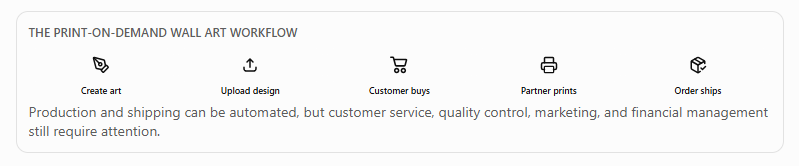
With print-on-demand (POD) wall art, your creative work can become a physical product that customers discover, purchase, and display in their homes. A printing partner produces each order when someone buys it, while you focus on creating designs, developing collections, and attracting customers.
The opportunity is attractive for digital artists, illustrators, graphic designers, creative entrepreneurs, and beginners interested in selling home decor online.
However, there’s an important distinction between uploading artwork and building a business that consistently attracts buyers.
A successful print-on-demand wall art business isn’t simply about making attractive illustrations. It’s about understanding what people want to display, creating artwork that fits their surroundings, presenting products professionally, and developing a repeatable sales system.
This guide explains how to sell art through print on demand, find profitable home decor niches, price your products realistically, and turn individual illustrations into a growing digital art business.
What Is POD Wall Art, and How Does It Work?
POD wall art is a business model in which original digital artwork is printed on physical products only after a customer places an order.
Instead of purchasing hundreds of posters upfront, you upload your artwork to a print-on-demand platform and connect it to an online marketplace or store.
When a customer orders, the printing provider manufactures and ships the product according to your fulfillment settings.
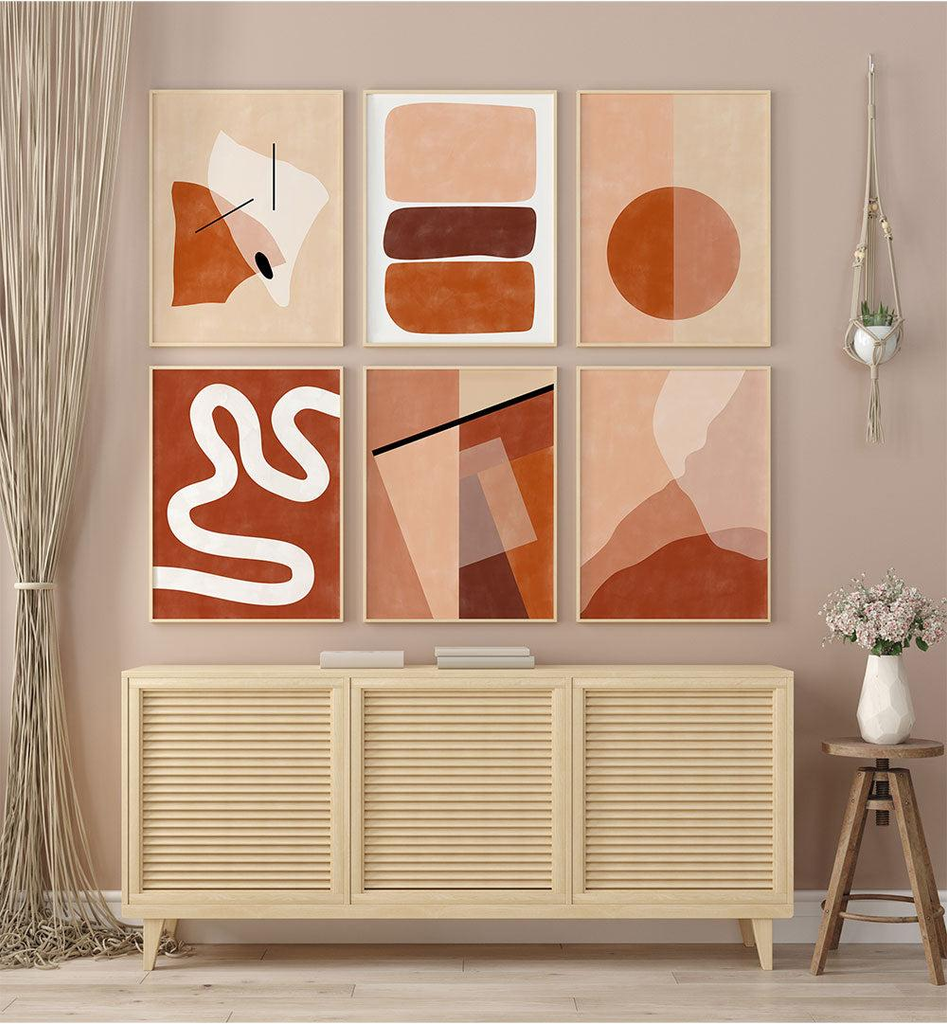
Popular products include framed posters, unframed fine-art prints, canvas wall art, coordinated gallery-wall sets, and seasonal home decor illustrations.
For example, you might design a minimalist botanical illustration featuring three delicate leaves against a warm beige background.
You could offer that same design as a small bedroom print, a larger living room poster, and a framed piece suitable for a home office.
One illustration becomes several product variations without requiring you to maintain physical inventory.
This is what makes digital illustrations for home decor commercially interesting: the original creative work can support multiple sales over time.
Why Wall Art Can Become a Long-Term Creative Income Asset
Wall art has a quality that many digital products lack: it serves both a decorative and emotional purpose.
People purchase art to make a room feel welcoming, celebrate personal interests, remember meaningful places, or create a particular atmosphere.
A customer searching for a coastal bedroom print isn’t merely looking for an image of the ocean. They may be trying to make their bedroom feel calmer.
Someone buying a personalized pet illustration may be purchasing a meaningful gift rather than simply decorating a wall.
Understanding these motivations gives independent artists an opportunity to build products around specific customer needs.
The advantages of selling POD wall art
- No bulk inventory: Artwork is printed after an order is placed.
- Lower initial financial commitment: You can test designs without investing in large printing runs.
- Multiple product variations: One original illustration can support several sizes and materials.
- International selling potential: Depending on the platform and provider, orders can be produced or shipped to customers in different regions.
- Long-term catalog value: Well-positioned evergreen artwork can remain relevant for years.
- Creative scalability: Successful themes can be expanded into matching collections.
The most important advantage is the ability to separate artistic creation from repeated physical production.
But passive income doesn’t mean guaranteed revenue. You still need to research customer demand, improve listings, monitor print quality, respond to customers, and refresh underperforming products.
A more realistic goal is to develop a low-inventory, increasingly automated creative business.
Find a Profitable Wall Art Niche Before Creating Your First Collection
One common mistake among new POD sellers is creating artwork for everyone.
A store featuring random animals, motivational quotes, abstract shapes, landscapes, and holiday designs may struggle to communicate a clear identity.
A stronger approach is to start with one recognizable audience and design style.
Instead of selling generic wall art, consider building a collection around peaceful botanical prints for modern apartments or educational animal illustrations for children’s bedrooms.
These niches give you a clearer idea of the customers you’re trying to reach.
Home decor illustration niches worth researching

1. Minimalist botanical wall art
Simple leaf drawings, wildflowers, delicate plant studies, and nature-inspired compositions can appeal to buyers seeking understated decor. Consider neutral palettes, earthy greens, and coordinated sets.

2. Abstract and geometric prints
Organic shapes, geometric compositions, modern color blocks, and textured illustrations can work well in contemporary interiors. Original composition and distinctive color combinations help establish your identity.

3. Nursery and children’s room decor
Gentle animal illustrations, alphabet-inspired educational artwork, fantasy landscapes, and pastel collections can attract parents and gift buyers. Design with age appropriateness and clear readability in mind.

4. Travel and destination illustrations
Original interpretations of cities, landscapes, architecture, and natural landmarks can appeal to travelers and people with personal connections to particular places.

5. Personalized pet and family artwork
Custom pet portraits, meaningful dates, family illustrations, and personalized home decor offer emotional value. These products usually require more hands-on work than ready-made designs but may support premium pricing.
Other worthwhile categories include kitchen and coffee-themed art, vintage-inspired florals, typography, celestial illustrations, architecture, line-drawn portraits, and seasonal gallery-wall collections.
How to validate demand without guessing
Begin by researching relevant searches on Etsy, Pinterest, and Google.
Look for evidence that shoppers are actively searching for particular styles, room types, and product formats.
Pay attention to:
- Product reviews mentioning real customer needs.
- Repeated design styles across successful-looking listings.
- Questions about size, paper finish, framing, and color.
- Search autocomplete suggestions.
- Pinterest content showing how similar art is used in rooms.
- Opportunities to create something more distinctive or useful.
Avoid assuming that a highly visible listing is automatically profitable. Popular products may also face significant competition, and publicly visible reviews don’t reveal a seller’s full costs.
A useful starting exercise is to select three niches, create two original illustrations for each, and compare their audience response before committing to a large collection.
How to Create Digital Illustrations That Look Professional When Printed
Digital wall art needs to succeed in two environments.
First, it must look attractive on a computer or smartphone screen. Second, it must retain its quality when printed at a physical size.
An illustration that looks crisp in an Instagram post can appear blurry, overly dark, or poorly balanced when enlarged for a framed poster.
That’s why preparing artwork correctly is as important as creating the original illustration.
Choose a suitable design tool
Several creative applications can help you produce original digital illustrations.

Procreate
Useful for hand-drawn illustrations, expressive brushwork, and textured artwork created on compatible iPads.

Adobe Illustrator
Particularly effective for vector-based illustrations, geometric compositions, and artwork that needs to scale cleanly.

Canva
Accessible for layout design, simple graphic compositions, and marketing mockups. Check the relevant content licenses before selling artwork made with third-party elements.

Krita
A free, open-source option for drawing, digital painting, and original artwork creation.
Your choice should depend on the artistic style you want to produce, your budget, and whether you prefer vector illustrations or raster-based artwork.
Prepare print-ready artwork
For a high-quality print, you must consider actual pixel dimensions rather than merely changing the DPI label in an image editor.
As a practical example, a 12 × 16-inch illustration printed at 300 pixels per inch would require approximately 3,600 × 4,800 pixels.
Printful’s technical guidance recommends high-resolution files, generally 150–300 DPI depending on the product, and emphasizes checking each product’s specifications. It strongly recommends 300 DPI for paper-based wall art.
Before uploading an illustration, verify that it has appropriate dimensions, a supported color profile, sufficient bleed where required, and no important elements near areas that might be cropped.
Export in the file format your provider recommends, often PNG or JPEG. Printful recommends sRGB for its print workflow. Always inspect product-specific requirements rather than assuming every wall art provider uses identical specifications.
Order a sample before promoting a design
A mockup shows how a product might look, but it cannot prove the final printing quality.
Order a physical sample to evaluate color accuracy, paper finish, illustration sharpness, border alignment, packaging, and the overall customer experience.
Sample photographs can also become valuable marketing assets because they provide more authentic evidence of the product than purely computer-generated previews.
Choosing a Print-on-Demand Supplier for Wall Art
Your fulfillment partner influences customer satisfaction, delivery times, product quality, and profitability.
Two well-known options are Printful and Printify.
Printful offers wall art printing and file preparation guidance, while Printify supports integrations with selling channels such as Etsy, Shopify, and WooCommerce.
Choosing between providers is not simply about finding the lowest printing price.
Consider whether your provider offers the paper quality your customers expect, printing locations close to target buyers, suitable frame options, reliable fulfillment, accessible customer support, and convenient store integration.
Compare suppliers using real orders
A simple evaluation method is to order the same design from two suppliers.
Compare the delivered products for physical print quality, packaging protection, shipping speed, and total landed cost.
For canvas artwork, check edge wrapping and whether important parts of the illustration disappear around the sides.
For framed posters, inspect frame construction, alignment, and protective packaging.
A provider that’s slightly more expensive but produces fewer damaged orders may be more economical over time.
Where to Sell Print-on-Demand Wall Art Online
Different platforms attract different types of customers and offer different levels of control.
| Selling channel | Main advantage | Important consideration |
|---|---|---|
| Etsy | Access to buyers searching for creative products | Marketplace fees, competition, and seller policies |
| Shopify | Greater control over store branding and customer experience | Requires audience development and marketing |
| WooCommerce | Flexible selling through a WordPress website | Hosting, maintenance, and technical responsibilities |
| Artist marketplaces | Potential exposure to art-focused shoppers | Less control over margins and customer relationships |
Etsy allows qualifying seller-designed products made with production partners, but sellers must disclose their production partners and follow the platform’s creativity standards.
For beginners, a marketplace can be useful for learning what customers search for and which designs receive attention.
As your brand grows, a dedicated online store can support a broader experience that includes collection pages, customer education, email subscriptions, and repeat-purchase offers.
The right decision depends on your capacity to attract traffic, your desired profit margin, and the amount of operational control you want.
How to Price POD Wall Art Without Sacrificing Profit
A print-on-demand business can generate orders without producing meaningful profit if its pricing ignores fulfillment charges, marketplace fees, advertising, and refunds.
Your selling price needs to cover all expected costs while leaving enough contribution to make the business worthwhile.
Consider a hypothetical framed art print priced at $39.
Example: Illustrative framed print economics
Selling price
$39.00
Estimated contribution
$12.10
Customer price
$39Print and product cost
$14Shipping cost paid by seller
$6Estimated fees
10%Marketing per order
$3
Contribution margin
31.0%
This is a hypothetical calculator, not live supplier pricing. It excludes fixed overhead, taxes, refunds, and other possible costs.
The difference between revenue and contribution matters.
For example, if a seller receives 50 orders at $39 each, total sales revenue would be $1,950. At an estimated $12.10 contribution per order, the business would retain $605 before additional operating expenses and taxes.
Those orders are not guaranteed, and actual margins depend on the specific provider, country, product, fees, and marketing costs.
Increase value with coordinated art collections
Rather than competing exclusively on price, offer customers a more complete decorating solution.
Consider selling matching pairs, coordinated sets of three, or themed gallery-wall collections.
For instance, one botanical illustration can become part of a three-piece series featuring eucalyptus, olive branches, and wildflowers.
A customer decorating a living room may find a coordinated set more convenient than searching for three unrelated prints.
The advantage isn’t merely a potentially higher order value. A curated collection reduces the effort customers must spend choosing compatible artwork.
Build Product Listings That Convert Visitors Into Customers
Your product listing should help someone confidently imagine the artwork in their own home.
A beautiful illustration may catch attention, but incomplete product information creates uncertainty.
The most useful listings combine attractive presentation with practical details.
Write product titles around what shoppers actually want
Instead of:
Beautiful Original Digital Artwork
Use a more descriptive title such as:
Minimalist Botanical Wall Art Print – Sage Green Nature Illustration for Bedroom or Living Room
This identifies the art style, subject, color, product, and possible use.
Make your product description answer buyer questions
A strong product description explains what the customer receives, the available sizes, whether a frame is included, the material or finish, and how the artwork is produced and delivered.
It should also make clear whether the product is a physical print or a digital download.
For example:
Bring a quiet touch of nature into your home with this original botanical illustration. Designed with soft green leaves and a warm neutral background, this print complements bedrooms, reading corners, and minimalist living spaces. Choose your preferred size and display it alone or pair it with matching artwork from the collection.
Follow this descriptive introduction with accurate specifications, shipping information, and any limitations.
Create visuals that reduce buying hesitation
Use a clear image of the artwork itself, a realistic interior mockup that shows scale, close-ups of the print surface, and a simple size guide.

Clear product image showing the artwork

Room setting to help shoppers imagine placement
If you use digital mockups, present them accurately and avoid suggesting they are photographs of the physical print. Display the correct size proportions and clearly state which frames or accessories are included.
A useful buying invitation might be:
Explore the matching wall art collection and choose a print size that fits your space.
The wording is simple, specific, and relevant to the shopper’s immediate goal.
Use Pinterest and Search-Friendly Content to Attract Evergreen Traffic
Wall art is naturally suited to visual discovery.
Many customers begin their shopping journey by researching how to decorate a blank wall, choose colors for a bedroom, or arrange artwork above furniture.
That creates an opportunity to attract customers before they have chosen a particular product.
Use Pinterest as a visual discovery channel
Instead of posting the same artwork repeatedly, create different visuals that solve related decorating needs.
A botanical print might appear in a warm bedroom, a modern home office, a Scandinavian-inspired living room, and a coordinated gallery wall.
Each visual can lead to a relevant product or collection page.
Use descriptive pin titles such as Neutral Botanical Wall Art Ideas for a Cozy Bedroom rather than relying only on vague captions.
Build a home decor content library
Your own blog can support product discovery by answering practical questions.
For example, publish articles explaining how to arrange three prints above a sofa, how to choose wall art for a small apartment, how to combine abstract art with neutral furniture, and how to select the right print size.
These topics connect genuine informational needs with products that help readers act on the advice.
You can link from each article to a relevant wall art collection without turning every paragraph into an advertisement.
Publish content that deserves search visibility
Google’s February 2026 Discover update emphasized original, timely, locally relevant, and in-depth content, while reducing the visibility of sensational or clickbait material.
For wall art sellers, that reinforces the value of publishing original photography, actual sample comparisons, useful interior styling examples, and authentic explanations of how products are made.
Relevant structured data, descriptive image alt text, clear author information, and an accurate page title can help search engines understand a page. Product pages may also benefit from applicable product structured data.
However, neither structured data nor keyword placement guarantees search rankings or inclusion in Google Discover.
The best long-term approach is to publish content that answers a real question more clearly or completely than generic alternatives.
Turn One Illustration Into an Entire Wall Art Collection
A single artwork may produce occasional sales. A cohesive collection gives customers more reasons to explore your store and potentially return.
Suppose your first successful product is a minimalist illustration of a coastal landscape.
You can develop related artwork featuring a lighthouse, an ocean sunrise, a quiet fishing village, and a sailboat.
Keep a consistent visual identity through coordinated colors, linework, texture, and composition.


Now a visitor who likes one illustration can discover an entire collection.
You can also create complementary product formats, such as larger statement prints or coordinated sets.
The goal isn’t to multiply identical listings. It’s to give the audience meaningful choices while preserving a recognizable artistic style.
Create a reason for customers to return
Home decor purchasing often happens in stages.
Someone may purchase a print for their bedroom today and consider artwork for a hallway, home office, or living room later.
A recognizable collection can help customers return when they’re decorating another space.
You can strengthen this connection by offering new seasonal collections, matching artwork suggestions, or decorating guides.
An invitation such as Discover new illustrations, styling ideas, and upcoming collections gives interested visitors a useful reason to subscribe to your updates.
A voluntary email list can become an important long-term asset because you can communicate with interested customers without relying exclusively on marketplace search or social media algorithms.
Can AI-Assisted Illustrations Be Sold as Print-on-Demand Wall Art?
AI tools can assist with brainstorming themes, exploring color palettes, developing compositions, and generating visual elements.
However, commercial usability depends on the rights associated with the tools, source materials, and output.
Sellers should review the relevant platform policies and the commercial-use terms of any AI tool or design resource they use.
Avoid reproducing protected characters, logos, recognizable brand identities, or copyrighted artwork without permission.
Also remember that copyright protection for AI-generated material may depend on the jurisdiction and degree of human authorship.
The strongest long-term brand generally comes from developing a distinctive creative direction instead of uploading large numbers of visually similar, unreviewed images.
Human refinement, originality, quality control, and responsible disclosure remain important.
A 30-Day Plan to Launch Your First POD Wall Art Collection
You don’t need hundreds of designs to begin. A small, organized test can provide more useful information than a rushed store containing dozens of unrelated products.
INTERACTIVE LAUNCH CHECKLIST
0 of 12 tasks complete
0%
Days 1–5: ResearchChoose one audience and one art styleStudy competing listings and customer questionsDefine a consistent color palette
Days 6–12: CreateProduce 5–10 original illustrationsPrepare and inspect print-ready filesChoose print sizes and product formats
Days 13–20: Set upCompare providers and order samplesCreate the store and accurate listingsPrepare mockups and product descriptions
Days 21–30: PromotePublish useful visual contentTrack product views and customer interestRefine listings using evidence
Copy checklist
Thirty days is a reasonable period for launching an initial experiment, not a promise that meaningful sales will arrive in that timeframe.
Once your store is operating, evaluate which listings receive attention, which images attract clicks, and which products customers purchase.
A design with many views but few orders may need clearer product information, stronger visuals, or better pricing.
A listing with almost no views may require better positioning, more targeted content, or a clearer product title.
Use those observations to guide your next collection rather than creating more artwork without a strategy.
Common Mistakes That Prevent Wall Art Stores From Growing
Creating too many unrelated designs makes it difficult for customers to understand a store’s identity.
Pricing without accounting for platform and fulfillment charges can produce disappointing financial results even when orders increase.
Publishing low-resolution artwork can lead to poor customer experiences, refunds, and negative reviews.
Relying entirely on supplier mockups may leave customers uncertain about what the physical product looks like.
Another mistake is confusing visual popularity with buying intent. Artwork that receives compliments on social media isn’t necessarily something that shoppers want to purchase.
Finally, sellers sometimes assume the passive nature of the fulfillment process means they can ignore the business after uploading products.
In practice, successful operators regularly monitor listings, shipping performance, supplier changes, customer feedback, and financial results.
Five Frequently Asked Questions About Selling POD Wall Art
1. Can beginners sell print-on-demand wall art without professional design experience?
Yes. Beginners can start with simple, original illustrations and gradually develop their skills. A clear niche, thoughtful composition, adequate print resolution, and professional presentation matter more than producing complicated designs. However, learning the fundamentals of color, typography, licensing, and printing can improve product quality.
2. How much money do I need to start a POD wall art business?
Startup expenses depend on your design software, selling platform, sample orders, and marketing approach. You can avoid bulk inventory costs, but should still budget for samples, potential listing or subscription fees, marketing experiments, and order-related expenses. Start with a small, controlled budget rather than assuming your initial designs will sell immediately.
3. Which wall art niches are best for long-term sales?
Evergreen decorating categories such as botanical illustrations, abstract art, nature-inspired prints, children’s room decor, and personalized artwork are worth researching. The strongest niche for your store will depend on its audience, originality, demand, and competition. No single category guarantees consistent sales.
4. Is selling POD wall art truly passive income?
It can become partially automated because providers handle production and shipping. However, research, design updates, marketing, financial management, customer service, and quality control still require work. Revenue may be inconsistent, especially during the early stages.
5. Can I sell the same digital illustration on Etsy, Shopify, and other platforms?
Often, yes, if you have the necessary rights to the artwork and your agreements don’t impose exclusivity restrictions. Check the licensing and seller requirements of each service. You should also ensure listings accurately describe the production process and avoid offering rights or products you aren’t authorized to sell.
Build a Wall Art Brand That Customers Remember
The most valuable wall art businesses don’t rely exclusively on individual trending illustrations.
They develop a recognizable style, understand a particular audience, and offer collections that make decorating easier.
A customer who appreciates your artistic direction may return for a matching print, recommend your store, or purchase another piece as a gift.
That kind of relationship takes time to establish, but it can give a creative business greater resilience than relying only on short-lived product trends.
Start with a narrow audience. Create a few thoughtful illustrations. Order samples. Build clear product listings. Measure your results and expand only where you find genuine interest.
The opportunity is not simply to sell a picture.
It’s to create artwork that becomes part of someone’s home, personal environment, or meaningful memories.
Explore your first wall art collection idea today: choose a room, a visual style, and a customer need—then turn one original illustration into a print-ready product worth displaying.
Compliance Note: Copyright, Licensing, Platform Policies, Consumer Protection, and Income Claims
This article is provided for general educational and informational purposes and does not constitute legal, financial, tax, or professional business advice.
Print-on-demand sellers are responsible for ensuring that their artwork, fonts, illustrations, photographs, graphics, templates, and other creative assets are legally authorized for their intended commercial use. Purchasing a design resource or using a free design platform does not automatically grant unrestricted rights to resell artwork on physical products.
Avoid using copyrighted characters, third-party artwork, protected brand identifiers, trademarks, or recognizable intellectual property without appropriate authorization. Review relevant laws and seek qualified legal advice when needed.
If you use AI-generated or AI-assisted content, check the applicable tool licensing terms, marketplace rules, and intellectual property requirements. Do not claim exclusive copyright ownership or human authorship without an appropriate legal basis.
Sellers must follow the current policies of their marketplaces and fulfillment providers, including applicable production-partner disclosures, accurate product descriptions, and shipping-origin information. Etsy, for example, requires qualifying third-party production assistance to be disclosed.
Product mockups, measurements, print finishes, processing times, frame inclusions, and delivery expectations should be represented truthfully. Consumer protection, advertising, privacy, taxation, and refund obligations differ by jurisdiction and should be checked before selling internationally.
Any references to revenue, costs, profit, or passive income in this article are illustrative and are not guarantees of results. Actual sales depend on demand, competition, pricing, product quality, marketing, operating costs, and changing market conditions.
Search rankings, Google Discover placement, trending visibility, customer acquisition, and repeat purchases are not guaranteed by any particular SEO strategy.
Where affiliate relationships, sponsorships, gifted products, or other material commercial relationships are involved, provide clear and appropriate disclosures. Google Discover’s policies also require transparency concerning sponsored or paid promotional content.
The objective is to build a transparent, original, customer-focused creative business that delivers products responsibly and represents its commercial potential accurately.
Stay ahead with exclusive updates
Join our community. Get curated industry trends, actionable guides, and fresh resources delivered straight to your inbox.