
How much does it really cost to run an automated YouTube channel in 2026? Discover realistic outsourcing budgets, freelancer pricing, hidden production expenses, and practical strategies to build a profitable YouTube business without overspending.
YouTube automation is often presented as an attractive business opportunity: launch a faceless channel, hire freelancers to create videos, publish consistently, and generate income while focusing on other projects.
The concept sounds simple. The financial reality is more complicated.
Behind every polished automated YouTube video is a production process involving research, scriptwriting, narration, video editing, thumbnail design, quality control, and publishing. Each step requires either money, time, expertise, or a combination of all three.
A channel that appears inexpensive to operate can quickly become a significant monthly investment.
For example, a creator publishing eight professionally produced videos every month could spend hundreds or thousands of dollars on content production before earning meaningful advertising revenue.
That raises an important question: What is the true cost of YouTube automation, and how can you outsource video production without destroying your profit margins?
This guide explores realistic YouTube automation costs in 2026, explains how to hire scriptwriters, video editors, and voiceover artists, and shows how to build an outsourcing system that prioritizes quality, sustainable growth, and financial discipline.
Whether you’re starting your first faceless YouTube channel or trying to scale an established content business, understanding these expenses can help you make better investment decisions.
What Is YouTube Automation, and How Does It Actually Work?
YouTube automation is a production model in which channel owners delegate some or most of the work involved in creating and managing videos.
Instead of personally writing every script, recording narration, editing footage, and designing thumbnails, the owner coordinates freelancers, agencies, or software tools.
The goal is to create a repeatable content production system.
A typical YouTube automation workflow includes:
- Niche research: Identify topics with sustainable audience demand and commercial potential.
- Content planning: Select video ideas and develop compelling titles.
- Scriptwriting: Research topics and write informative, engaging narratives.
- Voiceover production: Record narration using professional voice talent or appropriately licensed AI tools.
- Video editing: Combine footage, graphics, sound, transitions, and narration into finished videos.
- Thumbnail design: Develop visuals that accurately represent the video’s value.
- Publishing and optimization: Upload videos, prepare descriptions, add chapters, and monitor performance.
- Performance analysis: Study audience retention, traffic sources, revenue, and production efficiency.
Automation does not necessarily mean eliminating human involvement.
In fact, effective YouTube automation usually depends on thoughtful human direction, creative decision-making, and consistent quality control.
The channel owner remains responsible for editorial standards, originality, licensing, financial management, and audience satisfaction.
Is YouTube automation really passive income?
Not entirely.
An established channel with a reliable production team may require less day-to-day involvement than a traditional creator-led channel. However, someone still needs to review scripts, approve videos, manage contractors, track costs, and respond to changing audience preferences.
A better description is a delegated content business with the potential for recurring revenue.
That distinction matters because business owners who underestimate the management workload often struggle to maintain quality as production increases.
How Much Does YouTube Automation Cost in 2026?
The cost of running an automated YouTube channel depends on video length, niche complexity, production quality, freelancer experience, and publishing frequency.
For planning purposes, a basic faceless video might cost around $50–$150 to produce. A more polished educational or documentary-style video can cost $200–$600 or considerably more.
These are illustrative project budgets, not fixed marketplace rates.
Current freelance pricing provides a useful reference. Upwork’s 2026 pricing resources list video editors at approximately $10–$60 per hour, writers at $30–$59 per hour, and voice actors at $40–$85 per hour. Actual contract prices vary by experience, project scope, location, and licensing terms.
Upwork
Estimated outsourcing costs per video
The following ranges illustrate what a creator might budget for a typical 8–12-minute faceless video.
| Production service | Budget range | Higher-quality range |
|---|---|---|
| Topic research and scripting | $15–$40 | $60–$180+ |
| Voiceover recording | $10–$30 | $50–$150+ |
| Video editing | $30–$80 | $120–$350+ |
| Thumbnail design | $5–$15 | $20–$60+ |
| Music and stock assets allocation | $0–$15 | $15–$60+ |
| Estimated total | $60–$180 | $265–$815+ |
These estimates represent negotiated project scenarios. They may not reflect the price of hiring experienced professionals at their published hourly rates.
The higher ranges can increase substantially for complex animation, original filming, investigative reporting, specialized graphics, or premium commercial voice licensing.
A channel producing four videos monthly with a $150 production budget per video would spend approximately $600 on direct production.
Publishing 12 videos at the same rate would require $1,800.
And those figures exclude several important business expenses.
1. Outsourcing YouTube Video Editing: The Largest Production Expense
For many automated YouTube channels, editing consumes the largest share of the content budget.
A professional editor does considerably more than arrange video clips.
Editing involves visual storytelling, pacing, audio synchronization, footage selection, transitions, graphics, color correction, and maintaining viewer interest.
Poor editing can undermine even an excellent script.
What determines YouTube video editing costs?
Video length and complexity
A straightforward ten-minute educational video featuring stock footage and narration generally requires less work than a documentary containing animated maps, custom illustrations, charts, and detailed visual explanations.
Footage availability
Editors who receive organized footage and detailed instructions can work more efficiently.
If they must independently locate every visual asset, production takes longer and may cost more.
Animation and motion graphics
Animated text, diagrams, infographics, character movements, and visual effects require additional expertise.
Revision requirements
Multiple editing rounds can increase costs, particularly when the original brief was unclear.
Delivery schedules
Urgent projects may attract higher fees.
How to outsource YouTube editing without overspending
Begin with a clearly defined editing brief.
Specify the video’s target audience, approximate length, pacing, visual style, reference examples, music requirements, and expected deliverables.
Rather than writing:
“Make an engaging YouTube video.”
Provide a more useful instruction:
“Edit this nine-minute business explainer for an audience of beginner entrepreneurs. Use licensed supporting visuals, readable charts, natural transitions, and consistent audio levels. Prioritize clarity over excessive effects.”
The second instruction reduces ambiguity and helps the editor estimate the workload.
Where can you hire freelance video editors?
Common hiring options include Upwork for ongoing freelance relationships, Fiverr for defined editing packages, Contra for independent creative professionals, and professional creator communities for specialized referrals.
Evaluate editors through actual work samples rather than price alone.
A lower-priced editor who delivers a polished video with minimal revisions can be more economical than a higher-priced editor whose work regularly requires substantial correction.
Practical tip: Begin with one paid test video and assess visual quality, communication, punctuality, technical reliability, and willingness to follow feedback.
2. Hiring YouTube Scriptwriters: The Cost of Original Storytelling
A video script is the foundation of the entire production.
It determines the opening hook, storytelling structure, information quality, pacing, transitions, and overall viewer experience.
This makes scriptwriting one of the most important areas of YouTube automation.
An inexpensive script that contains weak research, factual errors, or generic information may eventually cost more than a carefully written script.
How much should you pay a YouTube scriptwriter?
Prices vary widely depending on research requirements, experience, and subject matter.
For an approximately 1,200–1,800-word script, a creator might plan for:
| Scriptwriting level | Illustrative cost |
|---|---|
| Basic outline and simple narration | $15–$40 |
| Researched educational script | $50–$120 |
| Advanced research and storytelling | $150–$300+ |
These are example fixed-fee budgets rather than verified market averages.
A writer producing financial, technical, scientific, or legal content may charge considerably more because accurate research and subject-matter expertise require additional effort.
What should a good YouTube script include?
An effective script should begin with a compelling reason to continue watching.
For example, a weak introduction might say:
“Today we’re discussing how online businesses work.”
A stronger introduction could be:
“Two online businesses can generate the same revenue, yet one owner keeps twice as much profit. The difference often begins with operating costs.”
The second approach establishes a problem and gives viewers a reason to stay.
A well-developed script should then deliver useful information through a clear sequence, concrete examples, and a satisfying resolution.
Should you hire human scriptwriters or use AI?
AI writing tools can assist with topic exploration, outlines, drafting, and organization.
However, using AI-generated text without editorial review introduces risks such as unsupported claims, repetitive language, weak examples, and inaccurate information.
For a financially sustainable workflow, consider using AI for preliminary research organization while keeping humans responsible for source verification, original interpretation, narrative quality, and editorial judgment.
You might also hire a scriptwriter to improve an initial outline rather than produce every word from scratch.
The important question is not whether the process uses AI.
It is whether the completed script delivers original, accurate, and useful information.
3. Voiceover Costs: Human Narrators vs. AI Voice Tools
Voiceovers strongly influence how audiences experience faceless videos.
A clear, engaging narrator can make complicated information easier to understand.
Poor narration, inconsistent pronunciation, or unnatural pacing can make even well-edited videos difficult to watch.
Professional human voiceover pricing
Voice actors may charge by recording session, finished minute, finished hour, or project.
Pricing often depends on usage rights, exclusivity, recording quality, script complexity, and delivery requirements.
For short YouTube narration projects, creators might budget $30–$150 or more, depending on the artist and agreed commercial usage.
Premium talent and specialized licensing may cost significantly more.
Before hiring, confirm whether the quoted fee includes audio cleanup, corrections for recording mistakes, commercial online publishing rights, and future use of the recording.
Are AI voiceovers cheaper?
AI voice generation can reduce certain production expenses and help creators test different narration styles.
Popular tools include ElevenLabs, Murf AI, and other licensed text-to-speech services.
However, subscription prices, commercial-use permissions, voice cloning rules, and usage allowances vary across providers and plans.
Human review remains important for pronunciation, tone, pacing, emphasis, and factual accuracy.
Human voice or AI voice: Which is better?
Human narration can be especially valuable for emotional storytelling, interviews, documentary production, and channels where vocal personality is central to brand identity.
AI narration may be suitable for certain explainers, tutorials, and other formats where the synthesized voice is licensed, understandable, and appropriate for the content.
Avoid cloning someone else’s voice without appropriate permission.
A sustainable channel should treat voice production as a branding decision, not simply a contest to find the cheapest audio.
4. Hidden YouTube Automation Expenses Most Beginners Forget
The visible freelancer invoices rarely tell the whole financial story.
Hidden production and management expenses can accumulate as a channel grows.
Stock footage and music licensing
Many faceless videos rely on third-party footage, illustrations, photographs, and music.
Creators may use licensed libraries such as Storyblocks, Envato, or Epidemic Sound.
Before subscribing, confirm that your plan covers the intended YouTube use, client work, monetization, and any required registration of channels or projects.
A paid subscription does not automatically grant unlimited redistribution rights.
Thumbnail design and testing
Thumbnails are essential marketing assets.
Poorly designed or misleading thumbnails may prevent otherwise valuable videos from reaching interested viewers.
Some creators outsource thumbnail production to designers, while others use Canva or professional graphics software.
Budget for experimentation, not just creating one image.
Software subscriptions
Production teams may use editing applications, collaboration systems, transcription tools, cloud storage, design software, and keyword research platforms.
Individually, these subscriptions can appear inexpensive.
Together, they may represent a meaningful monthly expense, particularly when tools have overlapping functionality.
Revisions and quality assurance
A completed video is not necessarily a publishable video.
Someone must check for factual errors, copyright concerns, incorrect captions, weak audio, formatting problems, and inconsistent visuals.
This can require paid editorial work or the channel owner’s own time.
Freelancer replacement and training
Contractors sometimes become unavailable, change their prices, or deliver inconsistent results.
Replacing them may involve recruiting, paid trials, onboarding, and correcting unfinished projects.
Successful automation systems need documentation so knowledge does not disappear when an individual freelancer leaves.
5. Realistic Monthly YouTube Automation Budget Examples
The following scenarios illustrate the financial difference between experimenting with outsourcing and building a larger production operation.
ILLUSTRATIVE MONTHLY PRODUCTION BUDGETS
Starter
$400
4 videos/month
Growth
$1,600
8 videos/month
Premium
$6,000
12 videos/month
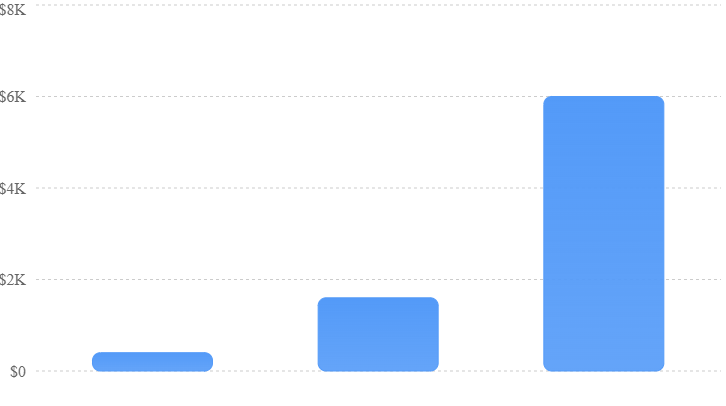
Example scenarios, not market averages or predicted operating costs.
Starter channel: $400 per month
This scenario assumes four videos each month at an average production cost of $100.
The owner may personally handle topic selection, script editing, publishing, and performance analysis.
This is a relatively low-cost way to test whether the content concept attracts viewers.
Growth channel: $1,600 per month
This scenario assumes eight videos at $200 each.
A business at this stage might regularly outsource writing, narration, editing, and thumbnails while retaining internal editorial oversight.
Premium channel: $6,000 per month
This scenario assumes 12 videos at $500 each.
It could include specialized storytelling, advanced editing, and more extensive quality assurance.
These examples exclude some overhead, taxes, unexpected revisions, and the owner’s time.
Higher production spending does not guarantee higher view counts or revenue.
6. Calculate Your Own YouTube Automation Budget
A channel budget should begin with production volume and a realistic per-video cost.
Use this calculator to explore a monthly production scenario.
Monthly YouTube production cost
Interactive estimatorVideos per month
8Scriptwriting per video ($)Voiceover per video ($)Editing per video ($)Thumbnail per video ($)Monthly tools/overhead ($)Contingency reserve (%)
Estimated monthly spending
$1,817
Estimated cost per published video
$227
Three-month operating reserve
$5,451
Copy my budgetPlanning calculations only. Currency is USD. Freelancer fees, taxes, licensing terms, and unplanned work may change actual expenses.
7. YouTube Automation Profit Margins: When Does Outsourcing Become Profitable?
Publishing videos consistently is not the same as generating profit.
A channel becomes financially sustainable when the revenue attributable to its content exceeds the full costs of producing and operating it.
One useful metric is RPM, or revenue per 1,000 views, as reported in YouTube Analytics.
RPM represents revenue earned per 1,000 video views after YouTube’s revenue share for applicable revenue sources. It should not be confused with advertiser CPM.
For simplified planning, suppose an established channel earns a hypothetical $4 in RPM and spends $200 per video.
Its advertising-equivalent break-even calculation would be:
\[ \frac{\$200}{\$4}\times1,000=50,000\text{ views} \]
Under those assumptions, the video needs approximately 50,000 monetized-channel views at that effective RPM to recover its $200 production cost through the revenue represented by RPM.
This is a simplified example, not a predicted earnings rate.
How many views are needed to recover production costs?
Illustrative view requirements at a hypothetical $4 RPM, excluding additional overhead.
| Production cost | Views needed |
|---|---|
| $50 | 12,500 |
| $100 | 25,000 |
| $200 | 50,000 |
| $400 | 100,000 |
| $800 | 200,000 |
Actual RPM varies according to audience geography, subject matter, seasonality, video characteristics, advertiser demand, and monetization status.
Some channels may earn substantially less or more.
The calculation also assumes the video or channel is already monetized. Unmonetized views do not retroactively become payable when a channel joins the YouTube Partner Program.
Why revenue diversification matters
Depending exclusively on advertising income can make an outsourced channel financially vulnerable.
Additional revenue models may include relevant affiliate partnerships, sponsorships, digital products, online courses, memberships, and consulting services.
Consider an educational channel that explains productivity systems.
A relevant video could generate advertising revenue while helping interested viewers discover a genuinely useful planning template or software product.
This approach works best when commercial recommendations are transparent, directly related to the viewer’s problem, and supported by personal testing or credible research.
The objective is not to place more links beneath every video.
It is to build a trustworthy relationship in which appropriate products complement the information viewers already value.
8. How to Hire Reliable Freelancers for YouTube Automation
Finding an inexpensive freelancer is relatively easy.
Finding someone who consistently delivers original, accurate, engaging content is much harder.
A disciplined hiring process can prevent expensive mistakes.
Step 1: Define the deliverable
Describe the project precisely.
For a scriptwriter, define word count, target audience, tone, research requirements, citation expectations, and delivery format.
For an editor, define approximate runtime, aspect ratio, resolution, footage requirements, audio standards, project-file expectations, and revision limits.
For a narrator, define language, pronunciation, pacing, recording specifications, and licensing rights.
Step 2: Review relevant portfolios
Look for experience in your particular content format.
A talented wedding video editor might not automatically understand the pacing required for a business explainer.
Likewise, a skilled blog writer may need additional experience to produce strong video scripts.
Relevant work samples matter more than generalized claims of expertise.
Step 3: Run a paid trial
A small paid assignment can reveal whether the freelancer communicates effectively, meets deadlines, responds to feedback, and understands your expectations.
Avoid asking candidates to complete extensive unpaid production work.
Step 4: Agree on revisions and ownership
Before work begins, establish the total payment, deliverables, milestones, number of included revisions, licensed third-party materials, and intellectual property terms.
Make sure any promised rights are documented rather than assumed.
Step 5: Build a repeatable quality-control process
Review every video against a consistent standard.
A simple evaluation can include narrative clarity, factual accuracy, visual relevance, audio quality, copyright compliance, and audience value.
Maintain a record of recurring mistakes so the production process improves over time.
9. The Smartest Outsourcing Order for Beginners
One common beginner mistake is outsourcing everything immediately.
Doing so creates multiple expenses before the creator has confirmed whether viewers actually want the content.
A more financially disciplined approach is to outsource tasks gradually.
Start by choosing a focused niche and publishing a few videos while personally managing topic selection and editorial decisions.
Once the format shows encouraging signs of audience interest, outsource the most time-consuming technical work.
For many creators, this is video editing.
Next, evaluate whether professional narration or scriptwriting would materially improve the finished product.
Only increase spending when there is a clear reason to believe the additional cost improves quality, saves valuable time, or supports a repeatable production workflow.
Should you outsource editing, scripting, or voiceovers first?
The right answer depends on your strengths.
A confident writer with limited editing skills may benefit most from hiring an editor.
A skilled editor who struggles with research may benefit more from working with a scriptwriter.
Someone producing narration-heavy documentaries may find professional voice talent particularly valuable.
The strongest operating model is not necessarily the one with the largest team.
It is the one that allocates resources to the activities that create the most value for viewers.
10. YouTube Automation and Monetization Policies in 2026
A channel can follow an outsourced production model and still qualify for YouTube monetization, provided it meets the applicable requirements.
However, outsourcing does not remove the responsibility to create original and authentic content.
YouTube clarified its monetization policy on July 15, 2025, by renaming its repetitious-content policy to inauthentic content and emphasizing that repetitive or mass-produced material without sufficient value is ineligible for monetization.
This matters for channels that rely heavily on generic scripts, recycled footage, repetitive templates, and minimal editorial input.
What content creates monetization risks?
Potentially problematic approaches include publishing nearly identical videos with minor wording changes, presenting third-party clips without meaningful original commentary, and producing repetitive slideshows that deliver little educational or entertainment value.
YouTube’s reused-content requirements also apply even when a creator has permission to use particular footage. Copyright permission alone does not guarantee eligibility for monetization.
The safer long-term strategy is to invest in meaningful original research, distinct storytelling, substantial creative contributions, and a clear benefit to the audience.
Can AI-generated voices or scripts be monetized?
Using AI production tools does not automatically disqualify a channel from monetization.
The crucial considerations include originality, authenticity, compliance, and appropriate disclosure.
YouTube requires disclosure for certain realistic synthetic or meaningfully altered content. Routine production assistance, such as generating outlines or scripts, does not by itself require disclosure. Some realistic synthetic audio and visual content does.
YouTube Help
+1
Check current requirements before publishing because platform policies can change.
What are the YouTube monetization thresholds?
As of October 2026, the standard thresholds for advertising revenue access generally require 1,000 subscribers plus either 4,000 qualifying public watch hours during the previous 12 months or 10 million qualifying Shorts views within 90 days, alongside other eligibility requirements and channel review. Some earlier monetization features have lower eligibility thresholds in supported regions.
YouTube Help
+1
Meeting numerical requirements does not guarantee acceptance.
11. How to Reduce YouTube Automation Costs Without Sacrificing Quality
Lowering expenses should not mean reducing every production step to its cheapest possible version.
The better objective is to remove inefficiency.
Build reusable production templates
Develop consistent title structures, script formats, thumbnail guidelines, editing specifications, and publishing checklists.
Templates should standardize workflow, not make every video repetitive or interchangeable.
Batch similar tasks
Research several related topics together.
Prepare scripts before scheduling narration sessions.
Organize footage and graphics in advance so editors spend less time searching for materials.
Negotiate recurring contracts carefully
Once a freelancer demonstrates reliability, recurring project agreements can simplify planning.
A monthly arrangement may offer predictable pricing and smoother scheduling, although it does not always result in lower fees.
Reuse original assets where appropriate
Custom illustrations, approved branding elements, charts, and project templates can sometimes be reused across related videos.
Confirm that licensing or ownership terms permit the intended reuse.
Measure cost per useful outcome
Instead of measuring only cost per minute of video, consider metrics such as audience retention, returning viewers, production turnaround, and revenue relative to expenses.
A $250 video that builds lasting interest may be a better investment than five inexpensive videos that viewers abandon quickly.
12. A 30-Day Plan to Launch a Lean YouTube Automation Channel
A structured first month can help prevent uncontrolled spending.
- Days 1–7: Research and channel positioningChoose an audience, evaluate competing channels, identify useful content gaps, and develop ten video ideas. Establish a spending limit and define the quality standards you want to maintain.
- Days 8–14: Produce a pilot videoWrite or commission one carefully researched script, test a narration method, and hire an editor if required. Pay particular attention to the usefulness and originality of the content.
- Days 15–21: Publish and reviewRelease the pilot, monitor early audience signals, identify production problems, and prepare a second video using the lessons learned. Avoid drawing strong conclusions from a tiny initial data sample.
- Days 22–30: Improve the workflowRefine briefs, document editorial standards, evaluate freelance performance, and decide whether the next production cycle is financially justified.
After the first month, continue testing without assuming that immediate monetization or profitability will follow.
Consistent improvement matters more than rapidly increasing upload volume.
13. Track the Metrics That Actually Determine Profitability
A successful YouTube automation business needs more than subscriber counts.
Pay attention to the relationship between production expenditure and audience response.
Useful metrics include:
- Cost per video: Total amount spent to publish an individual video.
- Click-through rate: How frequently people choose to watch after seeing an eligible thumbnail impression.
- Average view duration: How long viewers typically continue watching.
- Audience retention: Where viewers remain engaged or begin leaving.
- Returning viewers: Whether the channel is attracting people who come back for more.
- RPM: Revenue per 1,000 views where monetization applies.
- Contribution margin: Revenue attributable to content minus directly attributable production costs.
- Operating profit: Revenue remaining after production, overhead, and other relevant business expenses.
For stronger decision-making, examine performance across several videos instead of reacting to the results of a single upload.
Remember that recently published videos may continue earning views over time, while older videos can lose momentum.
Revenue attribution and profitability analysis should account for these differences.
14. Common YouTube Automation Mistakes That Waste Money
Hiring based entirely on the lowest price
Extremely cheap production may lead to excessive revisions, poor research, weak visuals, or unreliable delivery.
Compare completed-work quality and the total time spent managing contractors.
Choosing a niche based only on potential advertising rates
A commercially attractive niche may also involve intense competition, expensive research, and demanding audience expectations.
Choose topics where you can repeatedly provide distinctive value.
Scaling before understanding audience demand
Publishing 20 videos monthly does not solve a weak content proposition.
Validate the format before increasing volume.
Ignoring copyright and licensing requirements
A freelancer’s promise that footage is safe to use is not sufficient documentation.
Retain licenses, asset records, and relevant agreements.
Publishing scripts without fact-checking
Inaccurate information can harm credibility and create additional risks in financial, medical, legal, and other sensitive subjects.
Use reliable sources and appropriate expert review.
Treating automation as a substitute for creativity
Systems can make production efficient.
They cannot automatically give audiences a reason to care.
The best channels combine repeatable operations with fresh ideas, thoughtful research, and original perspectives.
15. How to Turn First-Time YouTube Viewers Into Returning Audiences
Long-term financial sustainability depends on more than attracting occasional viral views.
A channel that consistently brings viewers back can build stronger brand recognition and more opportunities for relevant monetization.
Create connected video series
Rather than publishing unrelated topics, develop content sequences that solve progressively more advanced problems.
For example, a YouTube business channel might publish:
- How to Choose a Profitable YouTube Niche
- How to Hire Your First YouTube Video Editor
- YouTube Automation Costs and Profit Margins
- How to Increase Audience Retention on Faceless Videos
- How to Build an Outsourced Video Production Team
Each video should provide complete standalone value while offering a natural path to related material.
Use relevant calls to action
A good call to action should match the viewer’s current needs.
Instead of repeatedly asking people to subscribe, explain what they will gain from returning.
For example:
“If you’re building a channel on a limited budget, explore our next guide on hiring freelance editors without overspending.”
This encourages continued learning rather than relying on generic promotional language.
Build owned audience relationships
When appropriate, offer a genuinely useful resource such as a video production checklist, freelancer briefing template, or budget worksheet.
An email newsletter or community can help interested viewers discover related content without depending entirely on YouTube recommendations.
Make clear what people are subscribing to and avoid sending unwanted promotional messages.
Monetize with products that solve real problems
Potential digital products include channel planning templates, production budget spreadsheets, editing briefs, freelancer management systems, and educational guides.
Commercial success depends on actual demand, product quality, credible descriptions, and customer satisfaction.
Do not create a product simply because it can be mentioned in a video.
Build something that addresses a recurring problem your audience has already demonstrated.
16. Is YouTube Automation Worth the Investment in 2026?
YouTube automation can be worthwhile for creators who approach it as a real content business.
Outsourcing provides access to specialized talent, supports consistent production, and allows channel owners to focus on strategy.
But the model carries meaningful financial risk.
Revenue may be unpredictable, production costs can increase, and successful videos are never guaranteed.
A creator who spends $2,000 per month without a validated audience or realistic financial plan may find the business difficult to sustain.
Conversely, someone who starts with a manageable budget, develops an original format, hires carefully, and improves production based on real performance data may build a more durable operation.
The central principle is straightforward:
Outsource repetitive production work while maintaining responsibility for originality, editorial quality, audience trust, and financial decisions.
The real advantage of YouTube automation is not that every video becomes effortless.
It is that a reliable system can eventually allow creators to devote more attention to making better content and serving their audience.
Frequently Asked Questions About YouTube Automation Costs
1. How much money do I need to start a YouTube automation channel?
A beginner might test a small channel with approximately $100–$500 in initial outsourced production spending if they personally handle several tasks and control the scope of work.
A more fully outsourced channel may require several hundred to several thousand dollars monthly, depending on production complexity and upload frequency.
It is sensible to keep additional reserves for revisions, software, licensing, and continued production before monetization.
2. Is it cheaper to hire freelancers or use AI tools for YouTube automation?
AI tools can reduce the cost of drafting, narration, transcription, and certain editing tasks.
However, they still require quality control, appropriate licenses, and human editorial judgment.
Freelancers may be more valuable when originality, advanced storytelling, specialized knowledge, or premium production quality is essential.
A hybrid workflow can be economical when responsibilities are clearly defined.
3. Can a fully outsourced YouTube channel get monetized?
Yes. Outsourcing video production does not automatically prevent monetization.
However, a channel must meet YouTube’s eligibility and content requirements, including rules concerning original, authentic, reused, and repetitive content.
Hiring freelancers does not guarantee that their delivered work complies with those policies.
4. What is the most expensive part of YouTube automation?
Video editing is often one of the largest expenses, particularly when videos require extensive footage selection, motion graphics, animation, or complicated storytelling.
For research-heavy niches, scriptwriting or specialist fact-checking may become equally expensive or more costly.
The largest expense depends on the channel’s format and production standards.
5. How long does it take for a YouTube automation channel to become profitable?
There is no reliable universal timeline.
Some channels never recover their production investment, while others may generate revenue once they develop sustained viewer demand and qualify for monetization.
Profitability depends on production expenses, audience growth, monetization eligibility, advertising revenue, other income sources, and the long-term performance of published videos.
Creators should plan for uncertainty rather than assume that profitability will arrive after a fixed number of uploads.
Build a YouTube Channel That Can Afford to Grow
The true cost of YouTube automation is more than the amount paid to an editor, scriptwriter, or narrator.
It includes the cost of organizing people, managing quality, acquiring legally usable assets, maintaining reliable production, and learning what the audience actually values.
If you are beginning with limited capital, start with a focused content concept and a realistic budget. Publish useful videos, evaluate performance, improve the process, and outsource gradually.
If your channel is already growing, prioritize operational consistency, reliable contractors, and clear financial reporting before increasing production volume.
A sustainable YouTube business is not built by producing the greatest number of videos for the lowest price.
It is built by investing carefully in content that people genuinely want to watch, trust, recommend, and return to.
Your next step: Use the budget calculator above to estimate the cost of your planned publishing schedule, then compare that investment with a conservative revenue scenario before hiring your production team.
Compliance Note
This article is provided for general educational and informational purposes. Its cost estimates, production budgets, and profitability examples are illustrative planning scenarios, not guaranteed market prices or financial results. Freelance rates, software prices, commercial licensing terms, and YouTube policies may change.
YouTube automation, outsourced content creation, AI-assisted production, and faceless channels do not guarantee monetization, search rankings, recommendations, audience growth, passive income, or profit. Google Search and Google Discover visibility cannot be guaranteed through SEO formatting, publishing frequency, or particular keywords.
Creators are responsible for verifying information, complying with YouTube’s monetization and Community Guidelines, securing appropriate rights for scripts, video footage, images, music, and narration, and following applicable copyright, privacy, consumer protection, advertising disclosure, tax, and contractual requirements. Paid sponsorships and affiliate relationships should be disclosed appropriately. Use realistic synthetic-content disclosures where YouTube’s rules require them, and obtain necessary consent before using identifiable people, voices, or likenesses.
Advertising RPM, production expenses, audience performance, and business results differ across channels and markets. Financial examples should not be interpreted as earnings promises, personalized investment advice, or a substitute for independent research and professional guidance.
For current platform requirements, consult the official YouTube Channel Monetization Policies and YouTube AI Content Disclosure Guidance.

Stay ahead with exclusive updates
Join our community. Get curated industry trends, actionable guides, and fresh resources delivered straight to your inbox.