
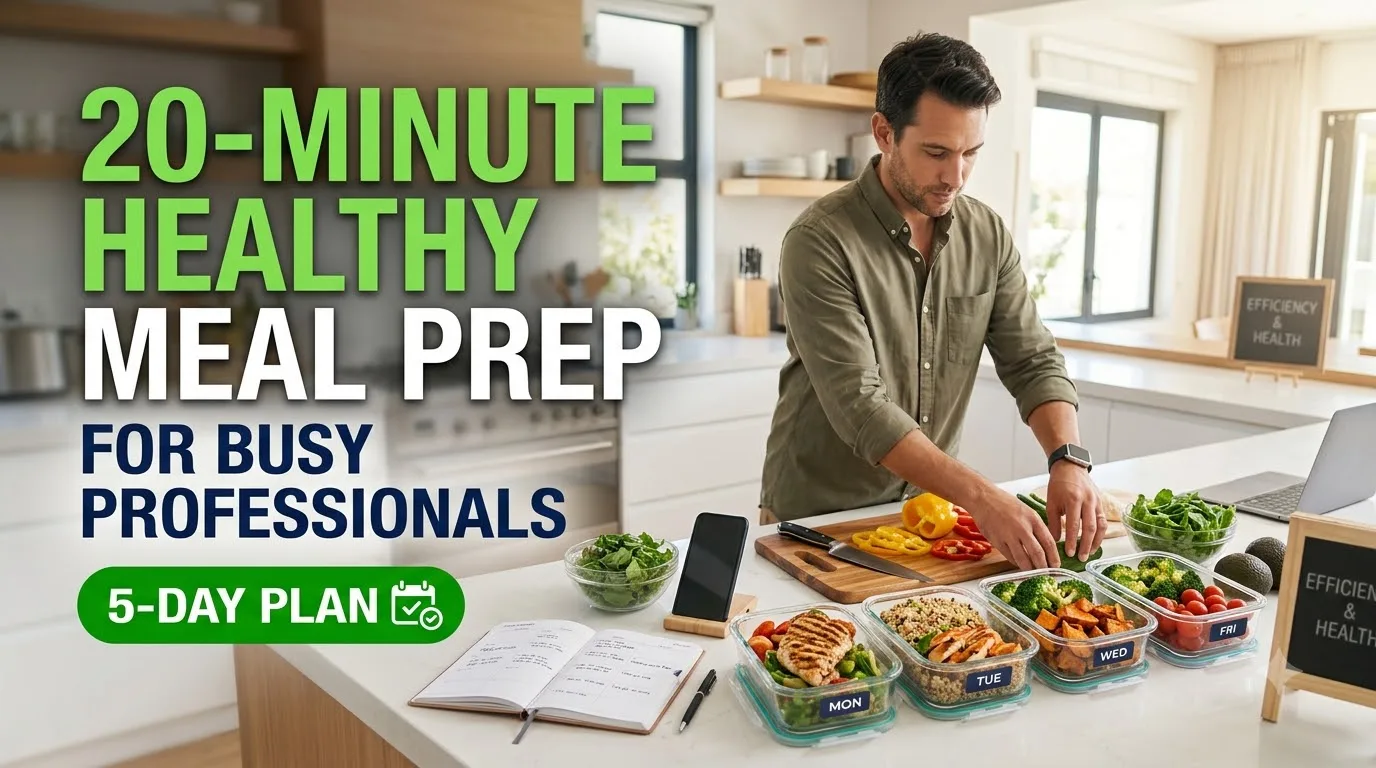
Healthy eating doesn’t need to take hours. Discover quick recipes, smart batch-cooking methods, healthy office lunch ideas, and a practical 20-minute weekday meal system for busy professionals.
Corporate & Busy-Professional’s 20-Minute Clean Eating Blueprint
A practical approach to nutritious home cooking, smart batch preparation, healthy work lunches, and minimal kitchen cleanup.
Article Summary
Discover how busy professionals can simplify healthy eating with a 20-minute weekday cooking framework. This practical guide explores balanced meal planning, quick recipes, reusable batch-cooked ingredients, and nutritious office lunches. It introduces a flexible meal-prep matrix, time-saving grocery strategies, safe food storage practices, and minimal-cleanup cooking methods to make home-prepared meals more manageable during demanding workweeks.
Article Description
Long office hours, exhausting commutes, and unpredictable deadlines often leave little time for preparing nutritious meals. The Corporate & Busy-Professional’s 20-Minute Clean Eating Blueprint offers a realistic solution for urban professionals, tech employees, hybrid workers, and anyone balancing a demanding career with everyday food preparation.
Learn how to build satisfying meals using vegetables, protein, fiber-rich grains, and convenient pantry ingredients. Explore 20-minute clean eating recipes, smart batch-cooking combinations, five-day meal-planning ideas, healthy work lunch options, and simple one-pan cooking techniques that reduce preparation and cleanup effort.
Rather than promoting restrictive food rules or unrealistic cooking schedules, this article focuses on practical routines, ingredient flexibility, and safe food handling. It helps readers make healthier everyday food choices while adapting meal preparation to their actual schedules, preferences, and available kitchen equipment.
What You’ll Discover
- How to structure a realistic 20-minute weekday meal preparation routine.
- How to create balanced meals from convenient, nutritious ingredients.
- How to use batch-cooking matrices to turn shared ingredients into different meals.
- How to prepare satisfying and safely packed lunches for office workdays.
- How to reduce dishes with practical one-pan and minimal-cleanup methods.
- How to store and reheat prepared food safely while reducing waste.
“Healthy eating becomes easier when your kitchen routine fits your workday. Prepare intelligently, combine simply, and make everyday cooking realistic.”
Corporate & Busy Professional’s 20-Minute Clean Eating Blueprint
A realistic five-day system for healthy home-cooked meals, satisfying office lunches, intelligent batch cooking, and less time cleaning up after work.
At 7:15 p.m., after back-to-back meetings, commuting, and answering messages that somehow became urgent at the end of the day, cooking dinner can feel like one more job. You open the refrigerator. There are ingredients, but no actual plan. Delivery starts looking easier than dinner.
That moment is where most ambitious meal plans fall apart. Not because people lack motivation, but because those plans assume unlimited time, energy, counter space, and enthusiasm for washing dishes.
A successful healthy eating routine should work on the busiest ordinary Tuesday, not just on the Sunday when everything seems possible.
This guide introduces a flexible system for preparing nutritious meals in approximately 20 minutes on workdays, supported by a manageable batch-cooking routine. It is designed around accessible supermarket ingredients, practical kitchen shortcuts, familiar flavors, and healthy work lunch ideas that travel well.
The 20-minute target applies to weekday preparation, cooking, assembly, and basic cleanup when ingredients are ready. Grocery shopping and optional weekly batch preparation are separate activities. Times are planning estimates, not guaranteed results.
Chapter 01 / The Mindset
What Clean Eating Really Means for a Busy Professional
The phrase clean eating sounds appealing, but it has no single standardized medical definition. It is not a food-safety certification, and it should never divide foods into morally “good” and “bad” categories.
For this practical blueprint, clean eating means choosing a varied, satisfying dietary pattern centered on vegetables, fruits, fiber-rich grains, nutritious proteins, and predominantly unsaturated fats, while being mindful of excessive sodium, added sugars, and saturated fat.
This approach is consistent with the broader principles emphasized in the American Heart Association’s 2026 dietary guidance. It leaves room for convenience ingredients and personal preferences.
Nutrition Before Perfection
A bowl of microwave brown rice, canned beans, and frozen vegetables can be a practical, nutritious meal. Everything does not have to be prepared from scratch.
Repeat Components, Not Boring Meals
Cooked grains can become a Mediterranean lunch, an Asian-inspired tofu bowl, or a vegetable egg skillet. Flavor variety comes from sauces and seasoning.
Design Around Your Real Schedule
Build meals around your workday, access to refrigeration, dietary preferences, and available cooking equipment. The plan should adapt when your calendar changes.
The Simple Balanced-Bowl Formula
Use the following as a visual planning guide rather than a rigid requirement for every meal:
- Vegetables: Aim for roughly half of the plate when practical, using colorful fresh, frozen, or suitably prepared canned choices.
- Protein: Add beans, tofu, lentils, eggs, fish, or lean poultry to suit your nutritional needs.
- Fiber-rich carbohydrates: Include whole grains, oats, potatoes, or other nutritious starches in portions appropriate for you.
- Healthy fats: Use modest amounts of olive oil, nuts, seeds, or avocado.
- Flavor: Finish with lemon, spices, herbs, vinegar, or a lower-sodium dressing.
Individual portion needs depend on factors such as age, body size, activity, health status, and personal goals. There is no universal calorie or protein target that fits every corporate employee.
Chapter 02 / The Operating System
The 20/2/3 Framework: A Better Way to Organize Your Kitchen
Instead of managing dozens of individual recipes, think of your kitchen as a small, reliable operating system. The method has three moving parts.
Weekday Execution
Choose a meal that can be assembled and cooked quickly, using ready-to-use vegetables, precooked grains, and safe, convenient proteins.
Sunday + Midweek
Use an optional 45–60-minute Sunday preparation window and a 10–15-minute midweek refresh. Freeze extra cooked portions rather than storing the entire workweek’s leftovers in the fridge.
Variety Without Complexity
Rotate lemon-herb, smoky Southwest, and ginger-sesame seasonings to make familiar ingredients feel like different meals.
Your 20-Minute Weekday Timeline
| Time | Action | Practical Benefit |
|---|---|---|
| 0–2 min | Wash hands, clear workspace, gather ingredients and one pan. | Prevents mid-recipe interruptions. |
| 2–6 min | Start reheating precooked grains or cooking the quickest component. | Uses waiting time productively. |
| 6–12 min | Cook vegetables and heat or prepare the protein. | Builds the main meal efficiently. |
| 12–17 min | Season, combine, check safe cooking temperatures and serve. | Creates flavor and ensures safe preparation. |
| 17–20 min | Package the next portion if appropriate, wipe surfaces and wash key utensils. | Reduces the evening cleanup burden. |
This timeline is a flexible example. Cooking equipment, ingredient sizes, appliance power, and experience affect preparation times. Food safety always takes priority over meeting a time target.
Chapter 03 / Intelligent Batch Cooking
The Batch-Cooking Matrix: One Grocery Basket, Many Meals
Traditional meal prep often asks you to cook several finished lunches, place them in matching containers, and eat nearly identical food until Friday.
Component-based batch cooking works differently. You prepare ingredients that can be combined in several ways, with quick finishing steps when you are ready to eat.
The Mix-and-Match Ingredient Matrix
| Meal Base | Protein | Vegetables | Flavor Switch | Meal Idea |
|---|---|---|---|---|
| Brown rice | Chickpeas | Cucumber, spinach, tomatoes | Lemon + herbs | Mediterranean grain bowl |
| Brown rice | Firm tofu | Broccoli + carrots | Ginger + sesame | Tofu vegetable skillet |
| Brown rice | Eggs | Frozen mixed vegetables | Garlic + reduced-sodium soy sauce | Vegetable egg rice |
| Sweet potato | Black beans | Peppers + greens | Cumin + lime | Southwest stuffed potato |
| Whole-grain pita | Salmon pouch | Slaw + cucumber | Yogurt + dill | Salmon lunch pita |
A Realistic Sunday Prep Session
| Estimated Window | Prep Task | Outcome |
|---|---|---|
| 0–10 minutes | Wash appropriate produce, chop vegetables, start grains. | Ready-to-use ingredients |
| 10–25 minutes | Roast or sauté tofu and vegetables while grains cook. | Flexible protein and vegetable bases |
| 25–40 minutes | Make two simple dressings, rinse canned beans, organize pantry items. | Fast weekday assembly |
| 40–60 minutes | Finish cooking, portion into shallow containers, refrigerate or freeze promptly, and clean. | Safer storage and an organized kitchen |
Sunday preparation should focus on reducing friction, not producing every finished meal. Depending on your appliances and recipes, some tasks can run in parallel. If you already buy ready-cooked grains and washed vegetables, this preparation window may be substantially shorter.
Midweek Refresh: Wednesday’s 10–15 Minutes
- Replenish fresh vegetables and fruit that are running low.
- Prepare a second small batch of grains or use a shelf-stable grain pouch.
- Move a frozen portion to the refrigerator for safe thawing.
- Make a fresh yogurt-based sauce or change seasoning blends.
- Check dates, containers, and leftovers before planning Thursday and Friday.
Most safely refrigerated cooked leftovers should be used within three to four days. Freeze portions that will be needed later, rather than assuming Sunday-cooked food will remain suitable through Friday.
Chapter 04 / The Recipe Collection
5 Healthy 20-Minute Recipes for Working Professionals
Each recipe below uses commonly available U.S. supermarket ingredients and is designed for approximately one adult serving. Scale amounts for your appetite and household. Estimated times assume the listed convenience ingredients are available and do not include an earlier batch-prep session.
1. Lemon-Herb Chickpea Power Bowl
Ingredients
- ¾ cup no-salt-added canned chickpeas, drained and rinsed
- ½–¾ cup ready-cooked brown rice or quinoa
- 1 cup cucumber, cherry tomatoes and spinach
- 1 tablespoon olive oil
- Fresh lemon juice, oregano and black pepper
- Optional: 2 tablespoons plain yogurt or a sprinkle of feta
Method
- Prepare the grain according to its package instructions.
- Rinse and drain the chickpeas thoroughly.
- Combine chickpeas, grain, and vegetables in a bowl.
- Whisk olive oil, lemon juice, oregano, and pepper.
- Dress immediately before eating or pack dressing separately.
Office tip: Pack the dressing in a leakproof container. Keep the prepared lunch refrigerated or appropriately chilled until eating.
2. Ginger-Sesame Tofu & Broccoli Skillet
Ingredients
- About 5 oz firm or extra-firm tofu, drained and cubed
- 1–1½ cups frozen broccoli or stir-fry vegetables
- ½–¾ cup ready-cooked brown rice
- 1 teaspoon sesame or olive oil
- 1–2 teaspoons reduced-sodium soy sauce or tamari
- Ginger, garlic and sesame seeds to taste
Method
- Heat the oil in a nonstick skillet.
- Add drained, cubed tofu and cook until lightly browned.
- Add the vegetables and cook until heated through and tender.
- Stir in ginger, garlic, and reduced-sodium soy sauce.
- Serve over properly heated rice and sprinkle with sesame seeds.
Smart shortcut: Purchase pre-cut tofu or use safely stored precooked tofu to reduce active preparation. Soy and sesame are common allergens; substitute according to your needs.
3. Colorful Egg & Vegetable Rice Skillet
Ingredients
- 2 large eggs
- ¾ cup refrigerated cooked rice or ready-cooked packaged rice
- 1 cup frozen peas, carrots and other mixed vegetables
- 1 teaspoon olive oil
- Garlic, pepper and a little reduced-sodium soy sauce
- Optional: sliced green onion
Method
- Heat the oil and vegetables in a nonstick skillet.
- Move the vegetables aside and scramble the eggs until fully cooked.
- Add the rice, garlic, and seasonings.
- Stir and heat thoroughly, ensuring previously cooked leftovers reach 165°F.
- Serve immediately, adding green onion if desired.
Food-safety tip: Cook eggs thoroughly. Use properly chilled rice, avoid leaving it at room temperature, and reheat leftover rice thoroughly.
4. Southwest Black Bean Stuffed Sweet Potato
Ingredients
- 1 small-to-medium sweet potato
- ¾ cup canned black beans, drained and rinsed
- ½ cup diced peppers and tomatoes
- 1 tablespoon plain Greek yogurt or dairy-free alternative
- Cumin, lime juice and cilantro
- Optional: sliced avocado
Method
- Scrub the sweet potato and pierce it with a fork.
- Microwave until completely tender, turning as needed. Timing varies with size and appliance power.
- Meanwhile, heat the beans and peppers in a small microwave-safe bowl or pan.
- Split the potato and add the warmed beans and vegetables.
- Finish with yogurt, lime, cumin, and cilantro.
Time-saving option: Use a safely precooked sweet potato if your microwave takes longer. A larger potato may exceed the 20-minute target.
5. Salmon & Crunchy Vegetable Pita
Ingredients
- 1 shelf-stable, ready-to-eat salmon pouch, approximately 2.5–3 oz
- 1 whole-grain pita
- ½ cup cabbage slaw or shredded lettuce
- ¼ cup sliced cucumber
- 2 tablespoons plain Greek yogurt
- Fresh lemon juice, dill and pepper
Method
- Open the salmon pouch and transfer the fish to a clean bowl.
- Mix yogurt, lemon, dill, and pepper.
- Fold the salmon into the yogurt dressing.
- Fill the pita with vegetables and the salmon mixture.
- Keep the prepared sandwich chilled until lunchtime.
Why it works: Shelf-stable unopened salmon requires no advance cooking. Once opened and mixed with perishable ingredients, follow safe refrigeration and packing practices. For people with seafood allergies, substitute an appropriate protein.
Chapter 05 / The Five-Day Calendar
A Practical 5-Day Healthy Eating Schedule
Your workday may include deadlines, commuting, unexpected calls, and meetings that run late. This calendar is built around convenience without requiring five elaborate cooking sessions.
| Day | Breakfast Idea | Work Lunch | Evening Meal | Prep Reminder |
|---|---|---|---|---|
| Monday | Overnight oats, berries, nuts | Chickpea grain bowl | Tofu and vegetable skillet | Keep dressing separate |
| Tuesday | Greek yogurt, fruit, oats | Leftover tofu grain bowl | Egg and vegetable rice | Use safely chilled leftovers |
| Wednesday | Eggs and whole-grain toast | Black bean pita with salad | Stuffed sweet potato | Refresh produce and grains |
| Thursday | Oatmeal with peanut butter and banana | Salmon and vegetable pita | Chickpea salad bowl | Prepare Friday’s ingredients |
| Friday | Yogurt, berries, seeds | Fresh vegetable and bean wrap | Freezer-to-skillet protein and vegetables | Use safely frozen or fresh ingredients |
This is a flexible menu illustration, not a personalized nutrient-complete diet prescription. Add snacks, fruits, dairy or fortified alternatives, and adjust portions and food variety according to individual needs.
What About Business Travel, Hybrid Work, and Office Days?
Different work arrangements require different food systems. Choose the approach that best describes your normal week.
The Office-Lunch Strategy
Prepare a cold grain bowl the previous evening, store dressing separately, and pack it just before your commute. Use an insulated lunch bag with at least two cold sources if reliable refrigeration is not available during transport.
Best choices: Chickpea bowls, well-chilled grain salads, bean wraps, or properly packed leftover meals.
The Work-From-Home Strategy
Schedule a realistic lunch break and keep a reusable grain-and-protein base in the refrigerator. A quick skillet can turn yesterday’s prepared ingredients into a fresh meal without interrupting the afternoon.
Best choices: Tofu stir-fry, vegetable egg rice, stuffed sweet potatoes, and quick bean-and-vegetable soups.
The Business-Travel Strategy
Focus on accessible, balanced food choices rather than insisting on home cooking when facilities are unavailable. Use appropriately stored ready-to-eat proteins, fruits, vegetables, and whole-grain options. Check refrigeration, food handling, and food-allergy needs carefully.
Best choices: Balanced grocery-store salads, prepared vegetable-and-protein bowls, whole fruit, and suitable shelf-stable snacks.
Chapter 06 / Shopping & Kitchen Tools
The Smart Grocery List for 20-Minute Clean Eating
A strategic grocery basket is more valuable than a complicated collection of one-time ingredients. This sample list supports the featured meals for approximately one adult over several workdays, with quantities adjusted for appetite and leftovers.
| Category | Shopping Ideas | Why They Matter |
|---|---|---|
| Proteins | 1 block firm tofu, eggs, 1 can chickpeas, 1 can black beans, 1 salmon pouch, plain Greek yogurt | Variety across fast meals |
| Grains & Starches | 2–3 ready-cooked brown rice pouches or home-cooked portions, whole-grain pita, oats, sweet potatoes | Convenient fiber-rich bases |
| Vegetables | Frozen broccoli, frozen mixed vegetables, spinach, slaw, cucumbers, peppers, cherry tomatoes | Fast preparation and variety |
| Fruit | Bananas, berries, apples, seasonal choices | Easy breakfasts and snacks |
| Flavor | Lemon, lime, olive oil, cumin, garlic, ginger, herbs, reduced-sodium soy sauce | Different flavors with few ingredients |
| Optional Extras | Nuts, seeds, avocado, feta, tahini, dairy-free substitutes | Customization and variety |
The Minimalist Kitchen Equipment Guide
Nonstick Skillet
A medium skillet with a lid can handle eggs, tofu, sautéed vegetables, and quick meals. Follow its care instructions.
Reliable Food Containers
Choose food-safe, leak-resistant containers. Use containers specifically labeled microwave-safe when reheating.
Food Thermometer
An inexpensive kitchen thermometer helps verify safe cooking and reheating temperatures, especially for animal proteins and leftovers.
Cutting Board & Knife
Reliable basic tools make preparation faster. Avoid cross-contamination between raw animal foods and ready-to-eat ingredients.
Rice Cooker
Convenient for batch preparation, but not required when shelf-stable prepared grains or stovetop cooking work well.
Insulated Lunch Bag
Helpful for carrying perishable foods with sufficient ice packs when cold storage is not immediately available.
Buying advice: Prioritize useful, durable equipment over specialized meal-prep gadgets. A good skillet, containers, and a thermometer often matter more than an expensive kitchen appliance.
Chapter 07 / Minimal Cleanup
The Minimal-Cleanup Guide: Eat Well Without Washing Every Pan You Own
Cooking time is only one part of the dinner problem. If making a quick meal leaves twenty minutes of dishes afterward, the system becomes harder to maintain.
Seven Small Habits That Reduce Kitchen Friction
- Choose one-pan meals: Combine vegetables and proteins in one suitable skillet whenever practical.
- Prepare ingredients before heating: Set out what you need so cooking does not become a search mission.
- Use frozen vegetables: They reduce chopping, minimize spoilage, and can be nutritious choices.
- Measure directly into the bowl: Avoid extra prep dishes where food-safety considerations allow.
- Clean while food cooks: Wash small utensils and clear packaging during natural downtime.
- Use reusable containers strategically: Choose easy-to-clean containers and avoid unnecessary transfers.
- Keep raw-meat handling separate: Never sacrifice cleaning, sanitizing, or cross-contamination prevention to save minutes.
Chapter 08 / Budget & Sustainability
Can 20-Minute Home Cooking Help Control Food Spending?
For many professionals, the real cost of an unplanned meal is not just its ingredients. It may also include delivery fees, service charges, unused groceries, and the tendency to buy another lunch tomorrow.
Home cooking can make costs more predictable, but savings are not automatic. Grocery prices, household size, delivery habits, location, and food waste all affect the outcome.
Track Your Real Meal Cost
| Measure | How to Calculate |
|---|---|
| Ingredient cost per portion | Total ingredient cost used ÷ portions prepared |
| Purchased lunch cost | Menu price + taxes, fees and tip where applicable |
| Weekly difference | Total purchased-lunch cost − actual homemade-lunch cost |
| Waste adjustment | Add the cost of unused groceries to your homemade total |
If your grocery strategy produces less waste and more meals from shared ingredients, the financial difference may become meaningful. Measure your own results rather than relying on generalized online savings claims.
Four Smart Ways to Keep Costs Practical
- Buy affordable frozen and canned vegetables without unnecessary added sugar or excess sodium.
- Compare unit prices and choose package sizes you can realistically finish.
- Use beans and lentils regularly as economical protein options.
- Freeze safe extra portions promptly instead of allowing them to spoil.
Chapter 09 / Safety First
Food Storage and Office-Lunch Safety Rules Worth Following
Effective batch cooking must protect food quality and safety. According to the USDA, most cooked leftovers should be refrigerated promptly and generally used within three to four days. Refrigerated leftovers should be reheated to an internal temperature of 165°F.
| Food Safety Situation | General Guidance |
|---|---|
| Refrigerator temperature | 40°F (4.4°C) or below |
| Most cooked leftovers | Refrigerate and use within 3–4 days or freeze |
| Reheating leftovers | 165°F (73.9°C) internal temperature |
| Raw poultry | Cook to 165°F (73.9°C) |
| Unrefrigerated perishables | Refrigerate within 2 hours, or 1 hour above 90°F ambient temperature |
| Cold packed lunches | Maintain safe cold temperatures; use an insulated bag and at least two cold sources as USDA recommends |
Divide large batches into shallow containers for quicker cooling. Keep work lunches refrigerated or properly insulated, and follow manufacturer directions for packaged foods.
Never rely only on smell, appearance, or taste to determine whether food is safe. When storage conditions are uncertain, discarding questionable perishable food is safer than taking unnecessary risks.
Chapter 10 / Habit Design
How to Make Healthy Meal Prep a Habit That Survives a Busy Career
Most professionals do not need a more ambitious meal plan. They need a smaller system that can continue during stressful weeks.
The easiest sustainable routine starts with one prepared lunch, expands to two or three dependable meals, and becomes more varied as shopping and cooking feel familiar.
Try the Three-Level Meal System
Normal Workday
Make a 15–20-minute skillet, bowl, or freshly assembled meal.
High-Pressure Workday
Use precooked grains, canned legumes, and ready-to-eat vegetables for a 5–10-minute meal.
Unexpected Late Night
Reheat a safely frozen portion or assemble an easy meal with nutritious shelf-stable pantry foods.
Every level counts. Consistency comes from having several reasonable options available, not from never changing your schedule.
Measure Progress Without Obsessing Over Perfection
At the end of two weeks, ask yourself: How many home-prepared lunches did I eat? Which recipes truly fitted my time limit? How much fresh food did I waste? Which ingredients felt repetitive? Did I spend less or simply shop differently?
These simple observations help improve the system. They are more useful than assigning yourself a perfect-or-failed score.
Make Your Next Workweek Easier to Eat Well
Choose three meals from this guide, create one grocery list, prepare two flexible ingredients, and test the 20-minute routine for five working days.
Use the Grocery Planner Review the Batch MatrixSave this article for your next grocery trip, and revisit it after two weeks to adjust your routine.
Reader Questions / Practical Answers
5 Frequently Asked Questions About Quick Healthy Meal Prep
1. Can I really cook healthy meals in 20 minutes every day?
Yes, many nutritious meals can fit into approximately 20 minutes when you choose quick recipes and keep suitable ingredients ready. More complicated dishes, raw meats, and certain grains take longer. The target should never override safe cooking.
2. What is the best meal prep method for someone working 9 to 6?
Component-based meal prep is often practical. Prepare grains, proteins, and vegetables separately, then combine them with different flavors. A Sunday session plus a small midweek refresh can support variety without preparing every meal several days in advance.
3. Are frozen vegetables and canned beans considered healthy?
They can be nutritious, convenient choices. Look for frozen vegetables without unnecessary sauces and canned beans with lower sodium or no added salt. Rinsing canned beans can also help reduce sodium.
4. How can I pack healthy work lunches without a refrigerator?
Perishable lunches need reliable temperature control. The USDA recommends insulated lunch bags with at least two cold sources. If proper refrigeration or insulation is unavailable, choose suitable shelf-stable items and assemble your meal safely.
5. Do I need expensive meal prep containers or specialized appliances?
No. A basic skillet, knife, cutting board, microwave-safe containers, and food thermometer are sufficient for many quick recipes. Additional equipment is optional and should solve a genuine problem in your routine.
Interactive Learning / Knowledge Check
5 Clean Eating Quiz Flashcards
Test what you learned before planning your next workweek. Read each question, think of your answer, and tap the card to reveal the recommended response.
Flashcard 1: What is the central advantage of component-based batch cooking?
Flashcard 2: How long can most cooked leftovers be kept safely refrigerated?
Flashcard 3: Name three fast protein options for a busy workday.
Flashcard 4: What temperature should reheated leftovers reach?
Flashcard 5: What is the most sustainable response to an unexpectedly busy evening?
Reader reflection: Which meal would you repeat three times in a month, and which one would you change? Your answer is a useful starting point for a more personalized kitchen routine.
The Next Workweek
A Better Workday Begins With Fewer Food Decisions
Healthy eating for busy professionals does not require an elaborate meal schedule, expensive subscription boxes, or spending every Sunday preparing a mountain of containers.
What makes the greatest practical difference is reducing the number of food decisions you must make when you are already tired. Keep dependable ingredients nearby. Repeat a handful of flexible recipes. Give yourself easy alternatives for the days that do not go according to plan.
A bowl of chickpeas and vegetables, a quick egg skillet, or a simple protein wrap may seem ordinary. That is precisely why these meals can become valuable: they are realistic enough to repeat.
Build a kitchen routine that serves your life, rather than making your life revolve around cooking.
Start with one good lunch tomorrow. Then make the next one a little easier.
Sources & Further Learning
The article’s general nutrition and food-safety guidance is informed by the following public health and professional resources. The 20/2/3 framework, meal matrices, sample schedule, and recipe combinations are original editorial planning tools, not externally validated clinical interventions.
- American Heart Association — 2026 Dietary Guidance. Guidance on vegetables, fruits, whole grains, nutritious proteins, unsaturated fats, sodium, and minimally processed foods. Read guidance.
- USDA Food Safety and Inspection Service — Leftovers and Food Safety. Refrigerator storage, food temperatures, and safe reheating. Read guidance.
- USDA — Keeping Bag Lunches Safe. Safe workplace-lunch packing and cold storage. Read guidance.
- Centers for Disease Control and Prevention — How to Have Healthier Meals and Snacks. Practical meal-planning and nutritious food choices. Read guidance.
- American Heart Association — Plant-Forward Eating. Protein variety, beans, legumes, nuts, and flexible meal planning. Read guidance.
Health, Nutrition, Food Safety & Commercial Compliance Note
Educational purpose: This content provides general food, nutrition, and meal-planning information for adults. It is not personalized medical advice, a medical diagnosis, or a substitute for guidance from a licensed clinician or registered dietitian nutritionist.
Dietary needs: People with diabetes, kidney disease, gastrointestinal conditions, pregnancy-related nutritional requirements, food allergies, eating disorders, or other medical concerns may require individualized dietary guidance. Ingredient substitutions should reflect personal needs and professional advice.
Food safety: Follow USDA and FDA food-handling recommendations, package directions, proper temperature control, safe cooking temperatures, and appropriate storage intervals. Do not use estimated cooking times in place of checking food safety.
Accuracy: Cooking times, ingredient quantities, and suggested preparation windows are illustrative. Results vary with equipment, ingredients, serving size, and individual cooking skill. No weight-loss, disease-prevention, productivity, or financial outcome is guaranteed. The recipes have not been represented as laboratory-tested or independently dietitian-certified.
Commercial transparency: If this article is monetized through affiliate links, sponsored placements, or product sales, the publisher should clearly disclose any material relationship near the relevant recommendation, in accordance with applicable advertising and consumer-protection requirements. Product recommendations should reflect genuine suitability, not merely commission value.
Editorial accountability: Publishers should display a real author byline, accurate credentials where relevant, an editorial contact or policy, and a genuine review/update date. Do not claim medical review, professional certification, firsthand testing, or brand endorsement unless it actually occurred.
Search visibility: Helpful, accurate, original content, mobile usability, and transparent sourcing support reader trust. No article design, SEO formula, or structured-data markup guarantees placement in Google Search or Google Discover.
20-Minute Clean Eating: 10 Smart Systems for Busy Professionals
Ten original editorial guides exploring healthy quick meal prep for working professionals, realistic weeknight recipes, intelligent batch cooking, office lunch strategies, and minimal-cleanup routines.
A demanding career should not force you to choose between convenience and nutritious home-cooked food. The solution is not always cooking faster. Sometimes it is making fewer decisions, using ingredients more intelligently, and preparing meals that fit the way you actually live.
This collection is designed for corporate employees, urban commuters, software developers, remote professionals, and anyone who wants to spend less time organizing dinner.
Our approach: Use a 20-minute weekday cooking target, prepare flexible components separately, choose nutritious convenience foods where appropriate, and prioritize safe food handling over the clock.
The 20-Minute Dinner Audit: Why Busy Professionals Need a Kitchen Workflow
The biggest enemy of quick home cooking is often the unplanned minute before cooking begins.
Consider a familiar situation. A software engineer closes a laptop after a long day, opens the refrigerator, searches for a recipe, discovers that the main ingredient is frozen, and then begins cutting vegetables. Fifteen minutes have passed before the stove is switched on.
That experience reveals an important distinction: recipe cooking time and real-world dinner time are not the same thing. A recipe advertised as fifteen minutes can demand much more when it requires ingredient selection, washing, chopping, equipment setup, and cleanup.
A more reliable strategy is to design the entire workflow around ingredients already available in a usable form. Choose one quick protein, one vegetable component, one prepared grain or starch, and one seasoning combination. Then perform tasks in an intentional order.
A Sample 20-Minute Cooking Schedule
- Minutes 0–3: Wash hands, gather ingredients, and prepare the workspace.
- Minutes 3–8: Start reheating prepared grains or cooking the fastest component.
- Minutes 8–15: Heat vegetables and prepare the protein, checking food-safety requirements.
- Minutes 15–18: Combine ingredients, season, and serve.
- Minutes 18–20: Wash essential utensils and wipe work surfaces.
This sequence is a planning target, not a guarantee. Raw poultry, thick cuts of meat, dried legumes, and certain whole grains require more time. Choose suitable convenience ingredients rather than trying to rush cooking that must be done safely.
Decide what you will cook before you become hungry. A simple plan plus ready-to-use ingredients can remove unnecessary steps from the evening.
The Balanced Bowl Formula: Clean Eating Without Complicated Food Rules
Healthy eating becomes more approachable when you stop searching for perfect ingredients and start building balanced meals.
“Clean eating” is a popular wellness expression, but it does not have a single standardized medical definition. For a busy professional, a more useful interpretation is a dietary pattern that emphasizes vegetables, fruit, fiber-rich grains, nutritious proteins, and healthy fats while being mindful of added sugars, sodium, and saturated fat.
The American Heart Association’s 2026 dietary guidance emphasizes the overall eating pattern. The practical lesson is that a nutritious lunch does not need to be an elaborate salad assembled from expensive specialty ingredients.
A bowl made with microwave-ready brown rice, rinsed canned chickpeas, frozen vegetables, olive oil, and lemon can be an entirely reasonable everyday choice.
The Four-Part Construction Method
- Vegetables: Aim for a generous variety, using fresh, frozen, or suitable canned options.
- Protein: Add eggs, tofu, beans, fish, lentils, or lean poultry.
- Carbohydrate: Include whole grains, potatoes, or another satisfying nutritious starch.
- Flavor and fats: Use herbs, spices, lemon, olive oil, nuts, seeds, or other suitable additions.
For example, an office worker could create a Mediterranean-style bowl with chickpeas, cooked quinoa, cucumber, tomatoes, olive oil, and lemon. Another person might use tofu, rice, broccoli, and a ginger-based sauce.
Both meals follow the same general construction formula without requiring identical ingredients. Portion sizes must still reflect individual energy needs, medical conditions, dietary preferences, and activity levels.
Build meals around vegetables, protein, nutritious carbohydrates, and flavor. Use the framework flexibly rather than treating it as a restrictive food rule.
The 3×3 Batch-Cooking Matrix: How to Create Nine Meal Variations From Three Bases
The best batch-cooking guide for busy people does not necessarily begin with five identical food containers.
Many traditional meal-prep routines focus on preparing complete meals several days in advance. This approach can be convenient, but it may create repetition, texture problems, and food-storage challenges.
Component cooking offers another approach. Prepare several neutral ingredients and transform them into different dishes through seasoning, sauces, and final assembly.
A single batch of cooked brown rice, for example, can support a vegetable skillet, a Mediterranean grain bowl, or a Southwest-inspired lunch. The ingredients remain familiar while the finished meals feel different.
The Nine-Combination Matrix
| Prepared Base | Lemon-Herb | Smoky-Lime | Ginger-Sesame |
|---|---|---|---|
| Rice + chickpeas + vegetables | Mediterranean rice bowl | Southwest bean bowl | Sesame chickpea rice |
| Quinoa + tofu + vegetables | Herb tofu quinoa | Spiced tofu salad bowl | Ginger tofu quinoa |
| Whole-grain noodles + edamame + vegetables | Lemon vegetable noodles | Chili-lime noodle bowl | Sesame edamame noodles |
This matrix demonstrates nine combinations, not nine separately prepared batches. Actual variety can be increased by changing vegetables, herbs, portion sizes, and proteins.
The Two-Session Weekly Routine
- Sunday: Optionally spend around 45–60 minutes preparing a small selection of components.
- Monday–Wednesday: Assemble meals from properly stored ingredients.
- Wednesday: Spend approximately 10–15 minutes refreshing fresh ingredients or preparing additional components.
- Thursday–Friday: Use freshly prepared or safely frozen portions rather than relying on aging refrigerated leftovers.
Store cooked foods promptly in shallow containers. USDA guidance recommends using most refrigerated cooked leftovers within three to four days, or freezing them for later use.
Prepare components, not five unrelated recipes. Change the flavor profile to create variety, and plan storage dates before batch cooking.
Mediterranean Chickpea Power Bowl: The Fast Lunch With Almost No Cooking
Sometimes the easiest healthy meal is the one that requires assembly rather than cooking several ingredients from scratch.
This Mediterranean-inspired chickpea bowl is designed around readily available supermarket staples. It offers a useful combination of plant protein, fiber-rich carbohydrates, vegetables, and olive oil, with lemon and herbs providing flavor.
The central shortcut is using drained canned chickpeas and precooked brown rice or quinoa. These ingredients reduce active cooking time without requiring an elaborate preparation session.
Ingredients for One Serving
- ¾ cup canned chickpeas, drained and rinsed
- ½–¾ cup ready-cooked brown rice or quinoa
- ½ cup sliced cucumber
- ½ cup cherry tomatoes and leafy greens
- 1 tablespoon olive oil
- Lemon juice, oregano, and black pepper
- Optional: plain yogurt, fresh parsley, or a small amount of feta
Preparation
- Prepare or heat the packaged grains according to their instructions.
- Rinse and drain the chickpeas thoroughly.
- Chop the vegetables and place them in a bowl.
- Add the grains and chickpeas.
- Combine olive oil, lemon, oregano, and pepper.
- Dress just before serving.
For an office lunch, allow heated components to cool safely before packing, keep the dressing separate, and maintain appropriate refrigeration. For a no-reheat version, use properly chilled cooked grains.
The same foundation can become a wrap, a green salad with grains, or a warm vegetable bowl on another day.
Choose ready-cooked grains and canned chickpeas for a practical lunch with little active cooking. The timing assumes ingredients are ready to use.
Ginger-Sesame Tofu & Broccoli: A Practical Weeknight One-Pan Dinner
A good weeknight recipe should deliver flavor without demanding a crowded collection of pans, cutting boards, and complicated sauces.
A tofu and broccoli skillet is useful because the main ingredients cook quickly when cut into manageable pieces. Frozen broccoli can eliminate chopping, while a prepared grain pouch reduces the need for a separate cooking pot.
The flavor comes from a short list: garlic, ginger, reduced-sodium soy sauce, and sesame. No elaborate marinade is required for a satisfying everyday meal.
Ingredients for One Serving
- About 5 ounces firm tofu, drained and cubed
- 1–1½ cups frozen broccoli or stir-fry vegetables
- ½–¾ cup cooked brown rice
- 1 teaspoon sesame or olive oil
- 1–2 teaspoons reduced-sodium soy sauce or suitable alternative
- Ginger, garlic, and optional sesame seeds
Quick Cooking Method
- Heat the oil in a nonstick skillet over medium heat.
- Add tofu cubes and cook until lightly browned.
- Add broccoli and cook until tender and thoroughly heated.
- Stir in ginger, garlic, and soy sauce.
- Prepare the rice according to package directions.
- Serve the vegetables and tofu over the rice.
The recipe can be adapted with mushrooms, carrots, snap peas, or other vegetables. The flavoring should be adjusted to personal sodium preferences and dietary needs. Soy and sesame are common allergens.
In addition to being convenient, this meal illustrates an important planning principle: cooking a flexible protein and vegetables in one pan can reduce cleanup compared with preparing several separate side dishes.
Combine frozen vegetables, a quick-cooking protein, and precooked grains. Keep the seasoning simple and avoid unnecessary cooking equipment.
The Office Lunch System: How to Pack a Meal That Survives Your Commute
A nutritious lunch is only useful if it remains appealing, convenient, and safe to eat when your lunch break finally arrives.
Office meals face challenges that home dinners rarely encounter: crowded refrigerators, commuting delays, limited reheating facilities, and meetings that begin just as you are ready to eat.
A better lunch system starts with the conditions in which food will actually be transported and stored.
The Three-Container Strategy
- Main container: Keep grains, proteins, and vegetables together when their textures are compatible.
- Small dressing container: Separate wet sauces to reduce sogginess.
- Optional side container: Add fruit, nuts, or another suitable accompaniment.
This setup makes it easy to pack a grain salad, tofu bowl, or bean-based lunch without requiring elaborate packaging.
However, meal prep convenience must never replace food safety. USDA recommends keeping perishable foods cold during transportation and using an insulated lunch bag with at least two cold sources when appropriate.
Perishable lunches should be maintained at 40°F or below. When a refrigerator is available at work, place the food inside promptly.
Lunches That Work Well With This System
- Lemon-herb chickpea and quinoa salad
- Cold whole-grain pasta with beans and vegetables
- Rice, tofu, and vegetable bowls
- Whole-grain wraps filled with suitable protein and crunchy vegetables
Prepare the lunch the previous evening if needed, refrigerate it promptly, and pack it immediately before commuting. Avoid leaving perishable food at room temperature for extended periods.
For perishable office lunches, maintain safe temperatures. Use reliable refrigeration or an insulated lunch bag with at least two suitable cold sources.
No Microwave? Two Healthy Work Lunch Formats That Still Feel Like Real Meals
Not every office has a dependable microwave, and not every employee wants to spend half a lunch break waiting in line.
Cold meals can be practical alternatives when they are designed for flavor, texture, and safe storage.
Two reliable formats are grain-based salads and filled whole-grain wraps. Both can be prepared in advance, customized for dietary preferences, and eaten without additional cooking at the workplace.
Option A: The Crunchy Grain Salad
Combine properly chilled cooked quinoa, rinsed canned beans, diced cucumber, tomatoes, and leafy greens. Add lemon dressing immediately before eating.
This format is particularly useful because many vegetables remain crisp when kept separate from dressing.
Option B: The Protein & Vegetable Wrap
Use a whole-grain tortilla with hummus, crunchy vegetables, and an appropriate ready-to-eat protein. For example, a chickpea-and-vegetable wrap requires little assembly time and no office microwave.
| Feature | Grain Salad | Whole-Grain Wrap |
|---|---|---|
| Reheating | Not required | Not required |
| Preparation | Mix prepared components | Layer, fold, and pack |
| Portability | Best with a leakproof container | Easy to carry securely wrapped |
| Texture tip | Pack dressing separately | Keep wet ingredients away from the tortilla |
| Food safety | Chill perishable components | Chill perishable fillings |
A cold lunch does not automatically mean a shelf-stable lunch. Perishable vegetables once cut, prepared grains, yogurt-based sauces, and many protein fillings require safe refrigeration.
Choose a grain salad for flexible ingredients or a wrap for convenience. Control moisture and maintain safe storage temperatures in both cases.
The Minimal-Cleanup Kitchen: How to Stop Quick Meals From Creating Big Messes
A fifteen-minute recipe that leaves another twenty minutes of dishes is not always a fifteen-minute solution.
Cleanup is an overlooked part of everyday meal preparation. For people who spend long hours at a desk, the thought of washing several pans can make cooking feel unnecessarily demanding.
The most practical answer is to design meals that use fewer tools from the beginning, while still following proper cleaning and food-handling practices.
The One-Pan Planning Method
- Choose recipes that allow several ingredients to cook in the same skillet.
- Use suitable pre-cut or frozen vegetables to reduce chopping.
- Measure seasonings directly into the cooking vessel when practical.
- Reheat ready-cooked grains according to package instructions instead of automatically using another pan.
- Clean small utensils during natural cooking breaks.
- Place reusable containers in a designated washing area immediately after use.
Consider a simple tofu-and-vegetable skillet. A pan, spoon, knife, and cutting board may be enough if the protein and vegetables are already prepared.
Contrast that with a complex dinner requiring multiple sauces, separate roasting trays, a blender, and several mixing bowls. Even when both meals taste excellent, their cleanup requirements differ considerably.
Reducing equipment should never mean skipping hygiene. Raw animal foods require careful separation from ready-to-eat ingredients. Wash and sanitize food-contact surfaces as appropriate, and avoid cross-contamination.
Select one-pan meals, simplify preparation, and wash as you go. The aim is less unnecessary cleanup, never less food-safety care.
The Emergency Dinner Shelf: Healthy Backup Meals for Deadline-Heavy Evenings
A sustainable eating plan must have an answer for the evening when everything runs late.
Unexpected deadlines, traffic delays, software incidents, and urgent meetings can destroy the most carefully organized cooking schedule.
The solution is to prepare a small emergency meal inventory that allows you to eat something nutritious without beginning a full cooking project.
This is where convenient supermarket ingredients can be especially useful. Frozen vegetables, no-salt-added beans, ready-cooked grains, canned fish, whole-grain bread, and appropriate shelf-stable soups can create straightforward meals.
Three Backup Meal Combinations
Backup 1: Bean & Vegetable Soup
Heat a suitable canned bean soup, stir in a handful of frozen or fresh spinach, and serve with whole-grain toast.
Backup 2: Chickpea Rice Bowl
Warm a prepared grain pouch according to its directions, add heated canned chickpeas, and finish with lemon and herbs.
Backup 3: Quick Vegetable Egg Skillet
Cook frozen mixed vegetables in a skillet, add beaten eggs, and cook until the eggs are thoroughly done. Serve with toast.
These options can fit into a short cooking window when ingredients and equipment are ready, although actual times vary.
Choose canned products with sodium levels appropriate to your needs, follow package directions, and use safe handling practices.
The broader principle is powerful: maintaining nutritious fallback options is often more realistic than expecting every workday to provide enough energy for a fully planned dinner.
Keep ingredients for at least three simple dinners. A flexible backup system makes everyday consistency easier.
The Friday Meal-Prep Review: Build a Sustainable System Instead of Another Food Resolution
The most effective meal plan is not necessarily the one with the most recipes. It is the one you can repeat during an ordinary workweek.
Busy professionals often experience an enthusiastic start followed by gradual abandonment. The grocery basket looks impressive on Sunday, but by Thursday, unused ingredients remain in the refrigerator.
Rather than interpreting this as personal failure, treat meal preparation as a system that can be adjusted. The first week provides useful information about your schedule, preferences, and cooking habits.
The Five-Day Working Professional’s Menu
| Day | Work Lunch | Evening Meal | Planning Action |
|---|---|---|---|
| Monday | Chickpea grain bowl | Tofu and broccoli skillet | Use prepared grains |
| Tuesday | Vegetable wrap | Egg and vegetable rice | Check stored portions |
| Wednesday | Quinoa and bean salad | Stuffed sweet potato | Refresh fresh ingredients |
| Thursday | Protein and vegetable pita | Ginger-sesame noodle bowl | Use fresh or safely frozen components |
| Friday | Chickpea vegetable wrap | Emergency pantry dinner | Review what worked |
This menu is illustrative rather than a personalized dietary prescription. Adjust portions, food variety, ingredients, and meal frequency for individual needs.
The Three-Question Friday Review
- Which meals did I actually make? Keep the recipes that fit naturally into your schedule.
- Which ingredients were wasted? Buy smaller amounts, choose frozen alternatives, or freeze safe portions earlier next week.
- Which part felt difficult? Simplify shopping, preparation, cooking, packing, or cleanup, depending on where the friction occurred.
You can also calculate approximate homemade lunch costs by dividing the actual ingredients used by the number of portions prepared. Include the cost of wasted groceries for a more accurate comparison with purchased meals.
Avoid assuming that home cooking automatically produces a particular dollar saving. Grocery prices, restaurant spending, household size, and purchasing habits differ.
After several weeks, repeat the meals that worked, replace the ones that did not, and gradually create a small personal recipe library. That approach can turn meal prep into an ordinary routine rather than an occasional ambitious project.
Track meal repeatability, food waste, and actual effort. Keep the simplest successful meals and improve just one weak point each week.
A Healthier Workweek Begins With a Simpler Kitchen
The key lesson from these ten guides is that healthy quick meal prep for working professionals should reduce unnecessary decisions, not create another demanding task.
Focus on realistic weekday recipes, ready-to-use ingredients, and simple cooking methods.
Mix grains, vegetables, and proteins with different flavors instead of repeating one dish.
Use fewer tools, maintain safe storage habits, and keep dependable backup meals.
Your next action: Select two recipes, buy the required ingredients, prepare one grain or protein component, and schedule your first home-cooked work lunch.
Review the Batch-Cooking Matrix Open the Five-Day MenuSave this page and revisit it before your next grocery trip. The goal is to build a practical weekly system that improves with repetition.
Sources & Further Learning
The editorial meal-planning frameworks and recipe examples in this collection are original. General nutrition and food-safety guidance is informed by the following authoritative resources.
- American Heart Association: 2026 Dietary Guidance to Improve Cardiovascular Health. Explore dietary guidance
- USDA Food Safety and Inspection Service: Leftovers and Food Safety. Review storage guidance
- USDA Food Safety and Inspection Service: Keeping Bag Lunches Safe. Read lunch-packing guidance
- USDA Food Safety and Inspection Service: Keep Food Safe! Food Safety Basics. Review safe cooking practices
Nutrition, Food Safety, Editorial & Commercial Compliance Note
Educational information: This collection is provided for general educational and lifestyle planning purposes. It is not personalized medical advice, nutrition therapy, or a substitute for consultation with a qualified healthcare professional or registered dietitian nutritionist.
Individual dietary needs: Nutritional requirements vary with age, health status, physical activity, allergies, medications, pregnancy, and personal dietary needs. Readers with medical conditions or special nutritional requirements should obtain appropriate professional guidance.
Food safety: Cooking and assembly estimates do not override food-safety requirements. Follow proper cooking temperatures, package instructions, safe refrigeration, sanitation, and cross-contamination prevention practices. USDA advises using most cooked refrigerated leftovers within three to four days and reheating leftovers to 165°F. Refrigerate perishables promptly.
Recipe and time estimates: Preparation times depend on ingredients, equipment, portion size, cooking skill, and food-storage conditions. These recipes and workflow examples have not been represented as independently laboratory-tested or formally dietitian-certified.
Financial and health claims: No specific savings, body-weight changes, productivity improvements, disease prevention outcomes, or other individual results are guaranteed.
Commercial transparency: Any affiliate recommendations, sponsored content, or paid product promotions added by the publisher should include clear, conspicuous disclosures of material relationships. Recommendations should be based on genuine relevance and suitability.
Originality and intellectual property: These ten editorial entries contain newly written explanations, comparative frameworks, and practical examples. Third-party editorial excerpts, proprietary recipes, product endorsements, testimonials, and independent testing claims have not been reproduced or invented.
Editorial responsibility: The publisher should provide a genuine author byline, factual credentials where relevant, transparent editorial policies, and accurate publication or revision dates. Professional review should not be claimed unless it has actually occurred.
Search visibility: Accurate, original, accessible, mobile-friendly content can support reader trust and discoverability. Search ranking, traffic growth, commercial conversion, and inclusion in Google Discover are not guaranteed.
Study Smarter. Eat Smarter.
The Remote Student’s Autonomous Academy & Corporate 20-Minute Clean Eating Blueprint
Test your understanding of digital nomad study planning, time-zone automation, quick healthy meal preparation, batch cooking, and workplace nutrition.
Remote Study Automation
20-Minute Clean Eating
Loading question…
Quiz Completed!
Corporate 20-Minute Clean Eating Blueprint
Loading your healthy meal preparation checklist...
Start with one small action today.
Congratulations! Your Blueprint Is Ready.
You have completed all 10 planning actions. Keep using the routines that work for your schedule and adjust the system as your week changes.
📝 Key Takeaways & Action Notes
Jot down insights, next steps, or thoughts from this post. Your notes save automatically in your browser.
- What is the #1 breakthrough insight you took away today?
- What is one concrete action you will take in the next 24 hours?
- What questions or ideas do you want to research further?
Stay ahead with exclusive updates
Join our community. Get curated industry trends, actionable guides, and fresh resources delivered straight to your inbox.