
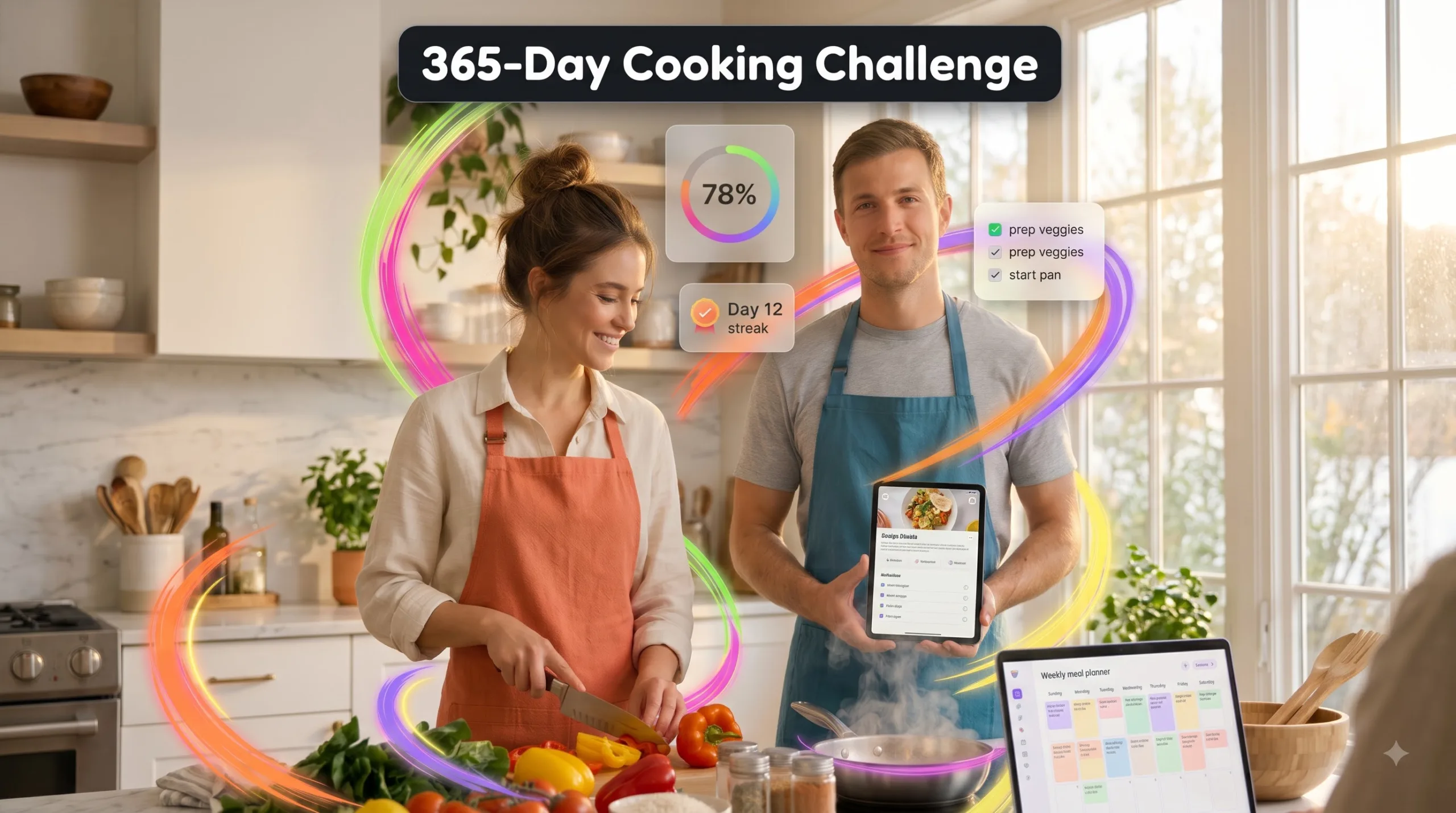
Learn cooking with 30 essential beginner Q&As. Build kitchen confidence, master basic recipes, stay motivated, and start your 365-day cooking challenge.
KitchenConfidence Master. Learn. Cook. Thrive.
Explore 30 essential cooking questions and learn how to prepare delicious recipes, master kitchen fundamentals, build confidence, practice consistently, and turn everyday cooking into a lifelong skill.

30 Questions. Real Answers.
Every confident cook starts with questions. Explore practical, beginner-friendly answers about cooking fundamentals, daily practice, motivation, progress, and future opportunities.
Getting Started
Questions 01–07 · Build your foundations
01Why Do I Need to Learn This?
Learning to cook gives you the ability to prepare meals that fit your preferences, schedule, and budget. It encourages greater independence and helps you understand ingredients and food preparation.
Cooking also builds creativity, patience, organization, and problem-solving. You do not need professional equipment or natural talent to begin. Consistent practice can transform simple recipes into dependable everyday meals.
Quick Tips
- Choose one meal you already enjoy.
- Learn the purpose of its ingredients.
- Celebrate improvement rather than perfection.
02What Should I Learn First?
Begin with kitchen hygiene, food safety, ingredient preparation, safe knife handling, and heat control. These basic skills support nearly every recipe and help prevent avoidable mistakes.
Then choose easy dishes such as rice, vegetables, soup, or scrambled eggs. Repeat familiar preparations before attempting complicated recipes with many ingredients.
Quick Tips
- Practice safe cutting techniques.
- Learn to measure and organize ingredients.
- Prepare one straightforward recipe repeatedly.
03How Can I Start Learning as a Complete Beginner?
Select a beginner-friendly recipe with clear instructions. Read it completely, gather the ingredients, prepare your workspace, and work through each step at a comfortable pace.
After cooking, write down what went well and what you would change. Repeat the recipe until the steps feel familiar, then introduce a new technique or ingredient.
Quick Tips
- Choose a recipe with few ingredients.
- Prepare everything before heating the pan.
- Record one lesson after every session.
04What Are the Essential Concepts Every Beginner Should Understand?
Important concepts include food safety, preparation, timing, temperature, ingredient measurement, seasoning, and texture. Understanding these principles helps you follow instructions and make informed adjustments.
For example, different levels of heat affect browning and moisture. Recognizing these differences teaches you why a recipe succeeds rather than simply memorizing instructions.
Quick Tips
- Compare boiling, sautéing, and baking.
- Learn safe storage and cooking temperatures.
- Practice seasoning carefully when tasting is safe.
05What Tools and Resources Do I Need to Get Started?
Useful essentials include a stable chopping board, appropriate knife, frying pan, saucepan, spatula, measuring tools, and storage containers. A food thermometer helps verify safe cooking temperatures where applicable.
For education, use beginner cookbooks, instructional videos, reputable recipe websites, and a notebook. Specialized kitchen gadgets are unnecessary for many basic meals.
Quick Tips
- Check what equipment you already own.
- Choose durable multipurpose tools.
- Keep recipes and notes organized.
06Where Can I Find the Best Free Learning Resources?
Free learning resources include public libraries, cooking tutorials, reputable recipe websites, community education, and government food-safety guidance. Choose explanations that demonstrate techniques clearly.
Prefer resources with accurate measurements, preparation instructions, realistic cooking steps, and reliable safety information. Compare explanations when you encounter confusing techniques.
Quick Tips
- Follow a clear beginner cooking instructor.
- Bookmark trustworthy food-safety information.
- Explore free library cookbooks.
07How Can I Learn This Skill Without Spending Money?
You can study cooking without paying for classes or subscriptions. Use free tutorials, existing equipment, and ingredients already included in your usual household meals.
Learn from experienced family members or friends when possible. Repeating familiar dishes can teach valuable lessons about timing, taste, temperature, and ingredient handling without requiring unnecessary purchases.
Quick Tips
- Practice with everyday pantry ingredients.
- Use freely available cooking lessons.
- Repeat affordable recipes rather than buying specialty foods.
Learning Methods
Questions 08–12 · Learn smarter
08What Is the Best Way to Learn Quickly and Effectively?
Combine short lessons with hands-on practice. Learn a technique, apply it immediately, examine the result, and adjust your approach the next time you cook.
Regular repetition and feedback can improve learning more effectively than watching large numbers of tutorials without practicing. Focus on a few useful recipes until you understand their main techniques.
Quick Tips
- Study one technique at a time.
- Practice soon after learning.
- Review what worked and what needs improvement.
09Which Skills Should I Focus on First?
Prioritize techniques used regularly: ingredient preparation, safe cutting, cooking with appropriate heat, measuring, seasoning, cleaning, and safe food storage.
Once these skills become familiar, explore soups, sauces, baking, and more advanced dishes. Strong fundamentals make it easier to learn new recipes later.
Quick Tips
- Put food safety before speed.
- Learn several versatile techniques.
- Practice with ingredients you use frequently.
10How Can I Create a Step-by-Step Learning Plan?
Divide your 365-day challenge into phases. Begin with safety and simple meals, develop core cooking techniques, practice preparing complete meals, and gradually experiment with more creative recipes.
Set small weekly objectives and include review days. Your learning plan should fit your lifestyle and allow time to repeat difficult techniques rather than rushing ahead.
Quick Tips
- Set one achievable goal each week.
- Schedule practice around everyday meals.
- Review completed goals regularly.
11Which Learning Methods Produce the Best Long-Term Results?
Active practice, spaced repetition, constructive feedback, and gradually increasing difficulty support lasting improvement. Preparing recipes independently also helps you recognize what you genuinely understand.
Return to important techniques over several weeks and compare results. This encourages retention and exposes mistakes that may otherwise go unnoticed.
Quick Tips
- Revisit core recipes regularly.
- Try cooking without constant video guidance.
- Ask trusted people for feedback.
12What Is the Difference Between Beginner, Intermediate, and Advanced Learning?
Beginners learn safety, ingredients, and basic recipes. Intermediate cooks can prepare complete meals, coordinate different steps, and make sensible adjustments.
Advanced cooks understand techniques well enough to troubleshoot problems, create recipes, and adapt confidently. Progress is better measured by consistency and independence than by the difficulty of one dish.
Quick Tips
- Beginner: follow instructions safely.
- Intermediate: adapt recipes and plan meals.
- Advanced: create, refine, and teach techniques.
Practice & Progress
Questions 13–18 · Build reliable abilities
13How Much Time Should I Spend Learning Every Day?
Fifteen minutes of daily focused learning can be a manageable starting target. Use short sessions to study techniques, review recipes, organize ingredients, or plan future practice.
Preparing complete meals often takes longer. Reserve additional time when necessary and adapt the schedule to your existing responsibilities.
Quick Tips
- Start with a realistic 15-minute learning target.
- Schedule longer sessions for actual cooking.
- Adjust the routine to your available time.
14How Can I Practice and Improve My Skills?
Practice deliberately by focusing on one specific weakness. For example, improve the consistency of your vegetable cuts or learn to control the texture of a sauce.
Repeat recipes and change one relevant factor at a time. Keeping notes about taste, texture, timing, and preparation can help you identify real improvements.
Quick Tips
- Focus on one technique per session.
- Record useful observations.
- Repeat recipes to compare results.
15What Are the Most Common Mistakes Beginners Should Avoid?
Common mistakes include failing to read recipes, using unsuitable heat, overcrowding pans, skipping preparation, and changing too many ingredients at once.
Food-safety mistakes are especially important to avoid. Prevent cross-contamination, refrigerate perishables appropriately, and cook applicable foods to safe internal temperatures using a thermometer.
Quick Tips
- Read the entire recipe before starting.
- Separate raw foods from ready-to-eat ingredients.
- Follow reliable temperature and storage guidance.
16How Can I Measure My Learning Progress and Improvement?
Track the number of recipes you can prepare independently, your ability to repeat successful outcomes, and how confidently you handle common kitchen techniques.
Record completed recipes, difficulties, improvements, and safety habits each week. Compare your current performance with earlier attempts rather than other people’s results.
Quick Tips
- Rate your confidence after cooking.
- Record techniques completed independently.
- Review progress every month.
17How Will I Know When I Have Mastered a Skill?
You demonstrate mastery of a particular technique when you can perform it safely, independently, and consistently while understanding why it works.
Mastery is specific. You may be confident at preparing rice but still be learning bread making. Continue improving established skills while exploring unfamiliar methods.
Quick Tips
- Repeat the technique successfully several times.
- Explain the method in your own words.
- Apply it to another suitable recipe.
18How Can I Apply My Knowledge to Solve Real-World Problems?
Cooking skills help you plan meals, use available ingredients, manage food spending, prepare for busy days, and reduce unnecessary waste.
Create practical challenges such as preparing a meal from pantry ingredients or adapting a familiar dish when a particular vegetable is unavailable. These exercises strengthen decision-making.
Quick Tips
- Cook a meal using ingredients already available.
- Practice appropriate substitutions.
- Plan meals around your actual schedule.
The Roadmap to Kitchen Confidence
Start with simple foundations and gradually build practical, independent cooking ability.
Beginner
Safety and simple recipes
Intermediate
Complete meals and techniques
Advanced
Recipe adaptation and creativity
Mastery
Consistency and confidence
Make Every Cooking Day Count
Explore KitchenConfidence Master – 365-Day Cooking Challenge, Recipe Practice, Kitchen Confidence & Daily Motivation Workbook. Turn these lessons into structured practice and meaningful progress.
Explore the 365-Day Cooking Workbook ↗Motivation & Habits
Questions 19–23 · Stay inspired and consistent
19How Can I Stay Motivated While Learning Something New?
Keep your goals personal and achievable. Choose recipes you genuinely enjoy and measure progress against your previous cooking experiences rather than professional chefs.
Celebrate milestones, including your first complete meal or preparing a favorite dish independently. Maintain a flexible learning routine that remains manageable during busy periods.
Quick Tips
- Keep a record of completed recipes.
- Set small enjoyable milestones.
- Share achievements with supportive people.
20How Can I Overcome Difficulties During the Learning Process?
Cooking difficulties are normal. A recipe may fail because of heat, timing, unfamiliar equipment, or ingredient variation. Examine the problem without judging your entire ability.
Identify a likely cause and repeat the recipe with one careful change. Seek reliable help when the difficulty involves equipment or food safety.
Quick Tips
- Describe the problem clearly.
- Adjust one factor at a time.
- Ask for guidance when necessary.
21What Daily Habits Can Help Me Learn Faster?
Planning meals, organizing ingredients, maintaining cleanliness, reviewing recipes, and reflecting after cooking are useful habits that support steady progress.
Connect learning to existing routines. For example, review instructions before preparing dinner and write a short note after completing the meal.
Quick Tips
- Plan upcoming meals briefly.
- Clean and organize while working.
- Review one practical lesson daily.
22How Can I Avoid Distractions and Stay Focused While Learning?
Prepare the workspace, gather equipment, and keep the recipe visible before beginning. Silence unnecessary notifications and avoid unrelated activities while actively cooking.
Focus is especially important around sharp knives, hot pans, and electrical equipment. Pay full attention to tasks requiring safe and careful handling.
Quick Tips
- Reduce phone notifications.
- Organize ingredients before cooking.
- Give complete attention to heat and sharp tools.
23How Can I Build Confidence While Learning a New Skill?
Confidence develops through repeated practical experience. Begin with manageable recipes, repeat successful techniques, and gradually increase difficulty.
Recognize meaningful achievements, even when the presentation is imperfect. Preparing a dependable meal independently demonstrates useful progress.
Quick Tips
- Begin with achievable cooking goals.
- Document independent achievements.
- Increase difficulty gradually.
Career & Future
Questions 24–30 · Build lasting opportunities
24What Are the Benefits of Learning This Skill?
Cooking provides everyday independence, more flexibility in meal choices, creative satisfaction, and opportunities to manage food expenses and waste.
It also develops organization, patience, time management, and problem-solving. These transferable abilities can support other personal and professional responsibilities.
Quick Tips
- Notice improvements in daily independence.
- Track meal planning and food waste.
- Recognize creative achievements.
25Why Is Learning This Skill Important for My Future?
Cooking is useful through many stages of life. Whether you live independently, prepare family meals, or manage a busy schedule, reliable cooking skills offer lasting practical value.
Fundamental techniques also support future interests such as food education, hospitality, recipe development, meal planning, and creative culinary projects.
Quick Tips
- Set long-term personal goals.
- Develop versatile techniques.
- Continue learning as your needs change.
26How Can I Use What I Learn in Real Life and My Future Career?
Apply cooking knowledge to meal preparation, ingredient management, food budgeting, and family routines. These practical abilities can improve organization and everyday flexibility.
With additional experience or training, related skills may support opportunities in hospitality, culinary employment, recipe writing, food education, or digital content creation.
Quick Tips
- Use meal planning in everyday life.
- Document your cooking projects.
- Research qualifications for relevant careers.
27How Can I Turn My New Skills into Career or Business Opportunities?
With reliable skills and further preparation, you could explore food blogging, recipe writing, photography, cooking tutorials, culinary employment, or a properly licensed food business.
Identify an audience or customer need, develop credible examples of your work, and understand costs, food-safety requirements, and applicable regulations before selling products or services.
Quick Tips
- Identify one clear audience need.
- Develop evidence of practical ability.
- Research legal and food-safety requirements.
28How Can I Build a Portfolio to Showcase My New Skills?
Create a portfolio featuring clear photographs, original recipes, preparation notes, technique demonstrations, and meal-planning projects. Show what you actually prepared and how you worked.
Organize projects by recipe or skill category. Explain the objective, ingredients, techniques, difficulties, and improvements involved in each example.
Quick Tips
- Photograph completed dishes clearly.
- Explain techniques and challenges accurately.
- Include examples showing your progress.
29What Should I Learn Next After Mastering the Basics?
Once your foundations are dependable, explore sauces, baking, international cuisines, fermentation, advanced meal planning, or creative ingredient combinations.
You can also study supporting topics such as food photography, recipe development, ingredient budgeting, and nutrition literacy. Choose subjects that genuinely interest you.
Quick Tips
- Select one intermediate cooking specialty.
- Expand food-safety knowledge with new techniques.
- Complete a practical project using new skills.
30How Can I Transform My Learning into Personal Growth, Financial Independence, and Long-Term Success?
Use your cooking skills to build long-term habits that support self-reliance, organization, confidence, and enjoyment. Regular cooking practice may also help you manage ingredients and household meals more effectively.
If income generation is important, investigate culinary employment, food education, digital content, or a compliant small business. Cooking alone does not guarantee financial independence, but practical ability combined with business skills and realistic planning may create meaningful opportunities.
Quick Tips
- Maintain a sustainable learning routine.
- Build skills before making major investments.
- Set realistic personal and financial goals.

Small Steps. Big Progress.
Your kitchen confidence starts with one recipe, one new technique, and one meaningful achievement. Take the next step with KitchenConfidence Master – 365-Day Cooking Challenge, Recipe Practice, Kitchen Confidence & Daily Motivation Workbook.
Start Your 365-Day Cooking Challenge ↗Explore the workbook and purchase details on Gumroad.
Important Reader Information
Disclaimer & Compliance Note
This article and the KitchenConfidence Master – 365-Day Cooking Challenge learning materials are intended for general education, personal development, and informational purposes. Please review the following guidance before applying the techniques, recipes, or recommendations.
01. Educational Information
Content is provided for general learning only. It does not replace personalized instruction from a qualified culinary professional, food-safety specialist, or other relevant expert. Readers should exercise independent judgment when following cooking guidance.
02. Kitchen & Food Safety
Cooking involves heat, sharp utensils, electricity, and potential foodborne hazards. Follow applicable hygiene practices, safe handling instructions, storage guidelines, and recommended internal cooking temperatures. Never rely on appearance alone to determine whether high-risk foods are safely cooked.
03. Health, Nutrition & Allergens
Recipes may contain allergens or ingredients unsuitable for certain dietary needs. Verify ingredient labels, cross-contact risks, and individual restrictions. Nutritional examples are not personalized medical or dietary advice. Consult an appropriate qualified professional for individual health concerns.
04. Results & Learning Outcomes
Individual learning progress depends on experience, practice, resources, and personal circumstances. The 365-day structure is a suggested learning challenge, not a guarantee of mastery, specific health outcomes, career success, or financial returns. Examples and progress indicators are illustrative.
05. Product & Commercial Disclosure
This article may contain links to Digital Idea Tool digital products, including the KitchenConfidence Master workbook . Purchasing is optional. Any applicable product price, features, licensing terms, and checkout conditions should be reviewed on the product page before purchase.
06. Responsibility & Copyright
Readers are responsible for evaluating whether instructions are suitable for their own circumstances and for following applicable safety rules. Content is provided without guarantees of specific results. Original Digital Idea Tool materials are subject to their applicable copyright and licensing terms.
Important Safety Reminder: Before attempting unfamiliar cooking methods, verify appropriate safety procedures. Supervise children around cooking equipment, avoid unsafe food substitutions, and consult current official food-safety guidance when needed. If you are uncertain whether food is safe to eat, do not serve or consume it.
KitchenConfidence Master
365-DAY COOKING CHALLENGE
Go from beginner to confident home cook. Practice delicious recipes, learn essential kitchen techniques, track daily progress, and stay motivated throughout your 365-day cooking journey.
Explore the Cooking Workbook by Digital Idea Tool📝 Key Takeaways & Action Notes
Jot down insights, next steps, or thoughts from this post. Your notes save automatically in your browser.
- What is the #1 breakthrough insight you took away today?
- What is one concrete action you will take in the next 24 hours?
- What questions or ideas do you want to research further?
Stay ahead with exclusive updates
Join our community. Get curated industry trends, actionable guides, and fresh resources delivered straight to your inbox.