

Learn to cook with confidence: 30 beginner cooking questions answered, from kitchen skills to healthy meal planning, budgeting and building daily habits.
30 Essential Questions Every Beginner Asks
Learn everyday cooking, essential kitchen skills, healthy meal planning and a personal success system, explained simply and step by step, even if you’ve never cooked before.
Written by Digital Idea Tool Team

From zero to your first confident meal
Getting Started
01Why Do I Need to Learn This?
Cooking is one of the few skills you use every single day of your life. When you can cook, you decide what goes into your food, how much you spend and how you feel after a meal, instead of leaving all of that to restaurants and delivery apps.
It also builds independence. Whether you're moving out for the first time, starting a family or simply tired of eating the same takeaway, everyday cooking gives you freedom, savings and a calmer relationship with food.
Quick Tips
- Write down three reasons you personally want to cook more
- Track one week of food spending to see what you could save
- Pick one favourite dish you'd love to make at home
Your "why" keeps you going on busy days. CookingLife Elite opens with a Cooking Profile page so you can write yours down on day one.
02What Should I Learn First?
Start with the foundations that appear in almost every recipe: holding a knife safely, cooking rice or another grain, boiling and frying eggs, and sautéing vegetables. These four skills alone let you make dozens of simple meals.
After that, learn to season by taste. Knowing when to add salt, a squeeze of lemon or a pinch of chilli is what turns basic food into food you actually enjoy.
Quick Tips
- Learn the claw grip before you learn fast chopping
- Master one grain you eat often, like rice, roti or pasta
- Cook eggs three different ways this week
Don't start with a complicated dish. One simple meal you can repeat confidently beats ten recipes you only half remember.
03How Can I Start Learning as a Complete Beginner?
Begin with one easy recipe you already like and cook it three times in one week. Repetition removes fear: by the third attempt you'll know the steps, the timings and what "done" looks like.
Keep your first kitchen sessions short and calm. Read the recipe fully before you start, prepare every ingredient first, and clean as you go so the kitchen never feels overwhelming.
Quick Tips
- Choose recipes with 7 ingredients or fewer
- Prep everything before you turn on the heat
- Write one note after every cook: what to change next time
Use a 30-day challenge with one tiny skill per day. Small daily wins build real confidence much faster than one big weekend attempt.
04What Are the Essential Concepts Every Beginner Should Understand?
Three ideas explain most of cooking: heat control, timing and seasoning. High heat browns and crisps, gentle heat softens and simmers, and most mistakes come from using the wrong heat for the job.
The other key concepts are food safety (keeping raw and cooked food apart and cooking to safe temperatures) and balance: salt, acid, fat, heat, sweetness and savoury umami working together.
Quick Tips
- Preheat your pan before adding oil and food
- Taste at the start, middle and end of cooking
- Keep a separate board for raw meat or fish
Learn the flavour formula. When a dish tastes flat, it usually needs salt first and a little acid second.
05What Tools and Resources Do I Need to Get Started?
You need far less than adverts suggest. A sharp chef's knife, a large cutting board, one non-stick pan, one saucepan with a lid, a baking tray, a wooden spoon, a spatula and measuring spoons will cover almost every beginner recipe.
Add a basic pantry of oil, salt, pepper, garlic, onions, a few spices, rice or pasta, tinned tomatoes and lentils or beans, and you can make a meal on most days without a special shopping trip.
Quick Tips
- Buy one good knife instead of a cheap block set
- Stock pantry staples gradually, a few per week
- Add a digital scale when you start baking
Use a checklist so you only buy what you'll actually use. CookingLife Elite includes Kitchen Essentials and Global Pantry checklists.
06Where Can I Find the Best Free Learning Resources?
Your public library is a great free start, with beginner cookbooks, family recipe collections and sometimes free cooking classes. Video recipe channels are also excellent for seeing techniques like knife cuts and the right texture of a dough.
For food safety, rely on your national food-safety authority's website rather than social media. And never overlook family members: a parent or grandparent's everyday recipes are often the best lessons you'll ever get.
Quick Tips
- Borrow one beginner cookbook from your library
- Watch a technique video before trying it yourself
- Ask a family member to cook their signature dish with you
Save every recipe you try in one place with a rating. A personal recipe index quickly becomes your most valuable resource.
07How Can I Learn This Skill Without Spending Money?
You can learn to cook with ingredients you already buy. Every meal you make instead of ordering is practice that actually saves money, so learning to cook pays for itself almost immediately.
Focus on low-cost, forgiving ingredients like eggs, lentils, rice, potatoes, seasonal vegetables and bananas. They're cheap, versatile and perfect for practising knife skills, boiling, roasting and seasoning.
Quick Tips
- Practise knife skills on onions and carrots
- Learn three cheap "pantry meals" for emergencies
- Turn leftovers into a new dish instead of throwing them out
Track what you save by cooking at home. Seeing the number grow each week is a powerful, free motivator.
Learn faster, remember longer
Learning Methods
08What Is the Best Way to Learn Quickly and Effectively?
Learn one technique, then use it in several dishes. Once you can sauté onions properly, for example, you can make curries, pasta sauces, soups and stir-fries. Skills multiply; recipes don't.
Cook, reflect and repeat. After each meal, note what worked and what didn't, then adjust one thing next time. This simple feedback loop is how chefs improve, and it works for home cooks too.
Quick Tips
- Practise one technique in three different recipes
- Watch, then do it yourself within 24 hours
- Change only one thing at a time when you adjust a recipe
Short, frequent practice beats long, rare sessions. Fifteen focused minutes a day will take you further than three hours once a month.
09Which Skills Should I Focus on First?
Prioritise the skills you'll use most: knife work, cooking grains, cooking vegetables, cooking a protein (eggs, lentils, chicken, tofu or paneer) and making a simple sauce or dressing.
Next, learn planning. Being able to plan a week of meals and shop from a list matters just as much as stirring a pot. It's what makes home cooking realistic on busy days.
Quick Tips
- Rate yourself 1-5 on the core skills
- Work on your lowest score first
- Re-rate yourself every month to see progress
Confidence ratings make progress visible. Seeing a skill move from 2 to 4 is incredibly motivating.
10How Can I Create a Step-by-Step Learning Plan?
Break the journey into stages. Week 1 covers safety, knife skills and eggs. Week 2 covers grains and vegetables. Week 3 covers proteins and sauces. Week 4 covers planning, batch cooking and one signature dish.
Give each day one small, specific task, like "dice an onion" or "cook fluffy rice", rather than vague goals like "get better at cooking". Specific tasks are easy to start and easy to tick off.
Quick Tips
- Write your plan down rather than keeping it in your head
- Schedule cooking sessions like appointments
- Leave one free day a week to repeat a skill
A ready-made 30-day skill builder removes the planning work so you can simply start. That's exactly why CookingLife Elite includes one.
11Which Learning Methods Produce the Best Long-Term Results?
Hands-on repetition, reflection and teaching others give the strongest long-term results. Cooking the same base recipe with small variations locks the technique into memory.
Keeping a cooking journal also helps. Writing down timings, quantities and changes turns one-off experiments into reliable knowledge you can return to for years.
Quick Tips
- Cook a base recipe, then create your own variation
- Keep notes on every recipe you rate 4 or 5
- Teach a friend or family member one dish
Explaining a recipe out loud reveals what you truly understand and where you still need practice.
12What Is the Difference Between Beginner, Intermediate, and Advanced Learning?
Beginners follow recipes exactly and focus on safety and basic techniques. Intermediate cooks understand why steps matter, can adjust seasoning by taste and can swap ingredients with confidence.
Advanced cooks rarely need a recipe. They plan balanced meals, cook several dishes at once, use leftovers creatively and develop their own signature dishes.
Quick Tips
- Beginner: follow, measure, repeat
- Intermediate: taste, adjust, substitute
- Advanced: plan, improvise, create
You don't need to be advanced to eat well. Solid intermediate skills are enough to cook healthy, delicious meals every day.
Turn practice into visible progress
Practice & Progress
13How Much Time Should I Spend Learning Every Day?
Fifteen to thirty minutes a day is plenty for steady progress. Many of your daily meals can double as practice sessions: you're cooking anyway, so make it intentional.
On busier days, even five minutes counts. Practise dicing one onion, mix a dressing or plan tomorrow's meals. Consistency matters far more than duration.
Quick Tips
- Pair practice with a meal you already cook
- Use weekends for longer recipes or batch cooking
- Never skip two days in a row
Protect your streak. A simple daily tick on a habit tracker makes it surprisingly hard to break the chain.
14How Can I Practice and Improve My Skills?
Practise with purpose: pick one technique, repeat it until it feels easy, then raise the challenge. Dice faster, cook a thicker cut or try a new spice blend.
Ask for feedback from the people you cook for, and compare your result with a photo or video of the dish. Small observations like "too salty" or "rice a bit hard" guide your next attempt.
Quick Tips
- Time your knife practice and try to beat it
- Rate every dish from 1 to 5
- Cook one new recipe every week
Keep a practice log. Writing "date, skill, result" for just a month shows a clear upward curve.
15What Are the Most Common Mistakes Beginners Should Avoid?
The big ones are crowding the pan (food steams instead of browns), adding everything at once instead of in stages, using a blunt knife and seasoning only at the very end.
Many beginners also skip reading the full recipe before starting, then panic mid-cook. Others forget food safety, like leaving cooked food out too long or using one board for raw meat and salad.
Quick Tips
- Cook in batches if the pan is crowded
- Keep knives sharp, since they are safer and easier
- Refrigerate leftovers within two hours
Mistakes are part of learning. Write down what went wrong and the fix, and you'll rarely repeat it.
16How Can I Measure My Learning Progress and Improvement?
Track simple numbers: meals cooked at home per week, new recipes tried, skills completed and money spent on food. These show real progress even when you don't feel it.
Also re-rate your confidence in each core skill every month. When "cooking rice" moves from 2 to 5, that's measurable improvement you can see and celebrate.
Quick Tips
- Count home-cooked meals each week
- Compare food spending month to month
- Re-rate your skills every 30 days
A monthly dashboard turns scattered effort into a clear picture of how far you've come.
17How Will I Know When I Have Mastered a Skill?
You've mastered a skill when you can do it confidently without a recipe, get consistent results and fix problems as they happen, like rescuing sauce that's too thick or rice that's too wet.
Another good test is teaching. If you can explain a technique clearly to someone else and they succeed, you truly understand it.
Quick Tips
- Cook the dish from memory three times
- Get the same good result every time
- Teach it to someone else
Mastery is about comfort, not perfection. When a skill stops feeling stressful, you've made it yours.
18How Can I Apply My Knowledge to Solve Real-World Problems?
Cooking skills solve daily problems: no time on weeknights (batch cooking), tight budgets (meal planning and grocery lists), food waste (leftover makeovers) and eating more vegetables (the healthy plate method).
They also help with special situations, like hosting a family gathering, cooking for guests with dietary needs or managing a busy week with a fully stocked freezer.
Quick Tips
- Batch-cook one base, like rice or a sauce, for busy days
- Plan meals around what's already in your fridge
- Keep three emergency pantry meals ready
Plan the week before you shop. A simple plan solves time, money and waste problems all at once.
Your cooking journey in numbers
Your learning roadmap
From first omelette to signature dish
- 1
Beginner
Safety, knife skills, eggs, rice & simple sides
- 2
Intermediate
Season by taste, swap ingredients, plan a week
- 3
Advanced
Cook without recipes, batch-cook, host with ease
- 4
Mastery
Signature dishes, teach others, create your own
Make cooking a habit, not a chore
Motivation & Habits
19How Can I Stay Motivated While Learning Something New?
Keep goals small and visible. "Cook dinner at home three nights this week" is far more motivating than "become a great cook", because you can achieve it and tick it off.
Celebrate progress and enjoy the food. Share meals with friends or family, photograph your best dishes and reward yourself when you hit a milestone.
Quick Tips
- Set one weekly cooking goal
- Keep a "Kitchen Wins" list
- Cook with a friend or family member
Motivation follows action. Start with five minutes, and the energy to continue usually appears once you begin.
20How Can I Overcome Difficulties During the Learning Process?
When a dish goes wrong, treat it as information, not failure. Most problems have simple causes like heat too high, too little salt or too much water, and each one teaches you something.
If a recipe feels too hard, simplify it. Use fewer ingredients, break the cooking into two sessions or prepare part of it ahead. Difficult steps get easier with each attempt.
Quick Tips
- Identify the single biggest problem in a failed dish
- Look up that one fix before trying again
- Return to an easier recipe for a quick confidence win
Keep a few "guaranteed success" recipes. They rebuild confidence after a tough day in the kitchen.
21What Daily Habits Can Help Me Learn Faster?
A short morning check of today's meal plan, taking food out to defrost and drinking water are small habits that make cooking easier later in the day.
In the evening, clean as you go, store leftovers properly and glance at tomorrow's plan. These routines take minutes but keep your kitchen and your mind ready.
Quick Tips
- Check your meal plan every morning
- Clean as you cook
- Review tomorrow's plan before bed
Attach new habits to existing ones. For example, plan tomorrow's lunch while your evening tea brews.
22How Can I Avoid Distractions and Stay Focused While Learning?
Prepare before you cook: read the recipe, set out ingredients and put your phone on a stand showing only the recipe. Fewer decisions mid-cook means fewer mistakes.
Cook in focused blocks. Set a timer, give the task your full attention and save scrolling for after the meal. Cooking can become a calm, almost meditative break from screens.
Quick Tips
- Use your phone only for the recipe and timers
- Prepare everything before turning on the heat
- Play music instead of video while you cook
Mindful cooking is safer cooking. Focus protects your fingers as well as your food.
23How Can I Build Confidence While Learning a New Skill?
Confidence comes from evidence. Every successful meal is proof you can do it, so keep a record of dishes you've mastered and look back at it when you doubt yourself.
Start with recipes you're likely to succeed at, then stretch gradually. Cooking for others, even just one friend, is a powerful confidence booster once you have a few reliable dishes.
Quick Tips
- Track skills you've completed
- Repeat a dish until it feels easy
- Cook for someone once a week
Compare yourself only with your past self. Look back at your Day 1 notes after 30 days and you'll be amazed.
Where your kitchen skills can take you
Career & Future
24What Are the Benefits of Learning This Skill?
Everyday cooking can help you save money, waste less food and feel more in control of what you eat. It also brings people together, since shared meals are one of the simplest ways to connect.
It builds transferable life skills too: planning, budgeting, time management, creativity and staying calm under pressure.
Quick Tips
- Save money by cooking more meals at home
- Eat more vegetables with the healthy plate method
- Strengthen relationships through shared meals
The benefits compound. Every meal you cook makes the next one faster, cheaper and better.
25Why Is Learning This Skill Important for My Future?
Cooking is a lifelong skill that supports independence at every stage, from student life and a first job to raising a family and caring for others.
As food prices change and busy lives get busier, being able to plan and cook simple, nourishing meals gives you stability and resilience whatever your situation.
Quick Tips
- Learn a few dishes you can cook for one or for many
- Build a personal recipe collection over time
- Teach your skills to the next generation
Your recipe collection is a legacy. Write family favourites down before they're forgotten.
26How Can I Use What I Learn in Real Life and My Future Career?
At home, your skills mean better everyday meals, smarter shopping and easier hosting. At work, the same skills show up as organisation, planning, teamwork and time management.
For some people, cooking also opens career paths in hospitality, catering, food content creation, nutrition-related study or teaching cooking classes.
Quick Tips
- Volunteer to cook for an event or community group
- Plan and host one gathering this month
- Note which cooking tasks you enjoy most
Notice what you love: baking, planning, teaching or creating content. Your favourite part of cooking can hint at a future path.
27How Can I Turn My New Skills into Career or Business Opportunities?
Once your skills are reliable, you could explore small opportunities like meal-prep services, home baking, cooking workshops, recipe blogging or food photography and video content.
Start small and do it properly. Selling food usually requires following local food-safety rules, licences and labelling, so check what applies in your area before you begin.
Quick Tips
- Test demand by cooking for friends and gathering feedback
- Check your local food business regulations first
- Price your work to cover ingredients, time and packaging
Build your skills and reputation before you scale. Consistency is what customers pay for.
28How Can I Build a Portfolio to Showcase My New Skills?
Photograph your best dishes in good natural light and keep them organised by category with a short note on each: the recipe, what you learned and how you'd improve it.
A simple social media page, blog or digital recipe collection works as a portfolio. Add testimonials from people you've cooked for and show your progress over time.
Quick Tips
- Take one good photo of every dish you rate 4 or 5
- Write the story behind your signature dish
- Show before-and-after progress
Consistency beats perfection. A portfolio of 30 honest home-cooked meals is more impressive than three styled photos.
29What Should I Learn Next After Mastering the Basics?
Expand in the direction you enjoy most: baking and breads, world cuisines, healthy meal prep, plant-based cooking, preserving and fermenting, or cooking for large groups.
You can also deepen your planning skills, like monthly menus, budgeting and zero-waste cooking. These make everyday cooking even easier and cheaper.
Quick Tips
- Choose one cuisine to explore for a month
- Learn one bread or baking technique
- Try a zero-waste week
Set a new 30-day challenge for each new area. The same system works at every level.
30How Can I Transform My Learning into Personal Growth, Financial Independence, and Long-Term Success?
Cooking teaches patience, planning and self-reliance, qualities that carry into every part of life. The money you save by cooking at home can support savings goals or other priorities.
Treat your kitchen like a personal success system. Set goals, track progress, review weekly and keep improving. The habits you build here, like planning ahead, staying consistent and reflecting honestly, are the same habits behind long-term success anywhere.
Quick Tips
- Set one cooking goal for this month
- Track your food savings and redirect them to a goal
- Review your progress every week
Small daily actions create big results. CookingLife Elite brings skills, planning and progress tracking together so you can grow one meal at a time.
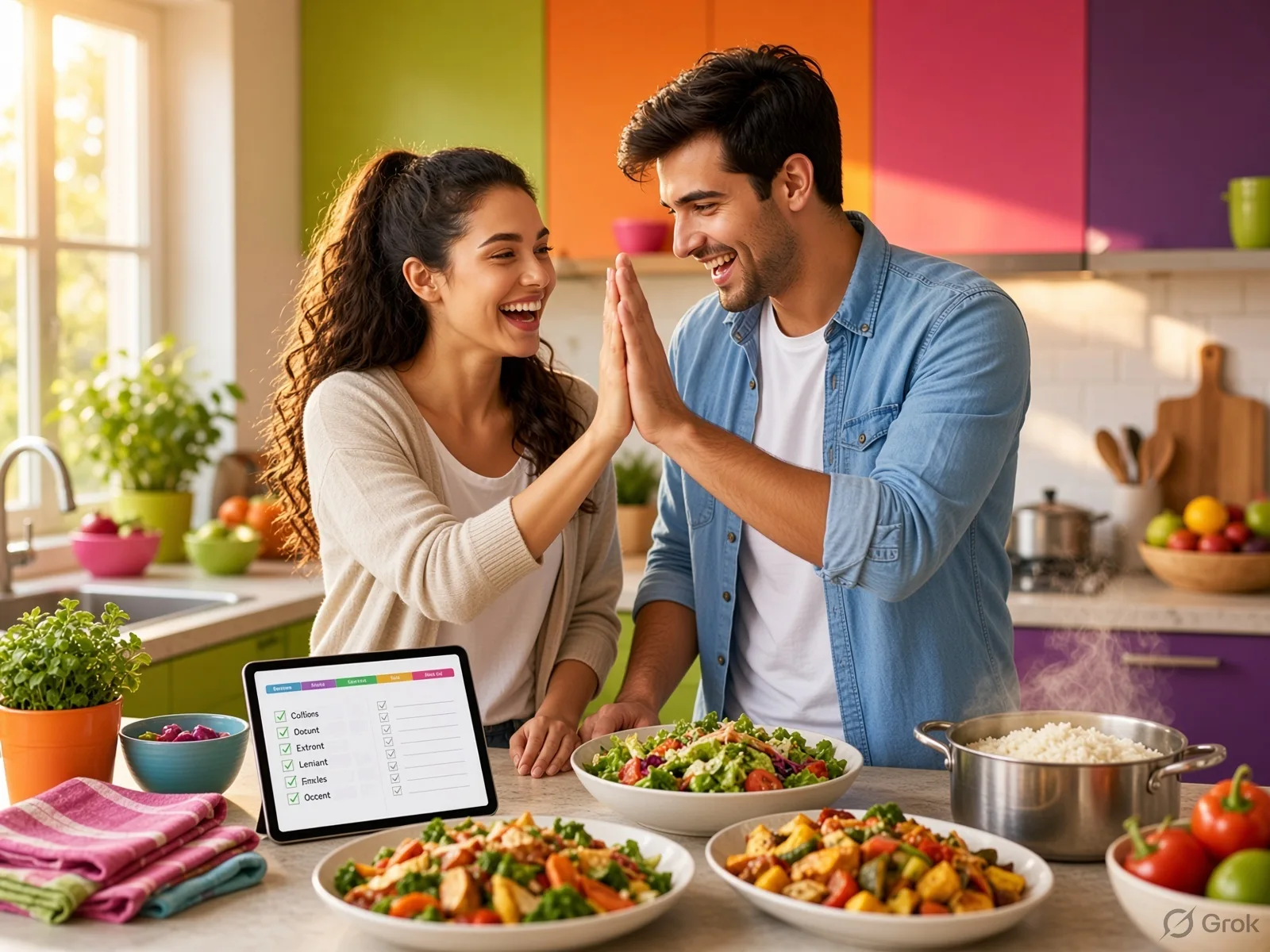
Your kitchen, your success story
One meal at a time, you’ve got this.
Turn these 30 answers into a real plan. CookingLife Elite gives you a 30-page editable system with kitchen skills, healthy meal planning, grocery and budget trackers, and a personal success dashboard.
Written by Digital Idea Tool Team · CookingLife Elite · Educational content only, not medical or nutritional advice.
Please read · Important information
Disclaimer & Compliance Note
This article, “30 Essential Cooking Questions Every Beginner Asks”, is published by Digital Idea Tool to help beginners learn everyday cooking, kitchen skills and meal planning. By reading and using this content, you agree to the terms below.
1Educational Purposes Only
All information in this article is general and educational. It is shared in good faith to help you learn, and is not a substitute for professional training or personalised advice.
2Not Medical or Nutritional Advice
Nothing here is medical, nutritional or dietary advice. If you have a health condition, food allergy or intolerance, are pregnant or breastfeeding, or plan a major diet change, please consult a doctor or registered dietitian first.
3Food Safety Guidelines
Food-safety practices and safe temperatures differ between countries. Always follow the guidance of your local food-safety authority and the instructions on food packaging.
4Allergens & Ingredients
Always read ingredient labels and check for allergens before cooking or serving food, especially when cooking for guests, children or anyone with dietary needs.
5Kitchen Safety
Cooking involves sharp knives, heat, hot oil and electrical appliances. Use them carefully, follow manufacturer instructions and always supervise children in the kitchen. You cook at your own risk.
6No Guaranteed Results
Results such as skills learnt, money saved or habits built depend on your own effort and circumstances. Any examples are illustrative, and no specific outcome is promised or guaranteed.
7Career & Business Information
Ideas about careers or food businesses are general suggestions, not financial, legal or business advice, and no income is guaranteed. Selling food usually requires local licences, registrations, food-hygiene certification and labelling, so check the rules in your area.
8Product Disclosure
This article promotes CookingLife Elite, a digital planner created and sold by Digital Idea Tool. We are the creators of this product and earn revenue from its sales. You can learn from this article without buying anything.
9AI-Assisted Images
Some images in this article were created with AI tools for illustration only. They do not show real customers, real results or specific recipes from the product.
10External Resources
We may mention general resources such as libraries, websites or video platforms. We are not responsible for the content, accuracy or availability of third-party sources.
11Accuracy & Updates
We aim to keep this content accurate and up to date as of the date of publication. Information and guidelines may change over time, and we may update this article without notice.
12Copyright
© 2026 Digital Idea Tool. All text, design and graphics in this article are protected by copyright. You may share a link to this page, but please do not copy or republish the content without written permission.
13Limitation of Liability
To the fullest extent permitted by applicable law, Digital Idea Tool and its team are not liable for any loss, injury, illness or damage arising from the use of, or reliance on, the information in this article or any linked product. If you have questions about this disclaimer, please contact us through digitalideatool.com.
Digital Download Only – No Physical Product. Nothing will be shipped. Files are available to download instantly after purchase.
30-Page Editable Planner
CookingLife Elite
Learn everyday cooking, master essential kitchen skills, plan healthy meals and track your progress with one colourful success system.
Get Instant Access📥 Digital download · Nothing shipped
📝 Key Takeaways & Action Notes
Jot down insights, next steps, or thoughts from this post. Your notes save automatically in your browser.
- What is the #1 breakthrough insight you took away today?
- What is one concrete action you will take in the next 24 hours?
- What questions or ideas do you want to research further?
Stay ahead with exclusive updates
Join our community. Get curated industry trends, actionable guides, and fresh resources delivered straight to your inbox.