
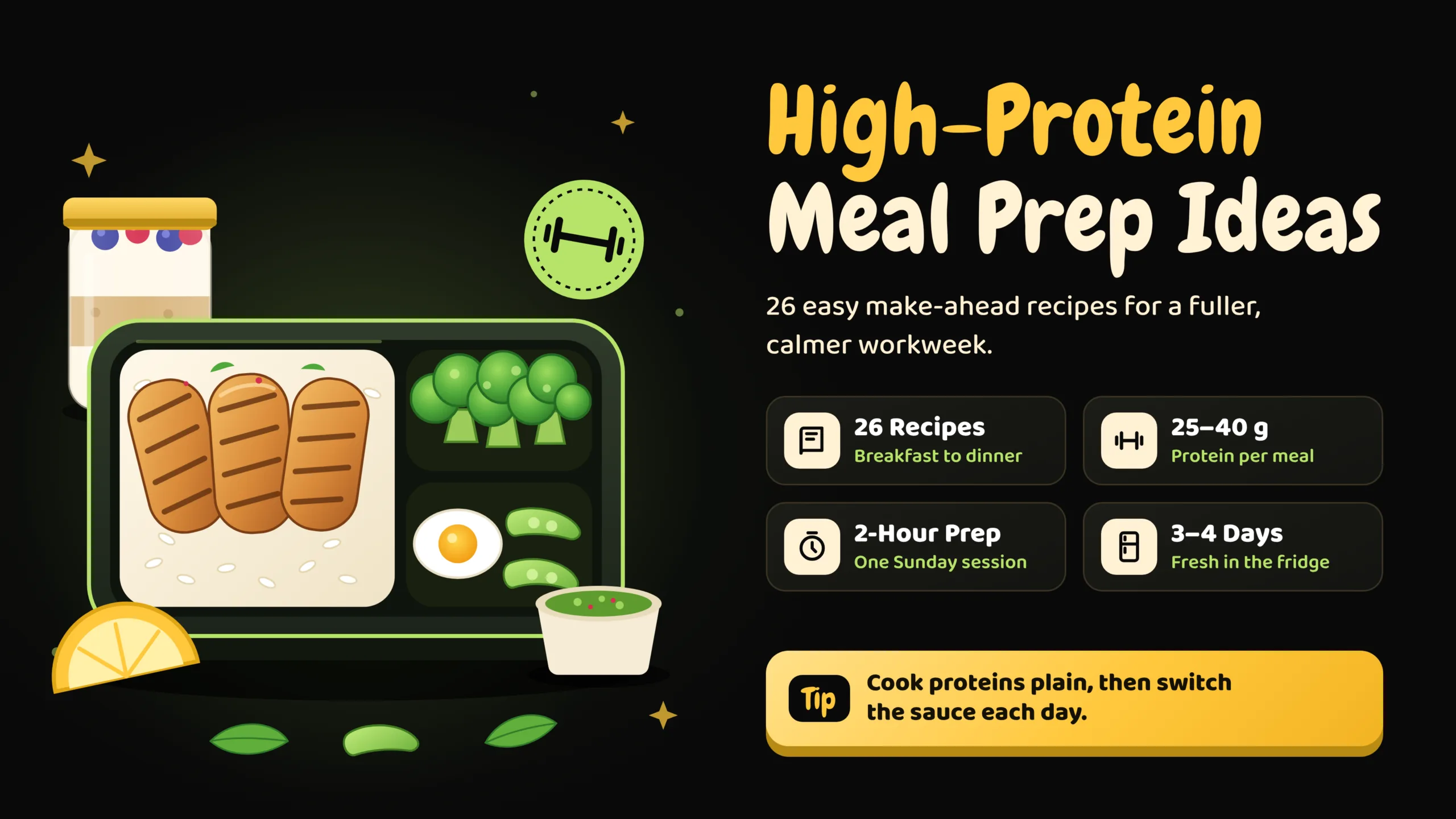
Easy high-protein meal prep ideas: 26 make-ahead recipes, a 2-hour Sunday plan, and a 5-day menu with 25–40 g of protein per meal.
High-Protein Meal Prep Ideas: 26 Easy, Make-Ahead Recipes and a Complete Weekly Strategy
A practical, evidence-informed playbook for breakfasts, lunches, dinners, and snacks that keep you full from Monday to Friday.
- ⏱ 24-min read
- 🥚 26 recipes
- 🗓 Updated Nov 2026
The most reliable high-protein meal prep ideas share one quality: they remove decision-making from the busiest hours of your week. When a satisfying, protein-rich lunch is already waiting in the refrigerator, the drive-through loses its appeal, the 3 p.m. vending-machine run becomes unnecessary, and dinner stops being a nightly negotiation. Protein is the anchor of that system because it is the macronutrient most strongly associated with fullness, muscle maintenance, and steady energy between meals.
This guide is written for American kitchens, American grocery stores, and American schedules. Every recipe uses ingredients you can find at Walmart, Kroger, Costco, Trader Joe’s, Aldi, or a regional supermarket, and every measurement is in cups, ounces, and degrees Fahrenheit. You will find the reasoning behind high-protein eating, a realistic estimate of how much you need, a two-hour Sunday workflow, twenty-six make-ahead recipes, budget tactics, the food-safety rules that keep leftovers safe, and a sample five-day menu you can follow as written or adapt to your own preferences.
Protein figures throughout are approximate, calculated from typical values for standard grocery-store ingredients. Brands vary, so treat each number as a dependable estimate rather than a laboratory measurement.
Why High-Protein Meal Prep Works So Well
Meal prep and high-protein eating reinforce each other. Protein-rich foods such as chicken, eggs, lean beef, beans, and Greek yogurt take longer to cook than most carbohydrates, so they are precisely the foods people skip when they are tired and hungry. Cooking them in advance closes that gap. Once the protein is ready, assembling a complete meal takes minutes.
There is also a physiological case. Protein tends to produce greater satiety than equivalent calories from refined carbohydrates or fat, partly because it influences appetite-regulating hormones and partly because it requires more energy to digest. That thermic effect is modest, yet across a week of meals it contributes to a steadier appetite. For people who strength train, distributing protein across several meals rather than concentrating it at dinner appears to support muscle repair more efficiently.
The practical advantages
- Fewer impulse purchases. A ready lunch competes directly with a $14 takeout bowl and usually wins.
- Consistent intake. Prepared portions make it far easier to reach a daily protein target without tracking every bite.
- Less food waste. Planning around a grocery list means fewer forgotten vegetables wilting in the crisper drawer.
- Reclaimed weeknights. One focused session on Sunday can replace five rushed evenings of cooking and cleanup.
The approach is not about eating identical chicken and broccoli for every meal. The most sustainable systems rely on a handful of versatile proteins, a few reliable grains and vegetables, and a rotating set of sauces that transform the same base ingredients into entirely different dishes. If you enjoy organizing that rotation on paper or a tablet, the Digital Idea Tool planner collection includes meal-planning layouts built for exactly this purpose.
How Much Protein Do You Actually Need Per Day?
The Recommended Dietary Allowance for healthy adults is 0.8 grams of protein per kilogram of body weight, or roughly 0.36 grams per pound. For a 160-pound adult, that is about 58 grams daily. The RDA, however, represents the minimum needed to prevent deficiency in most people, not an optimal target for every goal.
Many sports-nutrition researchers suggest a higher range of about 1.2 to 2.0 grams per kilogram for people who exercise regularly, are trying to preserve muscle while losing weight, or are older adults working to counter age-related muscle loss. For that same 160-pound person, the higher range works out to approximately 87 to 145 grams per day. The Harvard T.H. Chan School of Public Health’s Nutrition Source offers a balanced overview of these numbers and of why protein quality and source matter as much as quantity.
A simple per-meal target
Rather than obsessing over a daily total, aim for roughly 25 to 40 grams of protein at each main meal and 10 to 20 grams at each snack. Three meals and one or two snacks in those ranges land most adults comfortably within the higher recommended range. Every recipe in this guide is designed around that framework, so you can mix and match without calculating.
A note on health conditions: People with kidney disease, those who are pregnant, and anyone managing a chronic condition should confirm protein targets with a physician or registered dietitian. Higher protein intakes are generally safe for healthy adults, but individual needs differ.
Protein quality matters as well. Animal foods, soy, and certain combinations of legumes and grains supply all nine essential amino acids. The USDA MyPlate protein foods guide recommends varying your sources across seafood, lean meats, poultry, eggs, beans, peas, lentils, nuts, seeds, and soy products, which is exactly the diversity the recipes below provide.
Building a Protein-Forward Grocery List
A well-designed grocery list is the quiet engine of successful meal prep. Organize it by category rather than by recipe, and you will move through the store faster while buying fewer duplicates. Choose two or three proteins per week, then build every meal around them.
The most reliable protein sources for meal prep
| Food | Serving | Protein | Prep Notes |
|---|---|---|---|
| Chicken breast, cooked | 4 oz | ≈ 35 g | Brine or marinate to keep it moist |
| Chicken thigh, boneless, cooked | 4 oz | ≈ 30 g | Reheats beautifully, rarely dries out |
| 93% lean ground turkey, cooked | 4 oz | ≈ 28 g | Ideal for chili, meatballs, and bowls |
| Sirloin or flank steak, cooked | 4 oz | ≈ 33 g | Slice thinly against the grain |
| Salmon, cooked | 4 oz | ≈ 29 g | Best eaten within three days |
| Shrimp, cooked | 4 oz | ≈ 27 g | Buy frozen, thaw overnight |
| Large eggs | 2 eggs | ≈ 12 g | Hard-boil a dozen at once |
| Nonfat Greek yogurt | 1 cup | ≈ 23 g | Doubles as a sauce base |
| Low-fat cottage cheese | 1 cup | ≈ 26 g | Blend smooth for dips and bakes |
| Lentils, cooked | 1 cup | ≈ 18 g | No soaking required |
| Extra-firm tofu | 4 oz | ≈ 12–14 g | Press, then bake or air-fry |
| Shelled edamame | 1 cup | ≈ 18 g | Keep a bag in the freezer |
Supporting ingredients worth keeping on hand
- Quinoa & brown rice
- Whole-wheat tortillas
- Rolled oats
- Canned black & white beans
- Frozen broccoli & peppers
- Baby spinach
- Sweet potatoes
- Salsa & hot sauce
- Low-sodium soy sauce
- Chia seeds
- Natural peanut butter
- Shredded part-skim cheese
To keep your list consistent from week to week, a reusable template helps enormously. Our printable grocery list template is organized by store section so you can shop in a single efficient loop.
Equipment that pays for itself
You do not need a professional kitchen, but a few tools make prep dramatically faster: two rimmed half-sheet pans, a set of glass containers with locking lids, a 6-quart Instant Pot or slow cooker, an air fryer for crisping tofu and reheating proteins, a digital instant-read thermometer, and an inexpensive kitchen scale. The thermometer is the most important item on the list, because it is the only reliable way to confirm that meat and poultry are cooked safely without being overcooked.
The Two-Hour Sunday Prep Blueprint
Efficient meal prep resembles a restaurant line more than a home kitchen. The goal is to keep the oven, stovetop, and countertop working simultaneously so that nothing sits idle. The sequence below produces proteins, grains, vegetables, and sauces for roughly fifteen meals in about two hours.
- Preheat and plan (0:00). Heat the oven to 425°F, start a pot of water, and lay out every container. Decide which recipes you are making so you never pause mid-session.
- Start the slowest items (0:10). Load the slow cooker or Instant Pot with chili or shredded chicken, and put a pot of quinoa or rice on the stove.
- Fill both sheet pans (0:20). Season chicken thighs on one pan and chopped sweet potatoes, broccoli, and peppers on the other. Roast together for 25 to 30 minutes.
- Bake breakfast (0:35). While the oven works, whisk egg bites or mix overnight oats. Egg bites can share the oven on a lower rack once the vegetables come out.
- Make two sauces (0:55). Blend a Greek-yogurt herb sauce and a peanut-lime dressing. Sauces are what prevent flavor fatigue by Wednesday.
- Cool quickly (1:15). Spread cooked food in shallow layers so it drops below 40°F fast. Never pack steaming food into sealed containers.
- Portion and label (1:30). Assemble containers, label each with the contents and date, and place the meals you will eat last in the freezer.
- Clean as you finish (1:50). Wash pans while they are still warm. A clean kitchen at the end makes next Sunday far more inviting.
Flavor rotation strategy: Cook proteins with only salt, pepper, and garlic, then divide them among different sauces. One batch of plain roasted chicken becomes chipotle bowls on Monday, Greek salad on Tuesday, and peanut noodles on Wednesday. If you like mapping this out visually, try our weekly meal planner template.
Two shorter sessions, one on Sunday and one on Wednesday evening, work better than a single marathon for many households. Fish, seafood, and cut salad greens stay at their best for only a few days, so splitting the week keeps late-week meals fresher and gives you a chance to adjust based on what you actually ate.
Five high-protein sauces that rescue any container
Sauces are the difference between a lunch you anticipate and one you tolerate. Several of the best options also add protein of their own, which makes them doubly useful.
- Greek-yogurt tzatziki: Greek yogurt, grated cucumber, garlic, lemon, and dill. Roughly 6 grams of protein per quarter cup.
- Creamy cottage-cheese Alfredo: Blend cottage cheese with Parmesan, garlic, and a splash of pasta water for a lighter pasta sauce.
- Peanut-lime dressing: Natural peanut butter, lime juice, low-sodium soy sauce, honey, and sriracha, thinned with warm water.
- Chipotle-yogurt crema: Greek yogurt blended with a chipotle pepper in adobo and lime. Ideal for bowls, tacos, and chili.
- Lemon-tahini sauce: Tahini, lemon, garlic, and water. Sesame adds a modest amount of plant protein and a rich, nutty finish.
Store sauces in small, separate containers and add them just before eating. Dressing a grain bowl on Sunday leaves it soggy by Tuesday, while sauce added at the last moment keeps every texture distinct.
Common meal-prep mistakes and how to avoid them
Preparing too many different recipes. Ambitious first-timers often attempt six or seven dishes and finish exhausted. Three recipes, prepared well, are enough for an entire workweek.
Overcooking the protein. Food continues to cook slightly as it cools and again when it is reheated. Pull chicken, pork, and fish from the heat the moment they reach a safe temperature, and they will remain tender on day four.
Ignoring texture. A container of soft rice, soft chicken, and steamed vegetables quickly becomes monotonous. Add crunch at serving time with toasted nuts, seeds, crisp cucumber, or shredded cabbage.
Under-seasoning. Cold refrigeration dulls flavor. Season a little more boldly than you would for a meal eaten immediately, and keep lemon wedges or hot sauce on hand to brighten reheated food.
High-Protein Breakfast Meal Prep
Breakfast is where most Americans fall short on protein. A bagel, a bowl of cereal, or a granola bar may supply only five to eight grams, leaving you hungry by mid-morning. These make-ahead options each deliver between 20 and 32 grams and can be eaten at a desk or in the car. For even more morning inspiration, browse our collection of healthy breakfast recipes.
1. Cottage Cheese Egg Bites
≈ 22 g proteinInspired by the coffee-shop favorite, these bites owe their velvety texture to blended cottage cheese. Whisk 10 eggs with 1 cup cottage cheese, then fold in chopped spinach, roasted red peppers, and ¼ cup crumbled feta.
Bake in a greased muffin tin set inside a water bath at 325°F for 25 to 30 minutes, until set. Three bites make one serving.
2. Greek Yogurt Protein Overnight Oats
≈ 30 g proteinCombine ½ cup rolled oats, ¾ cup nonfat Greek yogurt, ½ cup milk, 1 tablespoon chia seeds, and 1 tablespoon peanut butter in a pint jar. Stir, seal, and refrigerate overnight.
Top with berries in the morning. Swap the peanut butter for cocoa powder and a mashed banana for a chocolate version without changing the protein much.
3. Turkey Sausage & Black Bean Breakfast Burritos
≈ 32 g proteinScramble 16 eggs, then brown 1 pound of turkey breakfast sausage. Divide both among 8 large whole-wheat tortillas with black beans, salsa, and shredded cheese.
Roll tightly, wrap in foil, and freeze. Reheat from frozen in an air fryer at 350°F for about 15 minutes, or unwrapped in the microwave for two to three minutes.
4. Sheet-Pan Protein Pancakes
≈ 20 g proteinBlend 2 cups rolled oats, 1½ cups cottage cheese, 6 eggs, 1 teaspoon baking powder, cinnamon, and vanilla until smooth. Pour onto a parchment-lined sheet pan and bake at 400°F for 15 minutes.
Slice into squares. Serve with Greek yogurt and fruit instead of syrup for an additional protein boost.
High-Protein Meal Prep Ideas for Lunch
Lunch is the meal that benefits most from preparation, because it is typically eaten away from home, on a deadline, and with limited reheating options. The following five recipes hold their texture for four days, tolerate a microwave well, and taste good at room temperature when a microwave is unavailable.
5. Chipotle Chicken Burrito Bowls
≈ 40 g proteinMarinate 2 pounds of chicken breast in chipotle peppers in adobo, lime juice, garlic, and cumin. Grill or roast at 425°F until the thickest part reaches 165°F, then dice.
Layer over cilantro-lime brown rice with black beans, corn, and pico de gallo. Pack Greek yogurt in a small cup as a sour-cream substitute.
6. Mediterranean Turkey Meatball Bowls
≈ 32 g proteinCombine 1½ pounds lean ground turkey with one egg, panko, grated onion, oregano, and lemon zest. Roll into 20 meatballs and bake at 400°F for 18 to 20 minutes.
Serve four meatballs over quinoa with cucumber, cherry tomatoes, Kalamata olives, and a generous spoonful of Greek-yogurt tzatziki.
7. Tuna & White Bean Salad Jars
≈ 34 g proteinIn a quart jar, layer a lemon-Dijon vinaigrette, then ½ cup cannellini beans, one drained 5-ounce can of tuna, diced celery, red onion, and parsley, finishing with arugula on top.
Keeping the greens at the top prevents wilting. Shake into a bowl at lunchtime. This is among the fastest high-protein lunches you can prepare.
8. Teriyaki Salmon & Edamame Bowls
≈ 36 g proteinBrush four 5-ounce salmon fillets with a homemade teriyaki of low-sodium soy sauce, honey, ginger, and garlic. Bake at 400°F until the center reaches 145°F, about 12 minutes.
Serve with jasmine rice, shelled edamame, shredded carrots, and sliced cucumber. Plan these for early in the week.
9. Steak & Chimichurri Grain Bowls
≈ 36 g proteinSear a 1½-pound flank steak to medium, rest for 10 minutes, and slice thinly against the grain. Blend parsley, garlic, red-wine vinegar, olive oil, and red-pepper flakes into a bright chimichurri.
Arrange over farro with roasted peppers and charred corn. The acidic sauce keeps leftover steak tasting lively.
Each of these lunches can be adapted for low-carb eating by replacing the grain with cauliflower rice or a bed of shredded romaine, which reduces calories without lowering the protein.
Make-Ahead High-Protein Dinners
Dinner recipes for meal prep should be forgiving: dishes that improve slightly as flavors meld, reheat without drying out, and satisfy the whole household. Casseroles, braises, chilis, and sheet-pan meals excel here. Several of the following can also be cooked fresh on a weeknight in 30 minutes if you prefer to prep components rather than complete meals.
10. Lemon-Herb Sheet-Pan Chicken Thighs
≈ 34 g proteinToss 2½ pounds of boneless thighs with lemon, garlic, oregano, and olive oil. Arrange with halved baby potatoes and green beans, then roast at 425°F for 25 to 30 minutes.
Thighs are the most forgiving cut for reheating and usually cost less than breasts per pound.
11. Slow-Cooker Turkey & Three-Bean Chili
≈ 35 g proteinBrown 2 pounds of lean ground turkey with onion and garlic. Add kidney, black, and pinto beans, crushed tomatoes, chili powder, cumin, and smoked paprika.
Cook on low for 6 to 8 hours. A 1½-cup serving is substantial. Top with Greek yogurt and shredded cheddar.
12. Garlic-Lime Shrimp with Cilantro Rice
≈ 32 g proteinSauté 1½ pounds of peeled shrimp in butter, garlic, lime juice, and chili flakes for three to four minutes, just until opaque.
Pair with cilantro rice and sautéed zucchini. Reheat gently at 50 percent microwave power to keep the shrimp tender.
13. Lean Beef & Broccoli Stir-Fry
≈ 35 g proteinSlice 1½ pounds of flank steak thinly, toss with cornstarch, and sear in batches over high heat. Add broccoli florets and a sauce of low-sodium soy sauce, oyster sauce, ginger, and a little brown sugar.
The cornstarch coating helps the beef stay tender after refrigeration, a technique borrowed from Chinese-American takeout kitchens.
14. High-Protein Baked Ziti
≈ 38 g proteinCook 12 ounces of protein-enriched or chickpea pasta. Combine with browned lean turkey, marinara, and 2 cups of cottage cheese blended until creamy, which stands in for ricotta.
Top with part-skim mozzarella and bake at 375°F for 25 minutes. It is comfort food with a remarkable protein profile.
15. Honey-Garlic Pork Tenderloin
≈ 33 g proteinPork tenderloin is one of the leanest and most affordable cuts in American supermarkets. Glaze two tenderloins with honey, garlic, and Dijon, then roast at 425°F until 145°F, followed by a three-minute rest.
Slice and serve with roasted sweet potatoes and Brussels sprouts.
Grab-and-Go Protein Snacks
Snacks fill the long gap between lunch and dinner, which is where most unplanned eating occurs. Preparing them alongside your main meals takes only a few extra minutes and keeps afternoon hunger in check.
16. Cottage Cheese Ranch Dip
≈ 14 g proteinBlend cottage cheese with dried dill, garlic powder, onion powder, and lemon juice. Pack with baby carrots, snap peas, and bell pepper strips.
17. The Classic Protein Snack Box
≈ 19 g proteinTwo hard-boiled eggs, one stick of part-skim mozzarella, grapes, and a few whole-grain crackers make a homemade version of the coffee-shop protein box.
18. Chocolate Peanut Butter Yogurt Pudding
≈ 20 g proteinStir unsweetened cocoa, powdered peanut butter, a little maple syrup, and vanilla into ¾ cup Greek yogurt. It tastes like dessert and keeps you full like a meal.
19. Turkey & Swiss Roll-Ups
≈ 18 g proteinSpread low-sodium deli turkey with mustard, layer with Swiss cheese and spinach, then roll tightly. Pair with an apple for a balanced snack.
20. Chili-Lime Roasted Edamame
≈ 13 g proteinThaw shelled edamame, pat completely dry, toss with olive oil, chili powder, and lime zest, then roast at 400°F for 30 to 35 minutes until crunchy.
21. No-Bake Protein Energy Bites
≈ 9 g proteinMix oats, peanut butter, a scoop of vanilla protein powder, honey, and mini chocolate chips. Roll into balls and chill. Ideal before a workout.
Plant-Based High-Protein Meal Prep
Vegetarian and vegan eaters can reach generous protein targets with thoughtful planning. The key is to rely on the most concentrated plant sources, namely tofu, tempeh, edamame, lentils, and seitan, and to combine legumes with whole grains across the day so that the full spectrum of essential amino acids is covered.
22. Crispy Tofu Peanut Noodle Bowls
≈ 26 g proteinPress two 14-ounce blocks of extra-firm tofu, cube, toss with cornstarch and soy sauce, and air-fry at 400°F for 15 minutes. Combine with soba noodles, edamame, shredded cabbage, and a peanut-lime dressing.
23. Red Lentil & Chickpea Coconut Curry
≈ 22 g proteinSimmer red lentils and chickpeas with light coconut milk, crushed tomatoes, ginger, garlic, and curry powder until thick. Serve over brown rice with a spoonful of plain yogurt, or a soy yogurt for a vegan version.
24. Tempeh Taco Crumbles
≈ 24 g proteinCrumble two 8-ounce packages of tempeh and brown with taco seasoning, tomato paste, and a splash of water. Spoon into lettuce cups, burrito bowls, or corn tortillas with black beans and salsa.
25. Edamame-Quinoa Power Salad
≈ 24 g proteinToss quinoa, shelled edamame, chickpeas, diced red pepper, cucumber, and toasted pumpkin seeds with a miso-sesame vinaigrette. Sturdy ingredients mean this salad stays crisp all week.
26. Black Bean & Sweet Potato Enchilada Bake
≈ 21 g proteinLayer corn tortillas with roasted sweet potato, black beans, crumbled extra-firm tofu, red enchilada sauce, and shredded cheese or a dairy-free alternative. Bake at 375°F for 25 minutes.
Plant-protein tip: A scoop of unflavored pea protein stirred into curries, soups, or overnight oats adds 15 to 20 grams with little change in flavor, a useful strategy when a plant-based day runs short.
High-Protein Meal Prep on a Budget
Protein is usually the most expensive part of any grocery cart, yet thoughtful shopping can reduce that cost considerably. The following strategies are especially effective in the United States, where warehouse clubs, discount grocers, and store brands offer real savings.
- Favor the economical proteins. Eggs, dried lentils, canned beans, chicken thighs, whole chickens, pork tenderloin, and canned tuna or salmon typically deliver more protein per dollar than steak or fresh fish.
- Buy family packs and portion them. Divide large packs of chicken or ground turkey into one-pound freezer bags as soon as you get home.
- Shop the freezer aisle. Frozen shrimp, fish fillets, edamame, and vegetables are frozen at peak quality, often cost less than fresh, and eliminate waste.
- Choose store brands. Great Value, Kirkland Signature, Kroger, and Good & Gather Greek yogurt and cottage cheese are nutritionally comparable to name brands.
- Cook dried beans in bulk. One pound of dried beans yields roughly six cups cooked at a fraction of the canned price. The Instant Pot cooks them without soaking in under an hour.
- Stretch meat with legumes. Replacing a third of the ground meat in chili, tacos, or pasta sauce with lentils maintains the protein while lowering the cost.
Tracking what you spend each week reveals patterns that are otherwise invisible. Pairing your meal plan with a simple monthly budget planner makes it easy to see how much prepping at home saves compared with takeout and delivery.
Scaling meal prep for a family
Feeding a household of four follows the same principles with larger batches. Double the chili, the baked ziti, and the sheet-pan chicken, and keep components separate so each person can assemble a plate to taste. Children often prefer plain protein, rice, and raw vegetables served side by side, while adults add the sauces and spice. Build-your-own formats such as burrito bowls, taco nights with tempeh or turkey, and pasta bars reduce complaints and waste at the same time. A family-sized slow cooker or 8-quart Instant Pot quickly earns its counter space, and a second set of sheet pans means both racks of the oven can work at once. If school lunches are part of your week, set aside snack boxes, roll-ups, and egg bites during the Sunday session so mornings require nothing more than packing a bag.
Storage and Food Safety Rules for Meal Prep
Food safety is the part of meal prep that people most often overlook, and it matters more than usual because prepared food sits in the refrigerator for several days. The guidelines below follow federal recommendations from the USDA and FDA. The FoodSafety.gov safe minimum internal temperature chart is worth bookmarking.
Cooking temperatures to confirm with a thermometer
- Poultry, including ground chicken and turkey: 165°F
- Ground beef and pork: 160°F
- Whole cuts of beef, pork, and lamb: 145°F, followed by a three-minute rest
- Fish and shellfish: 145°F, or until the flesh is opaque and flakes easily
- Egg dishes and casseroles: 160°F; leftovers reheated to 165°F
Storage guidelines
- Refrigerate cooked food within two hours, or within one hour if the room is above 90°F.
- Keep the refrigerator at 40°F or below and the freezer at 0°F.
- Eat refrigerated leftovers within three to four days. Plan fish and seafood for the first half of the week.
- Cool large batches in shallow containers no more than two inches deep, so they chill quickly and evenly.
- Cool cooked rice promptly and refrigerate it within an hour where possible, because rice can harbor heat-resistant bacterial spores.
- Label every container with its contents and the date it was prepared.
- Thaw frozen meals overnight in the refrigerator, never on the counter.
How to reheat meal prep without ruining it
Reheating is where many well-prepared meals lose their appeal. Microwave on medium power rather than high, stirring halfway through, and cover the container loosely so steam keeps the food moist. Add a tablespoon of water or broth to rice and grains before heating. Shrimp, salmon, and steak benefit from brief, gentle heating, while chili, curries, and casseroles can be reheated more vigorously. Whatever the method, leftovers should reach 165°F throughout. An air fryer at 350°F restores crispness to tofu, burritos, and roasted chicken in five to eight minutes, which makes it a worthwhile addition to an office kitchen or a home setup. Glass containers are the safest and most versatile choice for microwaving; if you use plastic, confirm that it is labeled microwave-safe.
Freezer strategy: Chili, curries, meatballs, burritos, egg bites, baked ziti, and cooked grains freeze exceptionally well. Leafy salads, cucumbers, and dishes with mayonnaise do not. Preparing a week of meals with two or three freezer meals reserved for Thursday and Friday keeps quality high all week.
A Sample 5-Day High-Protein Meal Plan
This workweek menu draws entirely from the recipes above and delivers roughly 110 to 120 grams of protein per day, suitable for an active adult. Adjust portions up or down depending on your needs, and repeat favorite meals freely, since repetition is what makes meal prep efficient.
| Day | Breakfast | Lunch | Dinner | Snack | Total |
|---|---|---|---|---|---|
| Monday | Overnight oats | Teriyaki salmon bowl | Sheet-pan chicken thighs | Snack box | ≈ 119 g |
| Tuesday | Egg bites | Chipotle chicken bowl | Turkey chili | Yogurt pudding | ≈ 117 g |
| Wednesday | Breakfast burrito | Turkey meatball bowl | Beef & broccoli | Ranch dip & veggies | ≈ 113 g |
| Thursday | Overnight oats | Tuna & white bean jar | Baked ziti (frozen) | Turkey roll-ups | ≈ 120 g |
| Friday | Protein pancakes | Steak grain bowl | Turkey chili (frozen) | Yogurt pudding | ≈ 111 g |
Notice how the plan reuses components. The chili appears twice, the overnight oats appear twice, and both chicken dishes come from a single Sunday roasting session. That repetition shortens your grocery list and your prep time. To track this plan alongside workouts, water intake, and habits, explore the planners in our digital product shop, or read our guide to quick and healthy recipes for more meals to add to your rotation.
Frequently Asked Questions About High-Protein Meal Prep
How long does high-protein meal prep last in the fridge?
Most cooked proteins, grains, and vegetables stay safe and appetizing for three to four days when refrigerated at 40°F or below. Fish and seafood are best eaten within two to three days. For a full workweek, freeze the meals you plan to eat on Thursday and Friday, then thaw them overnight in the refrigerator.
What are the best high-protein foods for meal prep?
Chicken thighs and breasts, lean ground turkey, flank steak, pork tenderloin, eggs, Greek yogurt, cottage cheese, canned tuna, salmon, lentils, black beans, edamame, tofu, and tempeh all hold up well after cooking and reheating. Chicken thighs and ground turkey are particularly forgiving because they stay moist for several days.
How can I get 30 grams of protein at breakfast?
Combine at least two protein sources. Greek yogurt overnight oats with chia and peanut butter reach about 30 grams, and a breakfast burrito with two eggs, turkey sausage, beans, and cheese provides roughly 32 grams. Cottage cheese, egg whites, and a scoop of protein powder are also easy ways to raise breakfast protein.
Is high-protein meal prep good for weight loss?
It can be helpful. Protein tends to increase fullness and helps preserve lean muscle during a calorie deficit, while portioned meals reduce impulse eating. Weight loss still depends on overall calorie balance, so pair high-protein meals with plenty of vegetables and sensible portions of grains and fats.
How do I keep meal-prep chicken from drying out?
Choose boneless thighs when possible, brine breasts in salted water for 30 minutes before cooking, and remove chicken from the heat as soon as it reaches 165°F. Store it with a spoonful of sauce or broth, and reheat covered with a damp paper towel to trap steam.
Can you meal prep high-protein meals as a vegetarian?
Yes. Tofu, tempeh, edamame, lentils, chickpeas, Greek yogurt, cottage cheese, and eggs make it straightforward to reach 20 to 30 grams per meal. Combining legumes with whole grains over the day ensures a complete range of essential amino acids.
How much does high-protein meal prep cost per week?
Costs vary by region and protein choice, but building meals around eggs, chicken thighs, ground turkey, canned fish, and beans keeps most single-person weekly plans well below the cost of buying lunch out every day. Buying family packs, using store brands, and shopping the freezer aisle reduce the total further.
Your First Protein-Powered Week Starts This Sunday
Successful meal prep rests on deliberate simplicity rather than culinary ambition. Choose two proteins, one grain, two vegetables, and two sauces for your first week. Cook them in a single focused session, portion them thoughtfully, and observe which meals you look forward to and which ones you push aside. That feedback is more valuable than any recipe, because it shapes a rotation tailored to your own tastes.
From there, expand gradually. Add a breakfast option in week two, a freezer meal in week three, and a plant-based dinner in week four. Within a month, you will have a personal library of high-protein meals that require little thought and reliably meet your nutritional goals. The time you once spent deciding what to eat becomes time you can spend on work, family, training, or rest.
Keep the system visible. A meal plan on the refrigerator, a grocery list on your phone, and labeled containers on the shelf turn good intentions into routine. When the routine is in place, eating well stops feeling like discipline and starts feeling like the easiest choice available.
Plan your meals, groceries, and workouts in one place.
Explore printable and digital planners designed for organized, healthy living.
Sources: protein recommendations summarized from the Harvard T.H. Chan School of Public Health and USDA MyPlate; cooking temperatures and storage times from FoodSafety.gov. Protein values are estimates based on typical U.S. grocery products. This article is for general information and is not a substitute for individual medical or nutrition advice.
📝 Key Takeaways & Action Notes
Jot down insights, next steps, or thoughts from this post. Your notes save automatically in your browser.
- What is the #1 breakthrough insight you took away today?
- What is one concrete action you will take in the next 24 hours?
- What questions or ideas do you want to research further?
Stay ahead with exclusive updates
Join our community. Get curated industry trends, actionable guides, and fresh resources delivered straight to your inbox.