
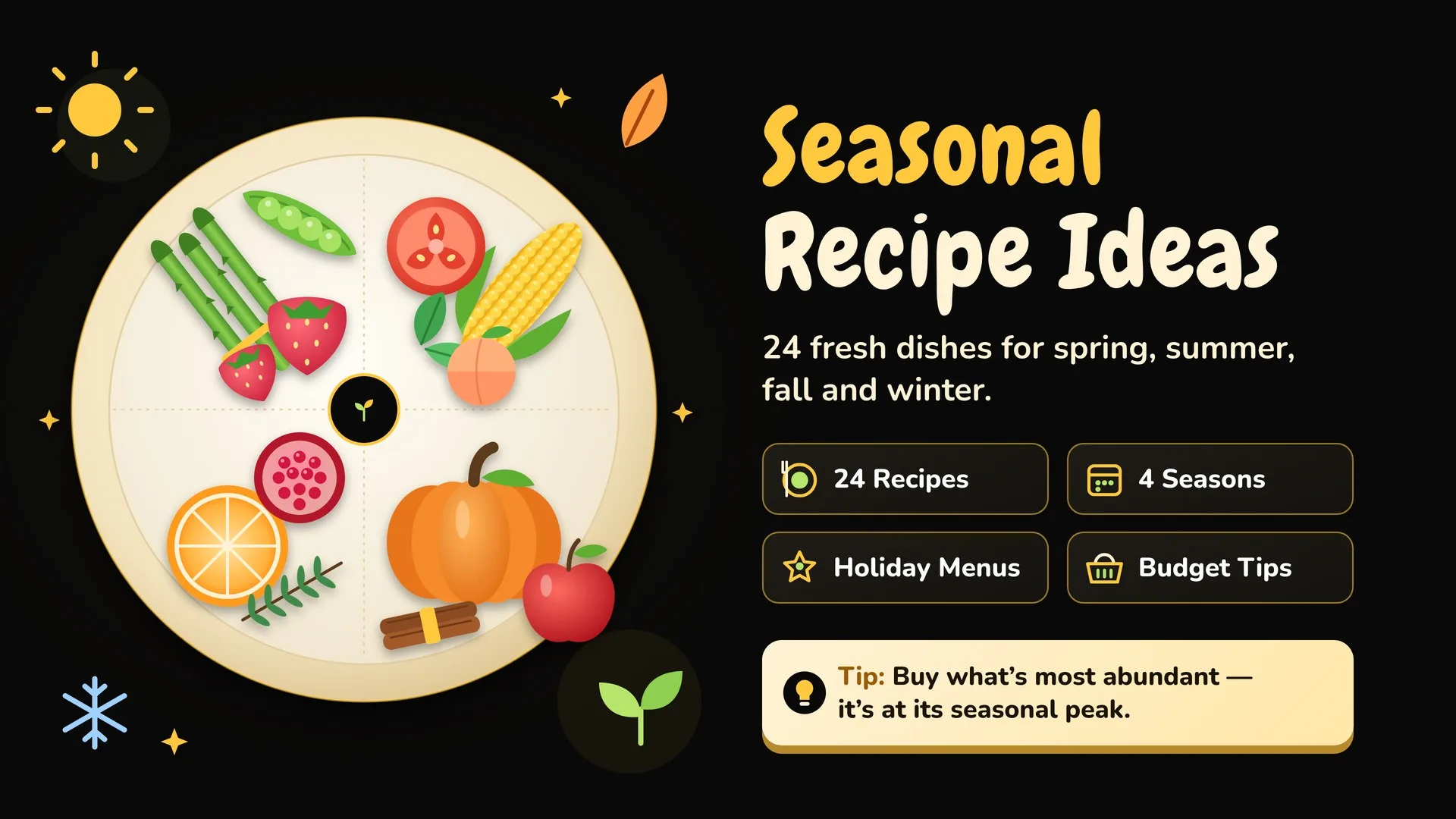
24 seasonal recipe ideas for spring, summer, fall and winter, plus holiday menus, harvest guides and budget tips for American home cooks.
The most reliable way to cook better food, spend less on groceries, and break out of a weeknight rut is to follow the calendar. These seasonal recipe ideas are organized around what American farms actually harvest each quarter, from the first asparagus of April to the Meyer lemons and storage squash that carry us through February. Cooking in step with the seasons is not a nostalgic affectation; it is a practical discipline. Produce picked at maturity has more sugar, more aroma, and more structural integrity than fruit harvested early and ripened in transit, and it is usually cheaper because it is abundant.
This guide works as both a reference and a planning tool. Each season opens with a short primer on what is at its peak, followed by five carefully chosen recipes that suit a typical U.S. household: weeknight dinners, make-ahead lunches, a dessert or two, and dishes that travel well to potlucks. Later sections cover holiday menus, preservation, food safety, and a straightforward method for building a seasonal meal plan you will actually use. Whether you shop at a farmers market in Vermont, a supermarket in Phoenix, or a CSA box in Ohio, the principles hold.
Why Seasonal Recipe Ideas Make Better Meals
Ask a professional chef what separates a memorable dish from an adequate one, and the answer rarely begins with technique. It begins with the ingredient. A July tomato from a nearby farm needs little more than salt and olive oil; a January tomato shipped two thousand miles needs a sauce to rescue it. Seasonal cooking simply means planning meals around ingredients when they are naturally at their best, and the benefits compound in four distinct ways.
Flavor and texture are measurably better
Fruits and vegetables continue to respire after harvest, converting sugars to starch and losing volatile aroma compounds. Sweet corn is the textbook example: its sugars begin converting within hours of picking, which is why corn bought at a roadside stand tastes noticeably sweeter than corn that has spent a week in distribution. Produce harvested close to maturity and sold nearby simply has more of what makes it taste like itself.
Abundance lowers the price
When a crop floods the market, prices fall. Strawberries in May, zucchini in August, and apples in October are routinely among the least expensive items in the produce aisle during their peak windows. Building your weekly menu around what is plentiful is one of the most effective, least painful grocery-budget strategies available to American households, and it requires no coupons.
Nutrition and variety improve naturally
Rotating ingredients with the seasons pushes your diet toward variety without any deliberate effort. Spring brings leafy greens and alliums, summer delivers carotenoid-rich tomatoes and peppers, autumn supplies fiber-dense squashes and apples, and winter offers vitamin-C-rich citrus and cruciferous vegetables. The USDA MyPlate guidance on fruits encourages eating a wide range of colors, and a seasonal kitchen does exactly that.
Decision fatigue disappears
Perhaps the most underrated advantage is psychological. “What should we eat this week?” is a large, open question. “What should we make with the asparagus and spring onions?” is a small, answerable one. The season narrows the field, and constraints are what make creative cooking feel manageable on a Tuesday night.
Local farms and communities benefit
Buying in season, particularly from regional growers, keeps more of each food dollar in the local economy and supports the small and mid-sized farms that maintain agricultural diversity across the country. Seasonal produce sold close to where it was grown also tends to need less refrigerated storage and shorter transport. The environmental arithmetic of food is complex, and distance is only one factor among many, but choosing what is naturally abundant nearby is a sensible default for cooks who want their kitchens to reflect their values.
Cook what the land is offering, and the recipe becomes a conversation with the season rather than an argument against it.
Reading the American Harvest Calendar
The United States spans everything from subtropical Florida to the short summers of Minnesota, so “in season” is always a regional statement. California, Florida, Texas and Arizona supply a large share of the nation’s winter vegetables, while the Northeast, Midwest and Pacific Northwest dominate summer and autumn harvests of berries, stone fruit, apples and corn. The national supermarket reflects whichever region is producing, which is why grocery stores seem to have everything all year. The useful question is not “Is this available?” but “Is this at its peak somewhere near me?”
A dependable starting point is the USDA SNAP-Ed Seasonal Produce Guide, which lists dozens of fruits and vegetables by season along with storage and preparation notes. To find growers near you, ask at your county extension office or search your state department of agriculture’s farmers market directory, which typically lists markets, CSAs and on-farm stores.
Spring
Asparagus, peas, artichokes, radishes, spinach, rhubarb, strawberries, spring onions, new potatoes.
Summer
Tomatoes, corn, zucchini, peppers, eggplant, peaches, blueberries, cherries, watermelon, basil.
Fall
Apples, pears, pumpkin, butternut squash, sweet potatoes, cranberries, mushrooms, kale, Brussels sprouts.
Winter
Oranges, grapefruit, Meyer lemons, pomegranates, leeks, cabbage, parsnips, turnips, fennel, cauliflower.
Regional adjustments worth knowing
- Southeast and Gulf Coast: Strawberries often peak from February through April in Florida, and collards and other hardy greens thrive through the cool months.
- Southwest and California: Citrus, avocados and leafy greens flourish in winter; summer heat favors peppers, melons and figs.
- Northeast and Upper Midwest: Expect a compressed season with a burst of berries in June and July, corn and tomatoes in August, and apples well into November.
- Pacific Northwest: Cherries, raspberries and blackberries define midsummer, while pears and wild mushrooms mark the fall.
Shopping shortcut: When a farmers market vendor has more of something than anything else on the table, that item is at its seasonal peak. Abundance is the most honest signal of ripeness you will find.
Flavor Pairings That Define Each Season
Recipes are useful, but pairings are what let you improvise. Experienced cooks carry a mental map of which ingredients flatter one another, and that map changes with the calendar. Ingredients that ripen together tend to taste good together, a principle as old as agriculture itself. Learning a few reliable combinations for each season frees you from following recipes word for word and lets you build a dinner from whatever came home in the market bag.
Spring pairings
Asparagus with lemon, eggs and Parmesan. Peas with mint, butter and ham. Radishes with butter, flaky salt and chives. Strawberries with rhubarb, balsamic vinegar or black pepper. Artichokes with garlic, white wine and thyme. The unifying idea is freshness: acid, soft herbs and dairy that cushions without overwhelming.
Summer pairings
Tomatoes with basil, olive oil and mozzarella. Corn with lime, chile and cotija. Watermelon with feta and mint. Peaches with bourbon, basil or burrata. Eggplant with garlic, miso or tahini. Summer pairings rely on contrast: sweet against salty, juicy against creamy, cool against smoky.
Fall pairings
Squash with sage, brown butter and maple. Apples with pork, cheddar and cinnamon. Mushrooms with thyme, cream and sherry. Sweet potatoes with chipotle, lime or pecans. Cranberries with orange and ginger. Autumn favors depth: toasted nuts, warm spices and caramelized sugars.
Winter pairings
Citrus with fennel, olives and red onion. Leeks with potatoes, cream and Gruyère. Cabbage with caraway, bacon and apples. Parsnips with honey and nutmeg. Pomegranate with lamb, walnuts or yogurt. Winter’s best combinations set richness against a sharp, clean accent.
A useful exercise is to choose one pairing per week and cook it three different ways: as a salad, as a pasta, and as a roasted side. By the end of a season you will understand those ingredients intimately, and the knowledge transfers. Once you know why squash and sage work, you will instinctively reach for sage with sweet potatoes or pumpkin, too.
Spring Recipes: Tender Greens and First Fruits
Spring cooking is about restraint. After months of braises and casseroles, the palate craves brightness: lemon, fresh herbs, crisp textures and quick cooking times. The produce of March through May is delicate, so the guiding principle is to do less. Blanch rather than roast, shave rather than stew, and let the sweetness of new peas and the grassy bite of asparagus speak for themselves. These spring dinner ideas suit the season’s longer evenings and lighter appetites.
Lemony Asparagus and Pea Risotto
Cook arborio rice slowly in warm vegetable stock, then fold in blanched asparagus tips and sweet peas during the final five minutes so they keep their color. Finish with lemon zest, a knob of butter, and grated Parmesan. Simmer the trimmed asparagus ends in the stock first; they lend a quiet, vegetal depth that store-bought broth lacks.
- 40 min
- Vegetarian
- Serves 4
Strawberry-Rhubarb Crisp
Rhubarb’s sharp acidity is the perfect foil for early strawberries. Toss equal weights of both with sugar, cornstarch and a pinch of salt, then bury them under an oat, pecan and brown-butter topping. Bake until the juices bubble thickly at the edges. Serve warm with vanilla ice cream or tangy Greek yogurt for brunch.
- 55 min
- Dessert
- Serves 8
Radish, Snap Pea and Herb Salad
Slice radishes paper-thin, cut snap peas on the bias, and toss with torn mint, dill and parsley. Dress with a buttermilk-chive dressing sharpened with a splash of white wine vinegar. The salad holds for an hour without wilting, making it an ideal side for a spring cookout or Easter table.
- 15 min
- No-cook
- Serves 4
Artichoke and Spring Onion Frittata
Sauté sliced spring onions and quartered artichoke hearts, pour over eggs whisked with ricotta and herbs, and finish under the broiler. For a protein-forward twist that rolls neatly for lunchboxes, try this cannellini bean and artichoke frittata roll, which delivers 28 grams of protein per serving.
- 25 min
- High-protein
- Serves 4
Seared Salmon With Minted Pea Mash
Wild Alaskan salmon runs begin in late spring. Sear skin-side down until the skin shatters, then baste briefly with butter. Serve over peas crushed with mint, olive oil and lemon. The dish takes twenty minutes and looks restaurant-polished on the plate.
- 20 min
- Gluten-free
- Serves 2
Leek and Gruyère Rolls
Young spring leeks are sweet and tender enough to use as wrappers. Blanch the outer layers, fill with a savory chickpea and cheese mixture, and bake until golden. This Swiss Gruyère and chickpea stuffed leek rolls recipe walks through the method step by step.
- 45 min
- Vegetarian
- Serves 4
Spring technique to master: blanching and shocking. Drop green vegetables into heavily salted boiling water for one to three minutes, then transfer them straight into ice water. The method fixes their color, preserves crunch, and lets you prep vegetables for several meals at once.
Summer Recipes: Peak Abundance, Minimal Heat
Summer is the season when American produce reaches its most generous state, and also the season when no one wants to turn on the oven. The best summer recipe ideas lean on the grill, the stovetop for brief stints, and the cutting board. From June through early September, think in terms of assembly rather than cookery: a perfect tomato, a handful of basil, good salt and a drizzle of oil is already a complete dish. Here are easy summer dinner ideas and make-ahead sides built for heat waves, backyard gatherings and Fourth of July tables.
Charred Sweet Corn Salad
Grill husked corn until spotted with char, cut the kernels from the cob, and toss with diced red onion, jalapeño, cilantro, crumbled cotija and lime juice. Add black beans and avocado to turn it into a meal. It tastes even better after an hour in the refrigerator.
- 25 min
- Grill
- Serves 6
Heirloom Tomato Panzanella
Salt chopped heirloom tomatoes and let them sit for twenty minutes to release their juice. Toss that juice with toasted day-old bread, cucumbers, shallots, basil and red wine vinaigrette. The bread drinks in the tomato liquid, producing a salad that is simultaneously crisp and saturated with flavor.
- 30 min
- Vegetarian
- Serves 4
Zucchini Fritters With Yogurt Dip
Grate zucchini, salt it, and wring out every drop of water in a kitchen towel; this is the step that separates crisp fritters from soggy ones. Bind with egg, feta, scallions and flour, then pan-fry. Serve with a garlicky yogurt-dill sauce. If you enjoy the pairing, these paneer patra rolls with yogurt dip offer a spiced, high-protein variation.
- 35 min
- Snack
- Makes 12
Herbed New Potato Salad
Skip the heavy mayonnaise. Boil small new potatoes until tender, halve them while warm, and dress immediately with mustard vinaigrette, capers, red onion and plenty of dill. Warm potatoes absorb the dressing deeply. For a Scandinavian take on the idea, try this Danish herring potato salad.
- 30 min
- Picnic
- Serves 6
Grilled Chicken With Peach Salsa
Marinate boneless thighs in lime, garlic, cumin and smoked paprika, then grill over medium-high heat. Top with a salsa of diced ripe peaches, red onion, jalapeño and basil. The fruit’s sweetness balances the smoke, and the thighs stay juicy even if slightly overcooked.
- 30 min + marinate
- Grill
- Serves 4
Peach and Blueberry Cobbler
Combine sliced peaches and blueberries with a little sugar, lemon and cornstarch, then cover with drop biscuits made from cold butter and buttermilk. Bake until the biscuits are tall and bronzed. It is the definitive late-July dessert, best eaten outdoors.
- 50 min
- Dessert
- Serves 8
Summer technique to master: salting tomatoes and cucumbers before using them. A sprinkle of salt draws out water, concentrates flavor, and prevents salads from becoming diluted. Save that liquid; it is an exceptional base for vinaigrettes.
Fall Recipes: Roasting, Braising and Baking
Autumn is arguably the most rewarding season for the American home cook. The weather invites the oven back into use, the harvest is enormous, and many fall vegetables, from winter squash to sweet potatoes, store for weeks. The flavors deepen accordingly: caramelization replaces freshness, warm spices replace raw herbs, and dishes become slower, more aromatic and more communal. These fall comfort food recipes span cozy weeknight dinners, one-pot meals and desserts worth baking on a Sunday afternoon.
Butternut Squash Soup With Sage Brown Butter
Roast halved squash and a whole head of garlic until deeply caramelized, then blend with sautéed onion, vegetable stock and a pinch of nutmeg. Finish each bowl with butter browned with crisp sage leaves. Roasting rather than boiling concentrates the squash’s sweetness and is the key to a velvety, flavorful soup.
- 1 hr
- Freezer-friendly
- Serves 6
Cider-Braised Pork Chops With Apples
Sear thick bone-in chops, remove them, then soften sliced onions and tart apples in the drippings. Deglaze with apple cider and a splash of cider vinegar, add thyme, and return the chops to braise gently. Swirl Dijon mustard into the reduced sauce. Serve with mashed potatoes or polenta.
- 45 min
- One-pan
- Serves 4
Wild Rice Stuffed Cabbage Bake
Fall cabbage is dense and sweet, and wild rice, a grain native to the Great Lakes region, gives the filling a nutty chew. Layer softened cabbage leaves with seasoned rice and tomato sauce for a casserole that feeds a crowd. Follow this wild rice stuffed cabbage bake for exact quantities.
- 1 hr 15 min
- Make-ahead
- Serves 6
Sweet Potato and Black Bean Chili
Cubed sweet potatoes simmer with black beans, fire-roasted tomatoes, chipotle in adobo, cumin and cocoa powder until thick and glossy. It is hearty enough to satisfy committed meat eaters, costs very little per serving, and freezes beautifully for game-day crowds.
- 50 min
- Vegan
- Serves 8
Sheet-Pan Harvest Vegetables
Toss Brussels sprouts, red onion, carrots and cubed delicata squash with olive oil, salt and smoked paprika. Roast at 425°F, stirring once, until edges are dark and crisp. Finish with maple syrup, apple cider vinegar and toasted pecans. Leftovers fold well into grain bowls the next day.
- 40 min
- Gluten-free
- Serves 4
Pear and Cranberry Galette
Roll an all-butter crust into a rough circle, arrange thinly sliced pears and fresh cranberries in the center, sprinkle with sugar and ginger, and fold the edges over. Brush with egg and coarse sugar. The free-form shape forgives imperfect pastry skills and looks rustic in the best sense.
- 1 hr
- Dessert
- Serves 8
Fall technique to master: high-heat roasting. Space vegetables generously on the pan, use enough oil to coat every surface, and resist stirring too often. Crowded pans steam; well-spaced pans caramelize.
Winter Recipes: Citrus, Roots and Slow Comfort
Winter tests the seasonal cook’s imagination, yet it offers more than many realize. Citrus reaches its peak in December through March, root vegetables and alliums grow sweeter after frost, and hardy brassicas like cabbage and kale are at their most flavorful. The craft of winter cooking lies in pairing slow, deeply savory dishes with bursts of brightness. A rich stew becomes extraordinary when followed by a sharp orange and fennel salad. These warm winter recipes balance comfort with clarity.
Chicken, Chestnut and Barley Soup
Pearl barley thickens the broth as it simmers, while roasted chestnuts add a subtle sweetness that pairs naturally with leeks, celery root and thyme. This Swiss chicken and chestnut barley soup is the kind of pot that improves on the second day, ideal for a snowed-in weekend.
- 1 hr 10 min
- One-pot
- Serves 6
Citrus, Fennel and Pomegranate Salad
Supreme blood oranges and grapefruit, layer them with shaved fennel and thinly sliced red onion, then scatter pomegranate seeds and mint on top. Dress with olive oil, honey and a squeeze of the leftover citrus membranes. It is the brightest plate of winter and needs no cooking at all.
- 20 min
- No-cook
- Serves 4
Red Wine Short Ribs With Root Mash
Brown short ribs thoroughly, then braise them with red wine, tomato paste, carrots, onions and rosemary at 325°F for about three hours. Serve over a mash of potatoes, parsnips and celery root whipped with butter. Make it a day ahead: chilling the braise lets you lift off the fat and the flavor deepens overnight.
- 3 hr 30 min
- Make-ahead
- Serves 6
Cod and Leek Croquettes
Winter leeks melt into a creamy salt-cod and potato mixture that is shaped, breaded and fried until shatteringly crisp. They make a stunning appetizer for a Feast of the Seven Fishes on Christmas Eve. This French cod and leek brandade croquettes recipe explains the soaking and shaping technique.
- 1 hr
- Appetizer
- Makes 20
Roasted Cauliflower With Tahini and Dates
Cut cauliflower into thick steaks or large florets, roast until deeply browned, and drizzle with a lemon-garlic tahini sauce. Scatter chopped dates, toasted almonds and parsley over the top. The combination of savory, sweet and nutty makes a compelling vegetarian main.
- 35 min
- Vegan
- Serves 3
Meyer Lemon Pudding Cakes
As these bake, the batter separates into a light sponge on top and a silky lemon curd beneath. Meyer lemons, a cross between a lemon and a mandarin, are less acidic and more floral than standard lemons, and they are at their peak in winter. Bake in ramekins set inside a water bath.
- 50 min
- Dessert
- Serves 6
Winter technique to master: braising. Brown the meat or vegetables well, add a modest amount of liquid, cover, and cook low and slow. Tough, inexpensive cuts become tender, and the oven warms the kitchen while you get on with your evening.
Holiday Menus From Thanksgiving to New Year’s
The six weeks between late November and early January concentrate more cooking into a short span than any other period of the American year. Seasonal thinking helps here, too, because the traditional holiday table is already a celebration of the fall harvest: turkey, cranberries, sweet potatoes, squash, pecans and apples. The challenge is logistics, not inspiration.
A stress-free Thanksgiving timeline
- Two weeks before: Finalize the guest count and menu, order a fresh turkey or buy a frozen one, and shop for pantry staples such as flour, stock, butter and spices.
- Four to five days before: Begin thawing a frozen turkey in the refrigerator. FoodSafety.gov recommends allowing roughly 24 hours for every 4 to 5 pounds of bird.
- Two days before: Make cranberry sauce, pie dough and stock. Toast pecans and dry out bread cubes for stuffing.
- The day before: Bake pies, assemble casseroles to bake the next day, prep vegetables, and set the table.
- Thanksgiving morning: Roast the turkey, bake the stuffing separately for even cooking, and make gravy from the drippings while the bird rests for at least 30 minutes.
Whatever cooking method you choose, check doneness with a thermometer rather than the clock. Turkey, stuffing and all poultry dishes should reach 165°F according to the FoodSafety.gov safe minimum internal temperature chart.
Creative ideas for Thanksgiving leftovers
Leftover turkey is an opportunity rather than an obligation. Shred it into a white-bean chili, fold it into enchiladas with salsa verde, or stir it into a quick noodle soup made with the carcass stock. For something unexpected, these baked turkey and cassava bolinhos turn the remains of the holiday roast into crisp, golden Brazilian-style bites, and the crispy baked cassava bolinhos with turkey variation is perfect for a Black Friday snack spread.
Christmas morning and New Year’s brunch
Holiday brunch rewards make-ahead dishes: an overnight French toast casserole with cranberries and orange zest, a citrus salad, and a savory baked item that can be prepared the night before. These Brazilian pão de queijo waffles are a protein-rich, naturally gluten-free choice that children and adults equally enjoy. For New Year’s Day, Southern tradition calls for black-eyed peas, collard greens and cornbread, said to bring prosperity, and each happens to be a winter staple.
Seasonal Cooking on a Budget
Grocery prices remain a pressing concern for many American families, and seasonal shopping is one of the few strategies that improves both quality and cost at the same time. The savings come not from deprivation but from timing: buying what is plentiful, using all of it, and storing the surplus for later.
Practical habits that cut the grocery bill
- Shop the last hour of the farmers market. Vendors often discount produce rather than haul it home, particularly delicate items like berries and greens.
- Ask for “seconds.” Bruised or oddly shaped tomatoes, peaches and apples are frequently sold at a steep discount and are perfect for sauces, jams and baking.
- Consider a CSA share. Community Supported Agriculture subscriptions deliver a weekly box of seasonal produce, often at a lower per-pound price than retail, while removing the guesswork from menu planning.
- Buy whole and use everything. Beet greens can be sautéed like chard, broccoli stems can be peeled and shaved into slaw, and squash seeds roast into a crunchy snack.
- Build a scrap stock bag. Keep onion ends, carrot peels, herb stems and parmesan rinds in a freezer bag, then simmer them into free, flavorful stock.
Seasonal breakfasts and packed lunches
Dinner gets most of the attention, but breakfast and lunch are where seasonal habits quietly save the most money. In spring, fold leftover asparagus into scrambled eggs or a breakfast tortilla. In summer, blend overripe peaches and berries into smoothies or layer them over yogurt with granola. Fall invites baked oatmeal with diced apples and cinnamon, while winter mornings pair well with citrus segments and warm, savory grain porridges. For lunches, cook a large batch of farro, quinoa or brown rice on Sunday and combine it each day with whatever roasted vegetables, greens and vinaigrette are on hand; the result is a different grain bowl every weekday for a fraction of the cost of takeout.
Storing, Preserving and Cooking Safely
A seasonal kitchen functions best when it can stretch the harvest. Preserving peak-season produce lets you enjoy August tomatoes in February and keeps prices low throughout the year. The methods below range from effortless to moderately involved; none requires special equipment beyond what most American kitchens already contain.
Freezing: the simplest preservation method
- Berries: Spread on a parchment-lined sheet pan, freeze until solid, then transfer to zip-top bags so they don’t clump together.
- Corn: Blanch whole ears for four minutes, chill in ice water, cut off the kernels, and freeze flat in bags.
- Herbs: Chop basil, parsley or cilantro and freeze in ice-cube trays covered with olive oil, ready to drop straight into a pan.
- Tomatoes: Freeze whole; the skins slip off easily once they thaw, and the flesh is perfect for sauces and soups.
Quick pickles and refrigerator jams
Refrigerator pickles require no canning: pack sliced cucumbers, red onions, radishes or green beans into a jar, pour over a hot brine of equal parts vinegar and water with salt and sugar, and refrigerate. They are ready within a day. Small-batch freezer jam made with ripe strawberries or peaches captures fruit flavor more vividly than cooked jam. For shelf-stable water-bath canning, follow tested recipes from a reliable extension service rather than improvising, because acidity and processing time matter for safety.
How to store produce so it lasts
- Keep tomatoes, bananas, stone fruit and avocados on the counter until ripe; refrigeration dulls the flavor of tomatoes in particular.
- Store potatoes, onions and winter squash in a cool, dark, well-ventilated spot, but keep potatoes and onions apart, as onions hasten sprouting.
- Wrap leafy greens loosely in a damp paper towel inside a container in the crisper drawer.
- Stand asparagus and fresh herbs like a bouquet in a jar of water in the refrigerator.
- Keep apples away from other produce; the ethylene gas they release speeds the ripening of everything nearby.
Food safety essentials: Keep your refrigerator at 40°F or below, rinse produce under running water just before using it rather than before storage, and refrigerate cooked leftovers within two hours, or within one hour on a hot summer day above 90°F.
Building a Seasonal Meal Plan That Lasts
Inspiration fades quickly without a system. The households that cook seasonally year after year are rarely the most talented cooks; they are the most organized ones. A simple, repeatable planning routine turns the recipes above into a dependable habit.
- Start with the market, not the recipe. Check what is abundant first, whether at the farmers market, in your CSA box, or on the supermarket’s sale flyer, and choose recipes afterward.
- Plan three anchor dinners per week. Leave the remaining nights for leftovers, simple eggs-and-toast suppers, or eating out. A plan with built-in slack is a plan you will keep.
- Cook once, eat twice. Roast a double tray of vegetables on Sunday, braise a large pot on Wednesday, and repurpose the extra into grain bowls, tacos or soups.
- Keep a seasonal pantry. Stock ingredients that flatter each season: good vinegar and fresh herbs for spring and summer, warm spices, stock and dried beans for fall and winter.
- Record what worked. Note your favorite dishes for each season in a planner. Next year, you will start with a proven shortlist instead of a blank page.
Five tools that make seasonal cooking easier
You do not need a professional kitchen to cook with the seasons, but a few well-chosen tools remove friction from the process. A sharp chef’s knife and a large cutting board make quick work of the vegetable prep that seasonal cooking demands. Two rimmed half-sheet pans allow you to roast generously without crowding. A heavy Dutch oven handles everything from summer ratatouille to winter braises. An instant-read thermometer takes the guesswork out of roasts and holiday birds. Finally, a set of glass storage containers and freezer bags makes it practical to prep ahead and preserve surplus produce. With these five items, every recipe in this guide is within reach.
Plan every season in one place
Digital Idea Tool offers printable and digital planners, recipe collections and kitchen organization templates designed to make seasonal cooking routine. Browse the full catalog to find a meal-planning system that fits your household.
Explore Digital ProductsFor more ideas on organizing your kitchen and your week, visit the Digital Idea Tool blog, or browse the latest posts on the Ideas page. Readers looking for quick weeknight inspiration will find a growing archive in our easy recipes collection.
Frequently Asked Questions
What are some easy seasonal recipe ideas for beginners?
Start with dishes that rely on one technique and a handful of ingredients: a sheet pan of roasted fall vegetables, a summer tomato and basil salad, a spring pea and mint soup, or a winter citrus salad. These recipes are forgiving and teach the core skills of seasoning, roasting and balancing acidity.
How do I know what fruits and vegetables are in season near me?
Visit a local farmers market and note what appears in the largest quantities, consult the USDA SNAP-Ed Seasonal Produce Guide, or check your state’s agriculture department or university extension service, many of which publish regional harvest calendars.
Is cooking with seasonal produce really cheaper?
Generally, yes. When a crop is at its harvest peak, supply is high and prices tend to fall, both at farmers markets and in supermarkets. Combining seasonal shopping with freezing or pickling surplus produce extends those savings into the off-season.
What vegetables are in season in the winter in the USA?
Winter brings cabbage, kale, collards, Brussels sprouts, leeks, parsnips, turnips, rutabagas, celery root, cauliflower and fennel, along with stored crops like potatoes, onions and winter squash. Citrus fruits such as oranges, grapefruit and Meyer lemons are also at their peak.
Can I use frozen produce in seasonal recipes?
Absolutely. Frozen fruits and vegetables are usually processed shortly after harvest, so they capture peak-season quality. Frozen peas, corn, spinach and berries perform especially well in soups, smoothies, baked goods and sautés, though they are less suited to raw salads.
What are good fall dinner ideas for a family?
Family-friendly fall dinners include butternut squash soup with grilled cheese, cider-braised pork chops with apples, sweet potato and black bean chili, stuffed cabbage casseroles, and sheet-pan chicken with root vegetables. Most can be prepared ahead and reheated on busy weeknights.
How far ahead can I prepare Thanksgiving dishes?
Cranberry sauce and stock can be made several days ahead, pie dough can be frozen weeks in advance, and most casseroles can be assembled the day before and baked on Thanksgiving. Bake pies a day ahead, and roast the turkey on the day itself for the best texture.
Cooking the Year in Four Movements
Seasonal cooking is less a set of rules than a way of paying attention. Spring asks for lightness and speed; summer for generosity and restraint at the stove; autumn for patience with the oven; winter for depth balanced by brightness. Once you begin cooking in this rhythm, the year acquires a shape. You start to anticipate the first asparagus, mourn the last peach, and greet the arrival of citrus in December like an old friend.
The approach also scales to any schedule. A busy parent can apply it to a single weekly dinner; an enthusiastic home cook can preserve, pickle and plan an entire calendar. Neither version is more correct. What matters is the shift in perspective from asking what you feel like eating to asking what the season is offering, and then cooking that ingredient with care. That question, asked consistently, quietly improves everything that reaches the table.
Choose one recipe from the current season and cook it this week. Note what you liked, adjust what you didn’t, and add it to your seasonal shortlist. Repeat that small practice through all four seasons, and a year from now you will have a personal repertoire built on the best ingredients America’s farms can offer.
Keep reading: more recipes from our kitchen
📝 Key Takeaways & Action Notes
Jot down insights, next steps, or thoughts from this post. Your notes save automatically in your browser.
- What is the #1 breakthrough insight you took away today?
- What is one concrete action you will take in the next 24 hours?
- What questions or ideas do you want to research further?
Stay ahead with exclusive updates
Join our community. Get curated industry trends, actionable guides, and fresh resources delivered straight to your inbox.