How to build sustainable mobile app revenue using smarter advertising, valuable premium features, and an experience users actually enjoy.
Your mobile app might attract thousands of downloads, but turning those downloads into reliable income is a different challenge. Show too many ads, and users leave. Hide every useful feature behind a paywall, and they may never return.
The solution isn’t necessarily more advertising or higher subscription prices. It’s building a monetization strategy that feels like a natural part of the app experience.
Whether you’re developing your first Android application, growing an iOS productivity tool, or improving an existing mobile game, the most successful approach starts with one principle: give people a compelling reason to stay before asking them to pay.
In this guide, you’ll discover how to monetize mobile apps through ad networks, in-app purchases, subscriptions, and hybrid revenue models without damaging user trust. You’ll also learn how to choose ad placements, design premium features, measure performance, and convert free users into loyal paying customers.
Why Mobile App Monetization Is About More Than Showing Ads
Many developers make the same early mistake. They invest months creating an app, finally publish it, and immediately begin filling available screen space with advertisements.
Revenue might start appearing. But something else happens.
Users encounter interruptions, engagement drops, and the app becomes less enjoyable.
That’s a difficult business model to sustain.
A smarter approach treats monetization as part of the product’s overall design.
Instead of asking, “How many advertisements can this app display?” ask:
“How can this app generate revenue while making users feel they’re receiving something worthwhile?”
That shift changes everything.
For example, imagine two free language-learning apps.
The first interrupts every lesson with a full-screen video advertisement.
The second allows users to complete lessons without interruption, offers optional rewarded ads for extra practice credits, and sells an affordable premium package with advanced exercises.
Both apps have monetization opportunities. But the second gives users more control over their experience.
This doesn’t guarantee higher revenue. It creates a stronger foundation for retention, satisfaction, and repeat usage.
The three foundations of sustainable app revenue
An effective mobile app monetization strategy balances three priorities:
- User value: People can accomplish something useful or enjoyable.
- Revenue opportunities: Advertising, purchases, or subscriptions support the business.
- Long-term retention: Monetization doesn’t discourage people from returning.
The best strategy isn’t necessarily the one generating the most money per session.
It’s the one generating healthy revenue throughout a user’s relationship with the app.
Understanding the Main Ways to Monetize Mobile Apps
Before selecting an advertising platform or designing a subscription, understand the available revenue models.
Each works differently depending on your app category, audience, and usage patterns.
1. In-app advertising
Mobile app advertising allows developers to earn revenue when advertisements are displayed or, depending on the arrangement, generate eligible clicks or other outcomes.
Common formats include banner ads, native ads, interstitial ads, rewarded videos, and app-open ads.
Advertising can work well for apps that attract frequent engagement but have relatively low direct purchase intent.
Examples include casual games, entertainment apps, informational tools, and some free utility applications.
2. In-app purchases
An in-app purchase, often abbreviated IAP, allows users to buy digital products, features, upgrades, or content within an application.
Examples include:
- Unlocking an advanced photo-editing toolkit.
- Purchasing additional game levels.
- Buying a digital sticker collection.
- Removing advertisements permanently.
- Unlocking specialized productivity templates.
The advantage is straightforward: users pay for something they specifically want.
3. Subscriptions
Subscriptions provide recurring access to premium features or services in exchange for periodic payments.
They’re often suitable for applications delivering ongoing value, such as fitness programs, cloud-backed productivity tools, educational resources, and frequently updated content.
However, subscriptions only make sense when the product continues to justify recurring payments.
Charging monthly for a feature that users need once can create unnecessary friction.
4. Freemium monetization
A freemium app provides useful basic functionality at no cost while charging for additional capabilities.
For example, a budgeting app might offer free expense tracking while reserving advanced forecasting, multiple accounts, and premium reports for paying customers.
Freemium works best when the free version is genuinely useful.
A deliberately frustrating free experience rarely creates lasting goodwill.
5. Hybrid monetization
A hybrid model combines two or more revenue streams.
A meditation app might offer:
- A useful free library.
- Limited, non-disruptive advertisements.
- Optional premium audio packs.
- An ad-free subscription with ongoing content updates.
This approach creates monetization options for users with different budgets and preferences.
The challenge is ensuring those options complement one another rather than competing for attention.
Choosing the Best Mobile Ad Networks for Your App
Selecting a mobile advertising network involves more than comparing estimated payouts.
You need to consider ad quality, geographical coverage, supported formats, SDK performance, privacy controls, reporting, and integration requirements.
Here are several established options worth evaluating.
| Advertising platform | Notable capabilities | Worth evaluating for |
|---|---|---|
| Google AdMob | Banner, native, interstitial, and rewarded ads | Developers seeking multiple ad formats |
| Unity LevelPlay | Mediation, optimization, demand-source management | Games and apps with multiple ad partners |
| AppLovin MAX | Ad mediation, bidding, analytics | Developers optimizing multiple demand sources |
| Liftoff Monetize | Mobile advertising demand and monetization tools | Apps evaluating diversified advertising demand |
Platform capabilities, eligibility, fees, and supported integrations can change. Evaluate current documentation and commercial terms before choosing.
What should you look for in an ad network?
Start by reviewing the quality of the advertising experience.
An ad network delivering a high estimated eCPM isn’t necessarily the best choice if its creative formats interfere with navigation or create policy issues.
Pay particular attention to ad relevance, available category blocking, fill rates in your target countries, technical support, SDK reliability, reporting transparency, and payment arrangements.
Practical tip: Begin with one manageable integration, establish performance benchmarks, and add mediation or other demand partners when you have enough traffic to evaluate the additional complexity.
Non-Intrusive App Ads: Which Formats Work Best?
The ad format you choose directly affects how users experience your application.
There is no universally perfect format. The right option depends on when people use your app and what they’re trying to accomplish.

Native ads
Designed to fit naturally within content feeds, with clear advertising labels. Useful for browsing-based apps when ads remain distinguishable from ordinary content.

Rewarded ads
Users voluntarily view an advertisement in exchange for a disclosed reward, such as a hint, bonus life, or additional content access.

Interstitial ads
Full-screen advertisements shown at suitable natural transitions, such as between selected game levels rather than during active play.

Banner ads
Small, persistent placements that can fit some utility or information screens, provided they don’t crowd content or cause accidental taps.
Why rewarded ads deserve special attention
Rewarded advertising is particularly interesting because the user initiates the interaction.
Instead of forcing an interruption, the application presents an optional exchange.
For example:
“Watch an ad to unlock one additional puzzle hint.”
The user can accept or decline.
Google’s AdMob guidance describes rewarded advertising as an opt-in format where users receive an in-app reward for engaging with an advertisement.
Google AdMob
+1
A transparent reward should have real value, be delivered reliably, and never mislead people about the action required.
Where interstitial advertising belongs
Interstitials should appear at logical pauses in an application’s workflow.
Google AdMob recommends natural transition points and cautions against repeatedly interrupting users or displaying unexpected ads during active tasks.
Google AdMob Help
+1
Good candidate moments include a completed game level or a clearly finished content segment.
Poor choices include interrupting a user while typing, reading instructions, recording audio, completing a payment, or navigating an important screen.
There is another important distinction: an advertising format might be technically supported without being appropriate for every situation.
A supported ad format is not permission to place it anywhere.
How Many Ads Are Too Many?
There is no universal number of advertisements that works for every app.
A puzzle game with natural breaks is different from a writing app used for uninterrupted concentration.
Instead of selecting an aggressive default frequency, start conservatively.
A reasonable experimental approach might include:
- Avoiding forced advertisements before users experience the app’s main benefit.
- Placing optional rewarded ads at moments when users understand their value.
- Testing infrequent interstitials at natural breaks.
- Suppressing inappropriate ads during sensitive or time-critical tasks.
- Providing an ad-free upgrade when it genuinely improves the experience.
These are design recommendations, not guaranteed revenue formulas or substitutes for network policies.
Use an ad-frequency budget
Think of user attention as a limited resource.
Every unnecessary advertisement consumes some of it.
An app that constantly demands attention can become exhausting even if each individual ad technically follows platform requirements.
Track advertisement exposure alongside meaningful outcomes.
For instance, if additional ad impressions increase revenue slightly but cause fewer users to finish their sessions, you may be sacrificing future earnings.
Measure the trade-off rather than assuming more impressions are always better.
Building an In-App Purchases Strategy That Users Welcome
An effective in-app purchases strategy begins with one question:
What additional value would someone willingly pay to receive?
The answer shouldn’t be “the ability to escape an intentionally miserable free experience.”
Instead, premium purchases should offer genuine improvements.
Offer features that solve specific problems
Consider a free habit-tracking app.
Its core experience includes creating habits, recording daily progress, and reviewing simple completion history.
Premium options might provide:
- Detailed habit analytics.
- Cloud synchronization across devices.
- Advanced reminders and scheduling.
- Downloadable progress reports.
- Specialized coaching programs.
Each premium feature solves an identifiable problem.
A customer can understand the value without needing a complicated sales pitch.
Choose the right purchase type
| Purchase type | Example | Best suited to |
|---|---|---|
| Consumable purchase | Extra game currency | Items that can be used up |
| Non-consumable purchase | Permanent ad removal | One-time unlocks |
| Subscription | Monthly premium lessons | Ongoing access or services |
| Content pack | Additional illustration brushes | Specific content or tool expansions |
The distinction matters because purchase restoration, entitlements, billing, and user expectations differ.
Implement each purchase type using the appropriate platform mechanisms.
Let users experience value before presenting a paywall
Imagine installing a photo-editing app.
You select an image, adjust a filter, and discover that every export requires payment.
That feels less like an upgrade opportunity and more like a broken promise.
A better experience might allow standard exports for free and offer premium exports with advanced resolution, batch processing, or specialist effects.
The user already understands what the product does.
Now the upgrade offer has context.
Designing a High-Converting Paywall Without Dark Patterns
A paywall is a product explanation, not merely a checkout screen.
Users need to understand what they’re buying, how much it costs, and what happens next.
Effective paywalls emphasize clarity.
Explain benefits rather than listing features alone
Compare these two messages.
Weak message:
“Upgrade to Pro for additional functionality.”
Stronger message:
“Save time with unlimited projects, automated backups, and advanced reports.”
The second communicates recognizable benefits.
It still needs to accurately describe what the upgrade provides.
Present pricing transparently
Show the relevant purchase price, billing period, renewal terms, trial conditions, cancellation details, and any applicable restrictions before purchase.
Don’t make the monthly option intentionally difficult to find.
Don’t use misleading buttons or false urgency.
And don’t describe a subscription as free when payment will begin automatically after a disclosed trial.
A transparent purchase flow can build the confidence needed for repeat transactions.
Use upgrade prompts when they’re relevant
A good prompt appears when a user encounters the value of the upgrade.
For example, after a customer creates several projects, an app might explain how premium organization tools can help manage a growing workspace.
That’s more relevant than displaying a subscription advertisement immediately after installation.
Consider contextual prompts after meaningful milestones while keeping repeated sales interruptions under control.
Combining Ad Revenue and In-App Purchases
Hybrid monetization is often worth exploring because not every user wants to pay directly.
Some people prefer a free experience supported by advertising.
Others gladly pay to eliminate ads or gain advanced capabilities.
A hybrid strategy respects both.
Example: A free mobile puzzle game
Imagine a game with short daily challenges.
Its free tier provides the main game experience.
Users may voluntarily watch a rewarded ad to receive an additional hint.
A premium purchase permanently removes eligible advertising and unlocks exclusive puzzle collections.
This creates distinct value propositions.
The free tier remains enjoyable, while the premium tier offers something extra.
Example: A mobile productivity app
A productivity app could offer a free plan with core task management.
Instead of crowding every screen with advertisements, it might use an occasional, clearly separated native ad in a non-critical discovery area.
A premium subscription unlocks advanced collaboration, cloud history, and automation.
This approach needs careful testing. For productivity products, a paid-only or freemium model without ads may deliver a better experience.
Avoid monetization conflicts
A common problem occurs when someone purchases an ad-free plan but continues seeing advertisements.
Distinguish clearly between advertising, optional promotional messages, and product announcements.
If you promise “ad-free,” users should receive the advertising-free experience described at checkout.
Premium entitlements should work reliably across supported devices and purchase restoration flows.
How Much Money Can Mobile Apps Make From Ads?
Advertising revenue depends on user activity, audience geography, ad format, demand, fill rate, and other variables.
A basic planning formula is:
Estimated ad revenue = (Paid ad impressions ÷ 1,000) × eCPM
Here, eCPM represents effective revenue per thousand impressions.
Consider a purely hypothetical scenario.
A mobile app records 100,000 paid advertising impressions during a month.
If its effective CPM is $3:
\[ (100,000 \div 1,000)\times \$3=\$300 \]
That produces $300 in estimated revenue for the period.
This is an illustration, not an industry average or earnings prediction.
Mobile Ad Revenue Calculator
Explore hypothetical revenue scenarios. These inputs are not live ad-network rates.Monthly paid ad impressionsEstimated eCPM
$3.00
Estimated monthly ad revenue
$300.00
Before operating costs and applicable taxes
Why retention matters more than a single day’s revenue
Consider two hypothetical users.
One opens an app once, encounters several advertisements, and leaves permanently.
Another returns throughout the month, engages with useful features, occasionally chooses rewarded ads, and eventually purchases a premium upgrade.
The second relationship offers more monetization opportunities over time.
But that doesn’t mean every retained user will become a buyer.
Retention simply gives the business more chances to deliver value and earn revenue.
Key Metrics Every App Developer Should Track
App monetization becomes more predictable when decisions are based on observed behavior rather than guesswork.
Track both commercial performance and user satisfaction.
| Metric | What it tells you |
|---|---|
| DAU and MAU | How many users engage daily and monthly |
| D1, D7, and D30 retention | Whether users return after installation |
| ARPDAU | Average revenue per daily active user |
| ARPU | Average revenue per user over a defined period |
| ARPPU | Average revenue per paying user |
| Ad eCPM | Effective advertising revenue per thousand impressions |
| Ad fill rate | How often eligible ad requests receive ads |
| IAP conversion rate | Percentage of eligible users making purchases |
| Subscriber churn | How frequently subscriptions end |
| Customer lifetime value | Estimated economic contribution over a customer’s relationship with the app |
Measure profit rather than gross revenue alone
Revenue is important, but it isn’t the entire financial picture.
Consider development costs, hosting, analytics, customer support, payment processing, app-store fees, acquisition expenses, refunds, and taxes.
An app earning $2,000 monthly while spending $2,500 to operate and acquire users isn’t a profitable business.
Use contribution margin and customer lifetime value to understand whether your revenue model is sustainable.
Track the connection between monetization and retention
A/B testing can help determine whether changes benefit the business.
For example, compare two eligible user groups.
Group A experiences one advertising frequency.
Group B experiences a less frequent schedule.
Evaluate not only ad revenue but also session completion, retention, purchase conversion, crashes, and user feedback.
Changes that increase short-term revenue at the expense of long-term engagement should be treated cautiously.
The Revenue-versus-Retention Balance
A monetization decision affects the entire app experience.
Consider this illustrative scenario for a fictional app. These numbers are invented solely to demonstrate the trade-off.
Hypothetical comparison of two ad strategies
Illustrative figures only, not measured industry results.
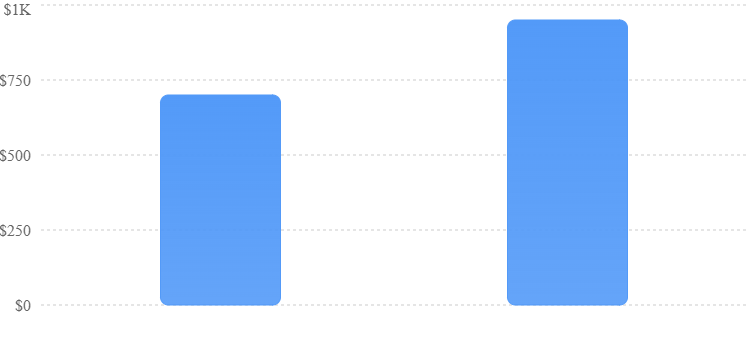
The higher-frequency approach appears better if you examine advertising revenue alone.
But suppose the more aggressive approach also reduces returning users and premium purchase conversions.
That could undermine longer-term performance.
The relevant business question isn’t simply which test generated the most ad revenue this month.
It’s which experience produces the strongest sustainable contribution after considering retention, purchase revenue, acquisition costs, and user satisfaction.
A Practical 30-Day Mobile App Monetization Plan
You don’t need to overhaul everything at once.
A focused implementation plan can help you introduce monetization without losing sight of product quality.
Days 1–7: Audit user behavior
Identify core user journeys, completion points, retention patterns, and existing friction. Review user complaints about advertisements or payment flows.
Days 8–14: Implement limited monetization
Choose an appropriate ad partner, test SDK integration, configure policy controls, and introduce carefully selected placements or purchase options.
Days 15–21: Improve premium conversion
Clarify premium benefits, test purchase restoration, review subscription disclosures, and experiment with contextual upgrade messaging.
Days 22–30: Analyze and refine
Compare engagement and monetization metrics, inspect feedback, review technical performance, and decide which experiments need more time or data.
Thirty days may be enough to establish the foundation, but not necessarily enough to draw reliable retention or lifetime-value conclusions. Smaller apps may need longer measurement periods.
Turning Free Users Into Paying Customers Without Pressure
Some free users will never buy.
That’s normal.
A successful monetization strategy doesn’t require every person to become a subscriber.
Instead, it identifies users who have a genuine reason to upgrade.
Use a value-first conversion journey
Discover the appStore search, social content, recommendations
Experience the core benefitComplete a meaningful task for free
Build a usage habitReturn because the app remains useful
Discover relevant premium valueSee an optional, timely upgrade offer
Purchase or continue freeBoth choices preserve user trust
Make the premium experience easy to understand
A premium preview can help users evaluate features.
Examples include displaying sample advanced analytics, showing how a premium export differs from a free export, or offering a clearly disclosed trial.
Avoid repeatedly presenting the same offer after users decline.
The goal is informed conversion, not exhaustion.
Give returning users a reason to stay
Retention benefits from genuine product improvements, not only notifications.
Useful approaches include updating content, introducing requested features, maintaining reliable synchronization, and making previous progress easy to resume.
Notifications should be relevant, permission-based where required, and easy to control.
A user who returns because the app solves a real problem is more valuable than someone repeatedly pulled back by artificial urgency.
Using Reviews and Feedback to Improve Monetization
User reviews can reveal problems that analytics alone might miss.
A sudden decline in session length tells you something has changed.
A review explaining that an interstitial appears before a critical action tells you what may need fixing.
Look for repeated themes.
Are users confused about subscription terms? Are rewarded ads failing to deliver rewards? Does the premium plan feel too limited? Are advertisers displaying inappropriate creatives?
Turn those patterns into improvement priorities.
Encourage authentic reviews
Invite users to review the app after a genuinely positive milestone, using approved platform mechanisms.
Don’t purchase fake reviews or condition ratings on rewards.
Don’t hide review opportunities from dissatisfied users or manipulate feedback to create misleading ratings.
Authentic feedback supports credibility and improves the product.
A well-designed review invitation might simply say:
“Enjoying the app? Your feedback helps us improve it.”
The request should be occasional, dismissible, and respectful.
Common Mobile App Monetization Mistakes
Even promising applications can struggle when monetization is implemented carelessly.
Introducing too many revenue streams at once
A new app rarely needs multiple mediation platforms, several subscription tiers, numerous advertising placements, and a complex virtual currency economy immediately.
Complexity creates more testing and support responsibilities.
Start with the model that best matches your core product.
Blocking essential functionality too early
A premium offer becomes harder to justify when users haven’t experienced the product’s value.
Give the free experience a clear purpose.
Choosing ads solely for high eCPM
An advertisement with strong revenue per thousand impressions may still be a poor choice if it damages retention.
Evaluate total value.
Ignoring technical performance
Advertising SDKs, purchase flows, and subscription verification can introduce latency, errors, and other performance issues.
Monitor crashes, application-not-responding events, launch times, memory usage, and battery impact.
Failing to honor purchase entitlements
Customers should receive the features they purchased.
Implement robust transaction verification, entitlement updates, restoration mechanisms, and support procedures.
Treating premium users like advertising inventory
If users purchase an ad-free experience, honor its stated scope.
Don’t undermine a paid benefit through misleading replacement promotions.
Privacy, Advertising, and In-App Purchase Compliance
Monetization must be designed around applicable laws, advertising-network policies, and app-store requirements.
As of October 2026, developers should review the latest requirements before launch and after any significant SDK, billing, or business-model change.
Apple App Store requirements
Apple’s App Review Guidelines govern areas including in-app purchases, advertising, user privacy, and application behavior.
Digital features and content offered inside an app generally fall under Apple’s in-app purchase requirements, subject to applicable exceptions, entitlements, and regional arrangements.
Apple also holds developers responsible for third-party SDKs and advertising services integrated into their applications.
Consult the current Apple App Review Guidelines before implementation.
Google Play billing requirements
Google Play generally requires its billing system for qualifying digital goods and services sold in Play-distributed applications, unless an applicable policy exception or authorized alternative billing arrangement applies.
Rules vary by transaction type, program eligibility, and jurisdiction.
Consult the current Google Play payments policy.
Google Play advertising requirements
Google Play restricts unexpected disruptive advertisements, deceptive close buttons, interference with device operations, and problematic full-screen interstitial behavior.
Certain interruption rules differ for genuinely opt-in rewarded advertisements.
Play Console Help
Review both app-store advertising rules and your individual advertising network’s implementation policies.
User privacy and tracking consent
Your privacy obligations extend beyond publishing a privacy policy.
Evaluate what your SDKs collect, why data is collected, whether it is shared, and which consent or permission mechanisms apply.
Apple requires use of App Tracking Transparency when applicable cross-app or cross-website tracking occurs.
Apple Developer Documentation
Developers may also need to address privacy disclosures, data minimization, deletion requests, security safeguards, and applicable privacy laws such as GDPR and California privacy legislation.
Consent requirements depend on the user’s location, the data being processed, and the particular activity.
Children’s applications require additional care
Apps designed for children may face stricter requirements involving advertising formats, behavioral targeting, data collection, and parental consent.
In the United States, the Children’s Online Privacy Protection Act and implementing rules may apply to certain collection of personal information from children under 13.
The Federal Trade Commission emphasizes that an app developer’s responsibilities may include information collected by third-party advertising technology.
Federal Trade Commission
Children’s apps should not simply reuse adult-oriented monetization flows without a dedicated legal and platform-policy review.
Be transparent about subscriptions and commercial relationships
Explain recurring charges, trial periods, renewal arrangements, cancellation methods, and material limitations.
If your app or associated marketing includes sponsored recommendations, affiliate endorsements, or other advertising claims, ensure the required disclosures are clear and prominent.
The FTC expects marketing claims to be truthful and appropriately supported.
Federal Trade Commission
Compliance Note: This article provides general educational guidance, not legal, tax, or financial advice. Platform rules, SDK practices, billing options, and privacy requirements can change. Review current Apple, Google Play, advertising-network, and jurisdiction-specific requirements, and obtain qualified advice when appropriate. Examples and revenue calculations in this article are hypothetical; no earnings, ranking, store approval, or conversion results are guaranteed.
How to Build an App Business That Keeps Growing
A mobile application becomes a stronger business when its monetization strategy evolves alongside its users.
Early on, your priority might be understanding why people install the app and whether they find enough value to return.
Later, you can study whether certain features justify premium pricing, whether advertising formats suit different user segments, and whether subscription benefits continue to meet expectations.
As the app develops, focus on three connected improvements.
Improve the product. Fix friction, strengthen core functionality, and make the experience more reliable.
Improve monetization relevance. Present advertisements and premium offers where they make contextual sense.
Improve financial understanding. Track retention-adjusted revenue, acquisition economics, operating costs, and profitability.
Growth doesn’t have to mean showing more advertisements or increasing prices.
Sometimes it means earning more trust, improving the experience, or offering a better reason to purchase.
Frequently Asked Questions About Mobile App Monetization
1. What is the best way to monetize a mobile app without annoying users?
The best starting point is a monetization model that fits how people use the app. Optional rewarded ads can suit mobile games, while premium feature purchases or subscriptions may work better for productivity and educational apps. Keep the free experience useful, avoid unexpected interruptions, and test revenue alongside retention and satisfaction.
2. Are in-app purchases better than mobile advertisements?
Neither is universally better. Advertising can generate income from users who prefer free access, while in-app purchases can earn more per transaction from customers who value premium features. A hybrid model may work well when the formats complement one another and don’t undermine the user experience.
3. How much can a mobile app earn from advertising?
Revenue depends on paid ad impressions, eCPM, geographical demand, ad formats, fill rate, and user activity. For example, 100,000 paid impressions at a hypothetical $3 eCPM would generate approximately $300 before costs and taxes. Actual earnings may differ substantially.
4. How can I increase in-app purchase conversion rates?
Start by improving the relevance and clarity of premium offers. Let users experience core value, explain specific upgrade benefits, present transparent pricing, and show purchase options when they naturally relate to a user’s needs. Test paywall designs without using pressure tactics or misleading subscription terms.
5. Can a mobile app successfully combine subscriptions and advertising?
Yes. An app can offer advertising-supported free access alongside a paid plan with premium features and an ad-free experience. The business model works best when both tiers deliver clear value, subscription terms are transparent, and purchased entitlements are consistently honored.
Build an App People Want to Keep Using
Monetizing mobile apps doesn’t have to mean interrupting users, overwhelming them with subscription prompts, or restricting everything that makes the product worthwhile.
A thoughtful business model allows advertising to support accessible content while giving users opportunities to purchase additional value.
Start with the experience. Understand why people return. Introduce monetization at moments when it makes sense.
Then measure what happens.
The real opportunity isn’t squeezing the maximum number of ad impressions out of each visit. It’s building a product that earns its place on someone’s phone.
Ready to improve your app revenue? Start by auditing your current advertising placements, identifying one premium feature with genuine customer value, and measuring how both affect engagement and retention.
For developers looking to build a broader digital business, the same principles apply to selling app templates, premium toolkits, educational downloads, and other digital products: solve a clear problem, communicate the value, and make purchasing straightforward.
When the user experience comes first, monetization becomes part of a sustainable product rather than an interruption to it.
Stay ahead with exclusive updates
Join our community. Get curated industry trends, actionable guides, and fresh resources delivered straight to your inbox.