
PrintablesFamily CareDigital ProductsPlanner Niche
Affiliate disclosure: This article contains an affiliate link to Gumroad. If you buy through it, Digital Idea Tool may earn a commission at no extra cost to you. We only mention tools that fit the topic.
The phone rings at work. It’s the pharmacy: one of Mom’s prescriptions needs a refill authorization. Was it the blood pressure pill or the new one the cardiologist added last month? The dose changed, didn’t it? And who has the doctor’s direct number: you, your brother, or the sticky note on her fridge?
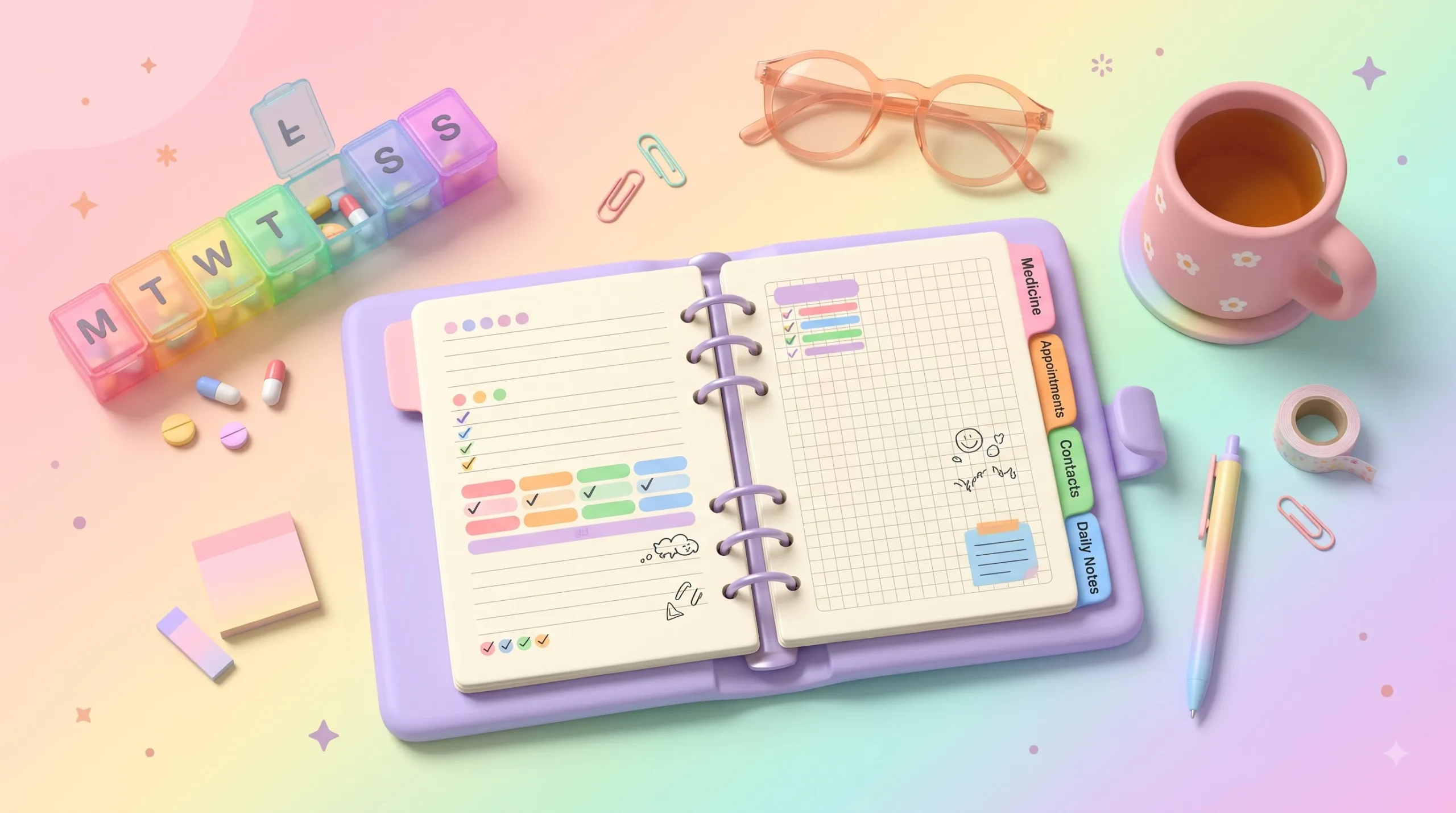
Moments like this are why caregiver planner printables exist. They give families one place for appointments, medication schedules, contacts, and daily care notes, so the details live on paper instead of in one exhausted person’s memory.
For creators, this is one of the rare digital products where usefulness and meaning line up. This guide walks through why families buy caregiver organizers, what a strong one includes, and how to build and sell a product like “Care With Ease: The Family Caregiver’s Organizer” responsibly.
What Is a Caregiver Planner Printable?
A caregiver planner printable is a downloadable set of pages, usually a PDF, that helps someone caring for a family member organize health information and daily tasks. Buyers print it at home, keep it in a binder, or fill it in on a tablet.
Most include a medication log, an appointment tracker, an emergency contact sheet, and a daily care log. Better ones add space for doctor’s questions, insurance details, and the caregiver’s own well-being.
Why Families Caring for Aging Parents Buy Organizers
The audience is large and growing. According to the Caregiving in the U.S. 2025 report from AARP and the National Alliance for Caregiving, about 63 million Americans, roughly one in four adults, are family caregivers. That is a 45% increase over the past decade.
The same research found that around six in ten family caregivers also hold a job. Reporting on the study notes that only a small minority, about 11%, say they received training for basic caregiving tasks. Most people are learning on the fly while juggling work and family.
The mental load is the real problem
Caregivers rarely lack love or effort. What they lack is a system. Medication names, dosage changes, follow-up dates, and “what the specialist actually said” all compete for attention. A planner doesn’t make caregiving easy, but it reduces the number of things a person has to hold in their head.
Care is often shared
Siblings split shifts. A neighbor checks in on Tuesdays. A paid aide covers mornings. When several people help, a shared binder with a clear daily log becomes the handoff tool everyone can read. That shared use case is a strong selling point.
Emergencies reward preparation
When an ambulance arrives or a hospital asks for a medication list, the family that can hand over one clear page is in a better position. Many buyers purchase an organizer after a scare, not before one, so messaging around calm preparation resonates.
Inside “Care With Ease”: What the Organizer Should Include
Here’s a practical page plan for a family caregiver’s organizer. Each section answers a real question caregivers ask.
| Section | What it tracks | Why families need it |
|---|---|---|
| Emergency info sheet | Conditions, allergies, current meds, doctors, emergency contacts | One page to hand to paramedics, ER staff, or a substitute caregiver |
| Medication schedule | Name, dose, time, purpose, prescriber, start date | Prevents missed or doubled doses and makes pharmacy calls easier |
| Medication change log | What changed, when, and who decided | Dose changes are easy to forget and important to report |
| Appointment tracker | Date, provider, reason, transport, follow-ups | Keeps multiple specialists and family drivers coordinated |
| Doctor visit notes | Questions to ask, answers given, next steps | Families often forget key details after short visits |
| Care team contacts | Doctors, pharmacy, aides, family, neighbors | Ends the hunt for phone numbers |
| Daily care log | Meals, sleep, mood, mobility, notes | Helps spot changes and supports shift handoffs |
| Document locator | Where insurance cards, legal and financial papers are kept | Saves time during stressful moments |
| Caregiver check-in | Rest, support, small wins | Caregivers need care too |
Design tip: Make the emergency sheet the very first page and keep it to one side of one sheet. It’s the page buyers will use most under pressure.
How to Design a Caregiver Planner People Can Actually Use
Pretty planners get clicks. Usable planners get repeat customers and good reviews. Focus on these choices:
- Large, readable type. Many users are tired, and some are older adults themselves. Generous font sizes and writing lines matter.
- Plain language. Use “Medicine” and “Doctor visits,” not clinical jargon. Clear headers help buyers fill pages quickly.
- US Letter and A4. Offer both so buyers in the US, UK, Canada, Australia, and New Zealand can print without scaling issues.
- Undated pages. Care needs don’t start on January 1. Undated layouts let people begin any day.
- Fillable PDF option. Some families want to update a medication list on a tablet and print a fresh copy for appointments.
- Black-and-white friendly. Heavy color fills waste ink. Light accents print better at home.
- Room for more than one person. Families may care for two parents. Include duplicate medication and contact pages.
Printable, Fillable PDF, or App Template?
Your format affects who buys and how they use it. A simple comparison:
| Format | Best for | Limitations |
|---|---|---|
| Printable PDF | Binder users, paper lovers, older caregivers | Must reprint when info changes |
| Fillable PDF | Families who update often and print copies | Fillable fields behave differently across PDF apps |
| Tablet planner (GoodNotes-style) | Caregivers who live on an iPad | Harder to share with relatives who don’t use the app |
| Notion or spreadsheet template | Siblings coordinating remotely | Requires comfort with the tool and careful privacy settings |
A bundle that pairs a printable PDF with a fillable version covers the widest audience without becoming hard to support.
Pricing and Where to Sell
Caregiver planners already sell on marketplaces such as Etsy, Gumroad, and Payhip. Listings we reviewed while researching this article ranged from about $5 to $15, depending on page count and extras like Notion versions. That range is a snapshot, not a rule, so check current listings before you price.
Sales platforms each have trade-offs:
- Gumroad: simple setup, direct links, and a built-in Discover marketplace.
- Etsy: strong search traffic for printables, but crowded and fee-based.
- Your own site: more control and better margins, but you must bring the traffic.
If you’re new to selling, our guide on optimizing for the Gumroad Discover marketplace explains how listings get found.
Common Mistakes to Avoid
- Making medical claims. A planner organizes information. It doesn’t diagnose, treat, or replace professional advice. Say so clearly in your listing.
- Cramming every page. Tiny boxes frustrate people writing medicine names and doses.
- Ignoring privacy. Remind buyers that the planner will hold sensitive health information and should be stored securely.
- Fear-based marketing. Caregivers are already stressed. Calm, supportive copy builds trust faster than alarm.
- Copying other sellers. Build your own layouts and wording. Originality protects your shop and your reputation.
- Skipping the preview. Show real page mockups so buyers know exactly what they get.
Marketing a Caregiver Planner With Care
This audience searches for solutions, often late at night. Helpful content works better than hard selling.
- Pinterest: Pins showing the emergency sheet or medication log answer an immediate need. See our Pinterest marketing guide for a consistent pinning routine.
- Search-friendly listing titles: Use the words buyers type, like “caregiver planner printable,” “medication log,” and “elderly care binder.”
- Gift angle: Siblings and friends often buy organizers for the primary caregiver.
- Free sample: A free one-page medication log can introduce your full organizer.
Honest Limitations
A planner is a tool, not a care plan. It won’t coordinate doctors, settle family disagreements, or replace legal documents such as a power of attorney. It only helps if someone keeps it updated. Being upfront about this in your product description builds credibility and reduces refund requests.
Frequently Asked Questions
What should be in a caregiver binder for an elderly parent?
Start with an emergency info sheet, medication schedule, appointment tracker, doctor visit notes, care team contacts, a daily care log, and a list of where important documents are kept. Add a caregiver self-check page if space allows.
Is a printable or digital caregiver planner better?
It depends on the family. Printables are easy to share and hand to medical staff. Digital or fillable versions are easier to update. Many families use a fillable PDF and print fresh copies when medications change.
How do I keep track of my parent’s medications at home?
Use a medication schedule listing each drug, dose, time, purpose, and prescriber, plus a change log for dose updates. Review the list with the pharmacist or doctor regularly. A planner organizes information but doesn’t replace professional guidance.
Can I sell caregiver planner printables on Etsy or Gumroad?
Yes. Both platforms host caregiver planners. Use your own original designs, avoid medical claims, and include a clear note that the planner is for organization only.
What size should a caregiver planner printable be?
Offer US Letter for American buyers and A4 for the UK, Australia, New Zealand, and many other markets. Including both sizes reduces printing problems and support questions.
Quick Quiz: Test Your Caregiver Planner Know-How
1. Which page should come first in a caregiver organizer?
Answer: The emergency info sheet, because it’s used under pressure.
2. Why include a medication change log?
Answer: Dose changes are easy to forget and important to report to doctors and pharmacists.
3. Which two page sizes cover most English-speaking markets?
Answer: US Letter and A4.
4. Why use undated pages?
Answer: Caregiving can start any day, so undated pages work year-round.
5. What is the main benefit of a shared daily care log?
Answer: Smooth handoffs between family members, aides, and helpers.
6. Should a caregiver planner make medical claims?
Answer: No. It organizes information and doesn’t replace professional advice.
7. Why keep printable pages black-and-white friendly?
Answer: They print clearly at home without wasting ink.
8. Which format suits siblings coordinating from different cities?
Answer: A shared digital template, such as Notion or a spreadsheet, with careful privacy settings.
9. What marketing tone works best for caregivers?
Answer: Calm and supportive, not fear-based.
10. What is a good low-cost way to introduce your full organizer?
Answer: A free single-page sample, such as a medication log.
Ready to Build Your Own Caregiver Organizer?
Sketch your nine core pages this week, starting with the emergency sheet. Then browse what’s already selling for ideas on format and pricing, and make yours clearer, kinder, and easier to use.
Explore Planners on GumroadBrowse Our Digital Products
Looking for more planner ideas? See our teacher planner and classroom templates guide.
Disclaimer & Compliance Note
This article is for general informational and educational purposes only. It is not medical, legal, or financial advice. A caregiver planner is an organizational tool and does not replace guidance from doctors, pharmacists, or other qualified professionals. Statistics are cited from publicly available sources and may change. Price ranges reflect listings reviewed at the time of writing and are not guarantees of earnings or sales. Digital Idea Tool may earn a commission from affiliate links. Questions? Contact support@digitalideatool.com.
📝 Key Takeaways & Action Notes
Jot down insights, next steps, or thoughts from this post. Your notes save automatically in your browser.
- What is the #1 breakthrough insight you took away today?
- What is one concrete action you will take in the next 24 hours?
- What questions or ideas do you want to research further?
Stay ahead with exclusive updates
Join our community. Get curated industry trends, actionable guides, and fresh resources delivered straight to your inbox.